Primary school fees in Singapore depend on the type of school, your child’s residency status and the programme you choose. Government and government-aided schools charge fees based on nationality, while private and international schools publish their own fee schedules.
For parents, comparing these options involves more than checking tuition. Registration charges, transport, meals, learning materials and other expenses can affect the total amount a family pays.
This guide explains the differences, provides dated fee examples and shows how families considering Global Indian International School (GIIS) Singapore can prepare a realistic budget.
Public, Private and International Schools: What Is the Difference?
Before comparing costs, it helps to understand the categories.
Public schools generally refer to Singapore’s government and government-aided schools, which follow the national curriculum.
Private schools operate outside that government-funded model and set their own fees. Their curricula and educational approaches vary.
International schools are generally privately operated schools offering international or overseas curricula. Private and international schools therefore overlap; they are not three entirely separate categories with fixed price bands.
| School category | カリキュラム | How fees are determined |
| Government and government-aided schools | Singapore national curriculum | MOE fee schedule, with different rates by nationality or residency status |
| Private schools | Depends on the school | School-specific charges and contractual terms |
| インターナショナルスクール | International or overseas curricula, depending on the school | Fees vary by school, campus, curriculum and grade |
A useful comparison considers both the cost and the educational pathway available to your child.
How Much Are Public Primary School Fees?
At government and government-aided primary schools, Singapore Citizens do not pay monthly school fees, but a miscellaneous fee applies. Permanent Residents and international students pay different school-fee rates.
Government and Government-Aided Primary School Fees for 2026
| Student category | Monthly school fee | Monthly miscellaneous fee | Monthly total | Annual total over 12 months |
| Singapore Citizen | S$0 | S$13 | S$13 | S$156 |
| Singapore Permanent Resident | S$330 | S$13 | S$343 | S$4,116 |
| International student: ASEAN | S$595 | S$13 | S$608 | S$7,296 |
| International student: non-ASEAN | S$1,035 | S$13 | S$1,048 | S$12,576 |
These figures cover school and miscellaneous fees for 2026. They exclude expenses such as uniforms, meals, transport and student care. Families planning a later intake should check the applicable year’s schedule.
Does Paying the International Student Rate Guarantee Admission?
No. Admission and fees are separate matters.
International students seeking Primary 1 admission follow a different process from Singapore Citizens and Permanent Residents. Places are subject to availability, and admission is not guaranteed. Families should therefore consider alternative options while exploring the national school route.
How Much Do Private and International Primary Schools Cost?
There is no single fee applicable to every private or international primary school. Even within one school, charges can differ by curriculum and year group.
Published examples show why parents need to check the basis of each figure:
| School and programme example | Published annual amount | What the figure includes |
| Heath House, Years 2–6 | S$17,440 including GST | Tuition, calculated from S$16,000 before GST; registration and other charges are additional |
| GIIS CBSE, Class 1 | S$24,737.55 including GST | Published recurring school-fee components across three terms |
| Nexus, Year 1 | S$40,400 including GST | Annual course fee; enrolment, development levy and other applicable charges are additional |
These are examples, not a ranking or a national average. Year labels, student ages and fee inclusions differ, so parents should request quotations for the appropriate placement before comparing final costs.
Understanding Primary School Fees at GIIS in Singapore
GIIS in Singapore offers primary education through CBSE and the IB Primary Years Programme. Families should select the relevant curriculum and grade when reviewing fees.
GIIS’s published fee structure separates tuition from other recurring components, including activities, building development, student welfare, school events, resources and technology.
GIIS CBSE Primary Fee Examples for 2026–27
The following figures are based on the published schedule effective 1 April 2026 to 31 March 2027.
All amounts include 9% GST. Annual figures are calculated across three terms.
| CBSE grade | Annual tuition only | Annual recurring school fees |
| Class 1 | S$14,034.84 | S$24,737.55 |
| Class 2 | S$14,414.16 | S$25,205.16 |
| Classes 3–5 | S$14,937.36 | S$25,940.91 |
Recurring totals exclude one-time registration, transport and applicable miscellaneous expenses. These figures apply to the cited CBSE schedule and should not be used as quotations for IB PYP.
For an individual estimate, ask admissions to confirm the campus, curriculum, grade, academic year and intended start date.
Why Tuition Alone Can Understate Your Budget
Schools organise their charges differently. One may include resources within its course fee, while another lists them separately.
Before comparing totals, ask about the following:
| Expense | What to confirm |
| Application or assessment | Whether a fee applies and whether it is refundable |
| Registration or enrolment | Whether it is a one-time charge and whether later top-ups apply |
| Deposit | Whether it is refundable and under what conditions |
| 輸送 | Route availability, travel arrangements and cancellation terms |
| Uniforms and materials | Initial purchases and replacement costs |
| Meals | Whether food is included or purchased separately |
| デバイス | Whether a laptop or tablet must be purchased |
| Activities and trips | Which are included, optional or separately charged |
| Learning support | Availability and any additional fees |
| After-school care | Hours, availability and cost where needed |
Avoid adding a charge twice. If a quoted recurring total already includes technology or resource fees, these should not be added again.
How Does GST Affect the Comparison?
Singapore’s current GST rate is 9%. Private and international school schedules may display amounts before or after GST, so read the labels carefully.
For example, S16,000excludingGSTbecomesS17,440 including GST. A fee already labelled GST-inclusive should not have another 9% added.
For public schools, use the published MOE payable amounts rather than applying the private-school calculation to the table.
How to Build a Realistic Primary School Budget
Prepare separate estimates for the first year and subsequent years.
First-Year Budget
Include:
- Annual recurring school fees.
- Application and registration charges.
- Any deposit.
- Initial uniform, book and device purchases.
- Transport, meals and other selected services.
Keep refundable deposits separate from non-refundable expenses, while still allowing for the cash needed at enrollment.
Continuing-Year Budget
Include recurring fees, ongoing services and expected replacements. Also check whether the next grade or curriculum stage has a different fee.
For families with multiple children, calculate each child’s cost separately before applying any confirmed sibling concession.
Dividing the annual total by 12 can help with household planning, but it does not mean the school accepts monthly payments. Confirm invoice dates and payment deadlines.
What Should Parents Check Before Accepting a Place?
The student contract is an important part of the cost comparison. Review:
- What must be paid before the child starts.
- Whether mid-term entry changes the amount charged.
- Withdrawal notice requirements.
- Refund conditions and deadlines.
- Payment-method surcharges or late-payment charges.
- The duration and conditions of discounts or scholarships.
If an employer provides an education allowance, confirm the covered expenses and reimbursement timing. A tuition allowance may not cover registration, transport or other charges.
Choosing a Primary School That Fits Your Family
Cost is important, but it should be considered alongside curriculum suitability, teaching, wellbeing support, travel time and future progression.
Public schools offer the national education pathway, with fees that vary by nationality. Private and international schools provide different curriculum choices and school-specific fee structures. The suitable option depends on both access and your child’s needs.
For families considering GIIS in Singapore, request an itemised quotation and discuss how the chosen primary programme connects to later learning.
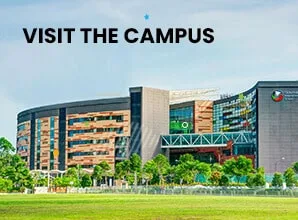
Contact GIIS in Singapore’s admissions team or book a campus tour to explore primary curriculum options and receive the applicable fee breakdown.

チームGIIS
Team GIIS is a group of enthusiastic writers who bring the vibrant world of GIIS in Singapore to life through engaging blog posts. Dedicated to highlighting the school’s teaching methodology, innovative learning environment, and diverse curriculum options like IB, Cambridge and CBSE, they aim to connect with parents, educators and students, sharing insights and stories that inspire and inform the school community.