Secondary Schools in Singapore: Choosing the Right Curriculum for Your Child
Selecting the right secondary school is one of the most important decisions parents make for their child’s future. Secondary education plays a crucial role in shaping academic foundations, critical thinking abilities, personal development, and readiness for university and beyond.
Singapore is home to some of the world’s leading educational institutions, offering a variety of internationally recognised curricula. Among the most popular options are the CBSE (Central Board of Secondary Education), Cambridge IGCSE (International General Certificate of Secondary Education), and the International Baccalaureate (IB).
Each pathway offers a unique approach to learning, assessment, and skill development. Understanding the differences can help parents make informed decisions that align with their child’s strengths, interests, and long-term aspirations.
Understanding Secondary Education in Singapore
Secondary education serves as a bridge between foundational learning and specialised academic pathways. During these formative years, students develop essential skills such as:
- Critical thinking
- Problem-solving
- コミュニケーション
- Research and inquiry
- コラボレーション
- Leadership
Many international schools in Singapore offer multiple curriculum options, enabling families to choose a pathway that best supports their child’s educational journey.
CBSE Curriculum: Structured and Concept-Based Learning
The CBSE curriculum is widely recognised among Indian families and is known for its structured academic framework and strong focus on conceptual understanding.
Key Features of CBSE
- Strong emphasis on Mathematics and Science
- Clearly defined learning outcomes
- Structured and standardised curriculum
- Focus on conceptual clarity and academic discipline
- Alignment with Indian competitive examinations
Suitable For
- Students who thrive in structured learning environments
- Families seeking continuity with the Indian education system
- Learners preparing for engineering, medical, or other competitive examinations
- Students who benefit from clear academic progression
Skills Developed
- Analytical thinking
- Conceptual understanding
- Academic discipline
- Problem-solving abilities
CBSE provides a strong academic foundation that supports higher education pathways both in India and internationally.
Cambridge IGCSE: Flexible and International Learning
The Cambridge IGCSE curriculum is one of the world’s most recognised international qualifications and is widely accepted by universities globally.
Key Features of IGCSE
- Broad range of subject choices
- Application-based learning approach
- Internationally benchmarked curriculum
- Assessment through coursework and examinations
- Encourages independent learning
Suitable For
- Students who enjoy exploring diverse subjects
- Families seeking international educational pathways
- Learners who benefit from flexibility and subject choice
- Students aiming for globally recognised qualifications
Skills Developed
- Critical thinking
- Independent learning
- Analytical reasoning
- Research skills
The IGCSE pathway prepares students for advanced programmes such as the IB Diploma Programme and A-Levels.
International Baccalaureate (IB): Inquiry-Based and Holistic Education
The International Baccalaureate (IB) is known for its inquiry-driven approach and emphasis on developing globally minded learners.
Key Features of IB
- Inquiry-based learning model
- Interdisciplinary approach to education
- Focus on research and reflection
- Strong international perspective
- Emphasis on holistic development
Suitable For
- Students who enjoy discussion-based learning
- Learners who thrive through exploration and inquiry
- Families interested in global university pathways
- Students seeking a balanced academic and personal development experience
Skills Developed
- Research and investigation
- Critical thinking
- コミュニケーション
- Global awareness
- Self-management
The IB encourages students to become confident, reflective, and internationally minded learners.
CBSE vs IGCSE vs IB: A Comparison for Parents
| Feature | CBSE | IGCSE | IB |
| Learning Style | Structured | Flexible | Inquiry-Based |
| Assessment | Primarily Exams | Coursework + Exams | Projects + Assessments |
| Academic Focus | Concept Mastery | Subject Exploration | Research & Inquiry |
| Best For | Indian Curriculum Continuity | International Flexibility | Global University Preparation |
| スキル開発 | Discipline & Clarity | 分析的思考 | Critical Thinking & Research |
| University Pathways | India & International | Global Universities | Global Universities |
While curriculum choice is an important factor, GIIS goes beyond academics through its award-winning 9 GEMS™ framework, which focuses on the holistic development of every student. The framework nurtures excellence across academics, sports, visual and performing arts, leadership, innovation, entrepreneurship, personality development, universal values, and community care. Regardless of whether students choose CBSE, IGCSE, or IB, they benefit from opportunities that help them build confidence, creativity, communication skills, and future-ready competencies. This balanced approach ensures that students grow not only as successful learners but also as responsible global citizens prepared for life beyond the classroom.
How to Choose the Right Curriculum for Your Child
There is no single “best” curriculum. The right choice depends on your child’s learning preferences, strengths, and future aspirations.
Consider the following questions:
What Is Your Child’s Learning Style?
- Does your child prefer structured learning? → CBSE
- Does your child enjoy flexibility and subject choice? → IGCSE
- Does your child thrive through inquiry and discussion? → IB
What Are Your Child’s Future Goals?
- Planning for Indian competitive exams? → CBSE
- Interested in international qualifications? → IGCSE
- Seeking global university pathways? → IB
What Skills Would You Like Your Child to Develop?
- Strong conceptual understanding → CBSE
- Independent learning and analysis → IGCSE
- Research and global thinking → IB
Understanding these factors can help families make a more informed decision.
Why Choose GIIS for Secondary Education in Singapore?
At Global Indian International School (GIIS), students benefit from a comprehensive learning environment that combines academic excellence with holistic development.
Multiple Curriculum Pathways
GIIS offers a range of academic programmes, allowing students to choose pathways that align with their strengths and ambitions:
- CBSE
- ケンブリッジ・ロウアー・セカンダリー・プログラム(CLSP)
- ケンブリッジIGCSE
- IBディプロマ・プログラム(IBDP)
This flexibility enables students to pursue educational journeys that suit their individual needs.
Holistic Development Through the 9 GEMS™ Framework
A key differentiator at GIIS is the award-winning 9 GEMS™ framework, which nurtures students across nine areas:
- アカデミック・エクセレンス
- スポーツ・エクセレンス
- Visual & Performing Arts
- Personality Development
- 革新と創造性
- 起業家精神とリーダーシップ
- Universal Values & Ethics
- Community Care & Responsibility
- スキル開発
This balanced approach supports both academic achievement and character development.
Future-Ready Learning
Students are exposed to:
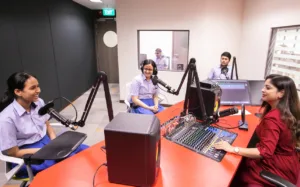
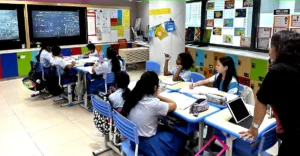
- Technology-enabled learning
- Innovation and entrepreneurship
- Research-based projects
- リーダーシップの機会
- Collaborative learning experiences
These experiences help prepare learners for future academic and professional success.
Strong Student Support Systems
GIIS provides:
- Personalised academic guidance
- Pastoral care programmes
- University and career counselling
- Student wellbeing initiatives
This ensures students receive support throughout their educational journey.
Beyond Academics: What Parents Should Consider
When evaluating secondary schools in Singapore, curriculum is only one factor.
Parents should also consider:
- School culture and environment
- Student wellbeing programmes
- Co-curricular opportunities
- Leadership development
- Teaching methodologies
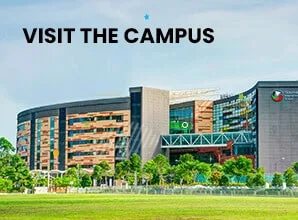
- Campus facilities
- Accessibility and location
A well-rounded school experience contributes significantly to a student’s overall growth and success.
最終的な感想
Choosing the right secondary school in Singapore requires careful consideration of your child’s learning style, academic goals, and personal development needs.
Whether you choose CBSE, IGCSE, or IB, each curriculum offers unique strengths and opportunities. The key is finding a learning environment that supports both academic achievement and holistic growth.
At GIIS Singapore, students benefit from internationally recognised curricula, strong academic support, future-ready learning experiences, and the award-winning 9 GEMS™ framework. This combination helps prepare learners to thrive in school, university, and beyond.
Take the Next Step
Interested in learning more about secondary education pathways at GIIS?
- Explore available curricula
- Book a campus tour
- Speak with our admissions team
- Experience the learning environment firsthand
📞 +65 9631 6000
🌐 https://globalindianschool.org/sg/admissions/
Address:
27 Punggol Field Walk, Singapore 828649
よくある質問
Which curriculum is best for secondary school in Singapore?
The best curriculum depends on your child’s learning style, future goals, and academic preferences. CBSE, IGCSE, and IB each offer unique advantages.
Does GIIS offer multiple curriculum options?
Yes. GIIS offers CBSE, Cambridge pathways including IGCSE, and the IB Diploma Programme, providing flexibility for students and families.
Is IGCSE better than CBSE?
Neither is inherently better. IGCSE offers greater subject flexibility and international alignment, while CBSE provides a structured and concept-based approach.
Is the IB suitable for Indian students?
Yes. Many Indian students excel in the IB due to its focus on inquiry, research, critical thinking, and global perspectives.
What should parents consider when choosing a secondary school?
Parents should evaluate curriculum options, teaching methodologies, student support systems, co-curricular opportunities, school culture, and future university pathways before making a decision.