A secondary school curriculum plays an important role in shaping a child’s academic journey. It influences how a teenager learns, thinks and is assessed, while also affecting the pathways available for senior high school and university. For parents in Singapore exploring different curriculum options, the Cambridge IGCSE is often part of the conversation. As one of the world’s most widely recognised secondary qualifications, it offers an internationally oriented approach to education.
This guide explains what the Cambridge IGCSE actually is, how it’s structured and why it matters specifically at the secondary school stage.
Key facts about Cambridge IGCSE at a glance:
- Governing body: Cambridge Assessment International Education (CAIE), a unit of Cambridge Assessment.
- Duration: Two years, generally covering Grades 9 and 10.
- Age range: 14 to 16 years.
- Subject breadth: Over 70 subjects are available across the Cambridge IGCSE framework, including around 30 languages, giving schools flexibility to design a combination suited to their students.
- Grading scale: Results are graded from A* to G, using a combination of statistical and judgemental evidence to standardise outcomes across different countries and school systems.
- Examination sessions: Cambridge IGCSE examinations are conducted in February (India only), May and October, with results released in May, August and January respectively.
What Is the Cambridge IGCSE?
IGCSE stands for International General Certificate of Secondary Education. It is a globally recognised secondary school curriculum developed and administered by Cambridge Assessment International Education (CAIE), a division of the University of Cambridge.
At its core, Cambridge IGCSE is a two-year secondary programme for students typically aged 14 to 16, corresponding to Grades 9 and 10 in most school systems. It sits between middle school and pre-university education, acting as a structured bridge toward advanced programmes such as the IB Diploma, A Levels or other Grade 11–12 pathways.
This structure is deliberately international. Because the syllabus, examination standards and grading are set centrally by Cambridge rather than by any single national education board, a student’s IGCSE results carry the same meaning and credibility whether they studied in Singapore, India, the UAE or the UK.
Why IGCSE Matters for Secondary School
Parents researching curricula often ask a fair question: with so many secondary options available, why does IGCSE specifically matter? The answer comes down to four practical factors — recognition, skill-building, flexibility and continuity into senior years.
1. Global recognition that travels with the student
Because Cambridge IGCSE is set and assessed by an international examination board rather than a single country’s ministry of education, it is recognised by schools and universities worldwide. This matters enormously for expatriate and internationally mobile families — a genuine concern for many parents in Singapore. An IGCSE transcript is already built for cross-border recognition.
2. It builds the specific skills secondary students need next
Cambridge IGCSE isn’t only about content coverage. The curriculum is explicitly designed to develop critical thinking, enquiry, problem-solving and effective communication in English — skills that matter for whichever pre-university pathway a student chooses next, whether that’s the IB Diploma, A Levels or another advanced programme.
3. Subject flexibility supports individual strengths
With more than 70 subjects available across the Cambridge framework, schools can offer combinations that reflect their students’ interests and future direction — academic, creative or technical. Rather than a rigid, one-size-fits-all sequence, IGCSE allows a student who is strong in sciences to lean into Biology, Physics and Chemistry, while a student inclined toward business or economics can build a different subject mix, all within the same certification framework.
4. It’s a proven bridge to senior secondary and university pathways
Because IGCSE is offered at the Grade 9–10 stage, it functions as the academic foundation for whatever comes after — IB Diploma, A Levels or equivalent. Schools that run both IGCSE and a Grade 11–12 programme under one roof (rather than requiring a school transfer at 16) give students continuity in teaching philosophy, assessment style and school community at a stage when consistency genuinely helps performance.
Cambridge IGCSE at GIIS Singapore: A Practical Example
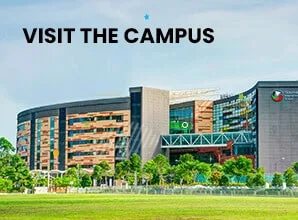
To make this concrete, it helps to look at how a real Cambridge-affiliated school structures the programme. GIIS Singapore offers Cambridge education starting from Grade 6 and continuing through Grade 10, with the IGCSE stage specifically covering Grades 9 and 10 for students aged 14 to 16. The school has built its curriculum under Cambridge guidelines, customised to its student population and the programme feeds directly into GIIS’s own IB Diploma Programme (IBDP) for Grades 11–12 — meaning students don’t need to change schools at a pivotal academic stage.
Cambridge IGCSE Subjects at GIIS Singapore
| Grade Level | Subjects Offered |
| 9年生 | English, Mathematics, Language 2 (French, Hindi, or Tamil), Information and Communication Technology (ICT), Physical Education, Global Perspectives, Science (Biology, Chemistry, and Physics), Social Studies |
| 10年生 | English, Mathematics (without coursework), Economics, Environmental Management, Business Studies, English as a Second Language, French as a Foreign Language, Hindi as a Second Language, Tamil GCE ‘O’, English Literature, Computer Science, Physical Education, Global Perspectives, Biology, Physics, Chemistry |
This range reflects the flexibility built into the Cambridge framework — students aren’t locked into a single academic track and the subject list spans sciences, humanities, languages and applied subjects.
Verified academic outcomes
Academic results are one of the most concrete ways to evaluate whether a curriculum is being delivered well and this is where transparency matters most for parents. According to GIIS Singapore’s published data, the school’s Cambridge IGCSE results in 2026 show:
19 Perfect Scorers: Nineteen students achieved the ultimate academic milestone, scoring a flawless A* in every single subject they appeared for — a remarkable feat that reflects deep mastery across the curriculum.
77.3% Students with A* and A Grades Beyond the top performers, the broader cohort delivered outstanding results as well, with 77.3% of all students securing an overall grade of A* or A — a strong indicator of consistent excellence across the board.
This means IGCSE at GIIS Singapore reflects a sustained pattern rather than a single strong year — an important distinction when evaluating any school’s academic claims.
IGCSE Schools in Singapore: What Parents Should Check
If you’re comparing IGCSE schools in Singapore, a few evidence-based questions will tell you more than a school’s marketing copy will:
- Which grades does the IGCSE programme actually cover? Confirm it aligns with the Grade 9–10, ages 14–16 structure set by Cambridge — some schools use “IGCSE” loosely, so ask specifically.
- What subject range is offered and does it match your child’s strengths? A school offering a narrow subject list limits flexibility later.
- What are the school’s actual, published IGCSE results — not just claims? Ask for multi-year data, not a single standout cohort.
- Is there a clear pathway after IGCSE? Schools that run IGCSE alongside a Grade 11–12 programme (IB, A Levels, etc.) under the same roof offer continuity that separate transfers don’t.
- Is the school’s Cambridge affiliation current and verifiable? Legitimate Cambridge schools can confirm their centre status directly.
The Bottom Line for Parents
Cambridge IGCSE matters at the secondary school stage because it does three things at once: it certifies learning to a globally consistent standard, it builds the analytical and communication skills students need for senior secondary study and it keeps options open for families who may relocate or whose children may pursue university abroad. When evaluating IGCSE schools in Singapore, the details that matter most are the ones you can verify — subject range, multi-year results, teaching approach and a clear academic pathway beyond Grade 10.
Schools like GIIS Singapore, which publish their subject structure, grading outcomes and teaching methodology openly, make that verification straightforward — which is itself a useful signal when you’re comparing options for your child’s next two years of secondary education.
Have Questions About the IGCSE Curriculum? Connect with GIIS Singapore Today.
よくある質問
What is the Cambridge IGCSE?
The Cambridge International General Certificate of Secondary Education (IGCSE) is a globally recognised secondary curriculum developed by Cambridge Assessment International Education. It is offered to students aged 14–16 and builds academic knowledge alongside critical thinking, adaptability and English communication skills.
How long is the Cambridge IGCSE programme?
It is a two-year programme, typically covering Grades 9 and 10.
Which examination board sets Cambridge IGCSE exams?
Cambridge Assessment International Education (CAIE), a unit of Cambridge Assessment.
How many subjects can a student take in IGCSE?
The Cambridge IGCSE framework offers over 70 subjects in total, including roughly 30 languages. Individual students typically take between 5 and 14 subjects, with English, Mathematics and Science forming the core.
When are Cambridge IGCSE exams held?
Examinations are conducted in February (India only), May and October, with results released in May, August and January respectively.
Why does IGCSE matter more at the secondary school stage specifically?
Because Grades 9–10 are the transition point between middle school and senior secondary or pre-university study, the rigour, global recognition and skill focus of IGCSE at this stage directly shapes how prepared a student is for IB, A Levels or equivalent programmes that follow.
Source note: Curriculum structure, subject lists, examination schedule and results data referenced in this article are drawn from GIIS Singapore’s official Cambridge IGCSE curriculum page. Parents are encouraged to verify current IGCSE fees, subject offerings and results directly with the school, as these are reviewed periodically.
チームGIIS
Team GIIS is a group of enthusiastic writers who bring the vibrant world of GIIS in Singapore to life through engaging blog posts. Dedicated to highlighting the school’s teaching methodology, innovative learning environment, and diverse curriculum options like IB, Cambridge and CBSE, they aim to connect with parents, educators and students, sharing insights and stories that inspire and inform the school community.