If your child is preparing to enter Grade 9 or Grade 10, you have likely already encountered the term ‘IGCSE results’ in parent meetings, school communications, and open days. For those currently comparing IGCSE schools in Singapore, one practical question often stands out: how can a school’s results be verified as genuinely reliable, rather than simply a marketing claim
This guide examines what the Cambridge IGCSE qualification actually involves, how results are graded, when they are released, and what the track record looks like at Global Indian International School (GIIS) Singapore — one of the city’s established Cambridge IGCSE providers.
Key takeaways:
- International qualification: IGCSE is a globally recognised, English-language secondary school qualification designed for students worldwide.
- Two-year programme: Typically taken by students aged 14–16, with GIIS in Singapore offering it in Grades 9 and 10.
- Smooth Cambridge progression: At GIIS, IGCSE builds on the Cambridge Lower Secondary programme introduced from Grade 6, giving students continuity in their learning approach.
- Wide subject choice: Cambridge offers 70+ subjects globally, including 30 languages, allowing schools to create flexible subject combinations.
- Future-ready skills: The curriculum develops critical thinking, adaptability and strong English communication—skills that support progression to the IB Diploma, A Levels or other pre-university pathways.
What Exactly Is the Cambridge IGCSE?
The Cambridge International General Certificate of Secondary Education, or IGCSE, is an English-language-based secondary school qualification. It’s set and assessed by Cambridge Assessment International Education (CAIE), a division of Cambridge Assessment that also oversees the GCE O Level. Think of it as an international equivalent to the UK’s GCSE, but designed from the outset for a global student body.
The programme runs for two years and is typically taken by students aged 14 to 16. At GIIS in Singapore, the IGCSE curriculum is offered specifically to Grade 9 and Grade 10 students and it builds on the Cambridge (CLSP) middle school programme that GIIS introduces from Grade 6 onward. That continuity matters — students aren’t dropped into an unfamiliar Cambridge framework at 14; they’ve already spent a few years working within it.
What makes IGCSE genuinely useful, rather than just another exam board, is its breadth. Cambridge offers more than 70 subjects globally, including 30 languages, which gives schools real flexibility to build a subject combination that suits their students rather than forcing everyone down one narrow track.
| Feature | Details |
| Qualification | Cambridge International General Certificate of Secondary Education (IGCSE) |
| Exam Board | Cambridge Assessment International Education (CAIE) |
| Target Age & Grades | Ages 14–16 (Grades 9 and 10 at GIIS in Singapore) |
| Program Duration | 2 years |
| Preceding Curriculum | Cambridge Lower Secondary Programme (CLSP) from Grade 6 |
| Subject Options | 70+ subjects globally, including 30 languages |
| Core Focus Skills | Critical thinking, adaptability, and strong English communication |
| Progression Paths | IB Diploma, A Levels, and other pre-university pathways |
How Cambridge IGCSE Grading Actually Works
Here’s something worth understanding before results season arrives: Cambridge IGCSE subjects may be graded using either the traditional A–G scale or, for selected syllabuses, the 9–1 numerical scale.* The grading scale that applies depends on the specific Cambridge syllabus and subject code.
Cambridge doesn’t rely purely on a fixed percentage cut-off system. Instead, grade boundaries are set for each exam session using a combination of statistical evidence and expert judgement. This means boundaries can vary slightly from one exam sitting to the next, even when the overall difficulty of the assessment appears similar.
The system is designed to maintain consistent standards across different exam sessions and locations. In practical terms, this means that a grade awarded for the same Cambridge syllabus is based on the same international standard, regardless of where the student takes the examination.
For parents comparing schools, it’s worth checking the specific subjects and grading scales reported by each school. A school’s published results may use A*–G, 9–1, or a mixture depending on the Cambridge syllabuses it offers.
When Are Cambridge IGCSE Exams Held and When Are Results Released?
For families tracking the 2026 exam cycle, it helps to know the rhythm of the Cambridge calendar:
| Exam Series | Region / Availability | Main Exam Window | Results Released | Primary Focus at GIIS in Singapore |
| February Series | Exclusively held in India | February – March | 5月 | No (India-specific calendar) |
| May Series | Global standard series | Late April – Early June | 8月 | Yes (Standard series for Grade 10 students) |
| October Series | Global autumn series | October – November | 1月 | Retakes or alternative scheduling |
Most GIIS in Singapore students sitting Grade 10 IGCSE exams will follow the May session, meaning their Cambridge IGCSE results 2026 would be released that August. If your child is preparing for exams this year, marking these windows on your family calendar now avoids last-minute scrambling later.
GIIS in Singapore’s Cambridge IGCSE Track Record
This is usually the part parents care about most: does the school’s past performance actually back up its claims?
According to GIIS in Singapore’s own published results, the school has recorded 100% distinction in Grade 10 IGCSE results, with more than 85% of students consistently scoring A* in their finals over the years. Looking at the last three years specifically, GIIS reports an overall A* and an achievement rate of 80%, alongside a 100% distinction and merit rate across that period, with year-on-year figures of 84% for 2024, 80.2% for 2023 and 84% for 2022.
If you’re comparing IGCSE schools in Singapore, this is the right question to ask any shortlisted school: can you show me results across several years, not just the most recent one?
Why GIIS in Singapore Results Hold Up
GIIS points to a few structural reasons behind its academic outcomes and they’re worth unpacking because they explain the ‘how,’ not just the ‘what.’
Robust, Data-Driven Assessment
GIIS runs a data analytics methodology it calls the 7S method, where teachers and coordinators track student performance across seven dimensions: school, segment, section, subject, subject-teacher, student and summary.
A Genuinely Broad Curriculum
Because Cambridge offers over 70 subjects and 30 languages, GIIS can build subject combinations that stretch students appropriately rather than fitting them into a rigid, one-size-fits-all track.
The 9GEMS Holistic Framework
Academic results don’t happen in isolation from the rest of a student’s school experience. GIIS runs an award-winning holistic development framework called 9GEMS, which sits alongside the academic curriculum and is intended to support well-rounded growth — not just exam scores.
A Purpose-Built Campus
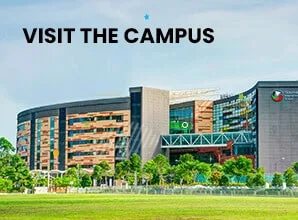
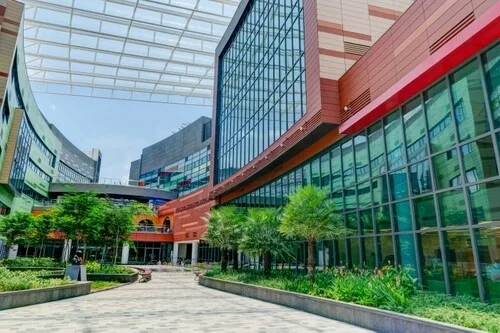
The GIIS SMART Campus in Singapore for IGCSE students specifically, supports the applied, project-based elements of subjects like Computer Science, Global Perspectives and the sciences — areas where hands-on facilities genuinely change what’s possible in a classroom.
Subjects Offered in the GIIS Cambridge IGCSE Programme
Subject choice is one of the most concrete ways to evaluate whether an IGCSE school will suit your child. Here’s what GIIS in Singapore currently offers.
Grade 9 subjects:
- 英語
- 数学
- Language 2 (French, Hindi, or Tamil)
- 情報通信技術(ICT)
- 体育
- グローバルな視点
- 科学(生物学、化学、物理学)
- 社会科 (SST)
Grade 10 subjects:
- 英語
- 数学
- 経済学
- 環境マネジメント
- ビジネス研究
- English and Hindi as a Second Language
- 外国語 フランス語
- タミル語GCE 'O'
- 文学 英語
- コンピューター・サイエンス
- 体育
- グローバルな視点
- Biology, Physics and Chemistry
Across both grades, English, Mathematics and Science remain the core subjects, with students able to choose from a wider spread depending on their interests and university direction.
Final Take: What This Means If You’re Comparing IGCSE Schools in Singapore
Choosing among IGCSE schools in Singapore usually comes down to three things: verified academic outcomes, curriculum depth and whether the school’s support structures (assessment systems, facilities, scholarships) are substantial enough to back up its claims. On each of these, GIIS in Singapore’s own published data gives you something concrete to evaluate — multi-year distinction rates, a 70-plus subject Cambridge framework, structured data-driven assessment through 7S and SPEDAS and a scholarship system that specifically recognises IGCSE achievement.
GIIS in Singapore operates as part of Global Indian International School, which has been running since 2002 and now spans 17 campuses globally — a scale that typically reflects sustained parent trust rather than short-term growth. The Singapore SMART Campus itself is registered with Singapore’s Committee for Private Education (CPE Registration No. 200912349N) and holds EduTrust certification, both markers worth checking for any school you’re considering, IGCSE or otherwise.
よくある質問
What is the Cambridge IGCSE?
It’s a globally recognised secondary school qualification developed by Cambridge Assessment International Education, offering a flexible curriculum backed by extensive resources and teacher training.
When are Cambridge IGCSE exams held and when will 2026 results be released?
Exams run in February (India only), May and October. Results follow in May, August and January respectively — so results from the May 2026 session are expected in August 2026 and the October 2026 session results in January 2027.
How long is the Cambridge IGCSE programme?
Two years, typically covering Grades 9 and 10 for students aged 14 to 16.
Which exam board runs Cambridge IGCSE?
Cambridge Assessment International Education (CAIE), a unit of Cambridge Assessment.
How many subjects can a student take?
Cambridge offers around 70 subjects in total. Students generally take between 5 and 14 subjects, with English, Mathematics and Science forming the compulsory core.
All programme details, results data, subject lists and admissions information referenced in this article are sourced from GIIS in Singapore’s official Cambridge IGCSE. For the most current fee structure and results updates, prospective families should confirm directly with the GIIS in Singapore admissions team.
チームGIIS
Team GIIS is a group of enthusiastic writers who bring the vibrant world of GIIS in Singapore to life through engaging blog posts. Dedicated to highlighting the school’s teaching methodology, innovative learning environment, and diverse curriculum options like IB, Cambridge and CBSE, they aim to connect with parents, educators and students, sharing insights and stories that inspire and inform the school community.