Building strong reading, writing, and number understanding in the early years helps children in every subject they’ll study later in life. These early skills form what we call foundational literacy and numeracy — the tools to understand lessons, solve problems, and think clearly.
These core skills are essential from the start of school and are crucial for parents choosing the right educational path in Ahmedabad.
Let’s break down what these skills include and why they are essential.
What is Foundational Literacy and Numeracy?
Literacy and numeracy are basic skills every child needs for learning.
- Foundational literacy means the ability to read with understanding and write clearly.
- Foundational numeracy includes recognising numbers, solving minor problems, and working with simple maths ideas.
Here’s a quick comparison to make it more straightforward:
| Area | Basic Level | Foundational Level |
| Reading | Knows the alphabet | Reads and understands short stories |
| Writing | Copies words | Writes simple, meaningful sentences |
| Numbers | Counts aloud | Solves basic maths problems confidently |
So, when children learn foundational numeracy, they are building more than just the ability to count. They are learning how numbers work, how to compare them, and how to identify patterns.
Why FLN is the Base of All Future Learning
Every subject in school depends on these early skills. If a child struggles to read, they will find it hard to follow science or social studies. If they aren’t comfortable with numbers, understanding charts or measurements can become confusing.
This is why schools and teachers pay close attention to FLN in education. It helps children move from learning to read to reading to understand new ideas. That change shapes how they learn as they grow.
Schools that follow the CBSE curriculum are expected to help children build these skills by the end of Grade 3. Enrolling your child in one of the best primary schools that supports these goals makes a big difference.
Benefits of a Strong Literacy and Numeracy Foundation
When children have strong foundational literacy and numeracy skills, they can accomplish much more than just read books or add numbers. Here’s how it helps them in school and life:
- They understand lessons faster and ask better questions
- Their learning in subjects like science and geography improves
- They feel more confident during classroom discussions
- There’s less need for extra tuition or extra pressure later
- They enjoy school more and stay more engaged
These outcomes matter not just for school marks, but for long-term success and independence.
What FLN Activities Look Like in Classrooms
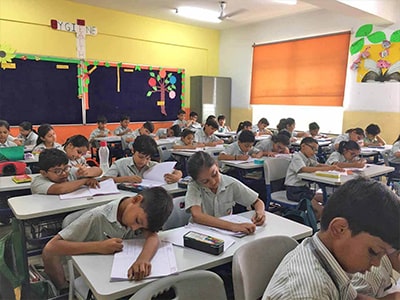
Foundational literacy and numeracy activities are designed to help children practise these skills in a fun and simple way.
Some common examples include:
- Group reading with classmates
- Matching words and pictures with flashcards
- Playing number games with counting or sorting
- Telling stories that include number-based questions
- Using counterfeit money to “buy” and “sell” items in class shops
Each FLN activity lets children learn by doing. In well-structured classrooms, such as those at a good preschool in Jagatpur, activities like these are part of the daily routine.
Supportive Home Environment Makes a Difference
What children learn at home plays a significant role in their development of literacy and numeracy skills. Parents don’t need special materials or training. Small, daily habits make a real difference.
Here are a few things parents can do:
- Read books or signs with your child
- Ask them to help count or sort stuff at home
- Talk about numbers when cooking or shopping
- Use everyday words in both English and your home language
- Let them try, make mistakes, and learn at their own pace
Children learn more effectively when schools and families work together to support them. With small steps at home, parents can give their child more confidence and a better understanding.
How the Right Schools Make FLN a Priority
When parents choose a school, they often consider the school’s exam results and facilities. However, it’s essential to understand how effectively the school establishes a strong foundation in literacy and numeracy from the outset.
Here’s what strong schools usually do:
- Track students’ progress in reading and maths regularly
- Train teachers to focus on early learning methods
- Use activities that match children’s learning levels
- Share learning updates with parents often
- Use precise language and build learning in both English and the child’s first language
Schools that focus on these early years practices provide students with a solid foundation. You can find such support at the best CBSE schools in your local area.
The Foundation Shapes the Future!
Foundational literacy and numeracy matter for every child’s future. These skills help them learn, think, and grow with confidence. When children build this foundation early, everything else becomes easier.
Parents in Ahmedabad should prioritise finding schools that teach these skills from the outset. FLN is not something extra—it’s at the centre of a good education.
Through well-planned foundational literacy and numeracy activities, support at home, and quality schools, children learn the skills they need for life. It’s one of the best things families can focus on for their child’s success.
 Ahmedabad Campus







![Global Montessori Programme [GMP]](https://globalindianschool.org/ahmedabad/wp-content/uploads/2023/09/l1.png)