The way higher education operates in India has undergone quite a significant change in the past few years. Students and colleges are no longer limited to just books, blackboards, and classroom lectures. The system is adapting to meet the evolving needs of a rapidly changing world. More than ever, students want flexible, job-ready learning, and institutions are trying to keep up.
In this blog, we’ll explore the most significant trends in education that are shaping how students in India learn today. These changes affect not only what students study but also how they learn and how they are supported in their well-being.
To gain a clearer understanding of this transformation, let’s examine the five most prominent trends currently shaping higher education in India.
Tops 5 Education Trends in Higher Education
Hybrid Learning Models Gain Traction
A major shift we’re seeing is the move toward hybrid learning. As a result, students can now;
- Attend some classes in person
- Complete other classes online
It’s becoming the new normal for many colleges.
Why students prefer it:
- They can save time and travel costs
- It allows them to work part-time or study from home
- It gives them more control over their schedules
That says a great deal about how hybrid learning is trending in education.
So, when you are taking admission to CBSE schools, find schools that provide such flexibility.
Integration of Artificial Intelligence in Education
Artificial intelligence has become more than just a fad. In higher education, it is becoming more and more common. Colleges are utilising AI tools to support instructors, aid students, and streamline administrative tasks.
Real-world uses:
- AI tutors that adjust to your learning pace
- Automated grading and feedback
- Tracking student performance over time
The AI in education market in India is forecasted to grow at a CAGR of 36.5% from 2025 to 2030, reaching USD 2,062.6 million (Grand View Research). These numbers clearly show that AI is not a passing trend.
This shift demonstrates how modern trends in education are shaping not only how we learn but also how colleges operate as a whole.
Micro-credentials and Short-Term Certifications
Degrees still matter, but an increasing number of students are opting for shorter courses that focus on specific skills. These are called microcredentials. Students use them to upskill or even reskill when they want to shift careers.
These certifications are typically offered online and are more affordable than full degrees. They’re great for learning software, business skills, data analysis, and many other subjects. Many tech and finance companies now hire based on specific skills rather than just degrees.
A recent survey found that 95% of higher education leaders in India agree that micro-credentials prepare students better for the workforce. This illustrates how this has become one of the significant trends in education in recent years.
Seeking a solid foundation for younger learners? Discover the best pre-schools in Ahmedabad that promote strong early development.
Focus on Student Mental Health and Well-being
In today’s education in India, colleges are finally paying more attention to student mental health. This was a long time coming. With high academic pressure, financial challenges, and personal stress, many students continue to face emotional and educational difficulties.
During the pandemic, things got worse. Remote learning made many students feel isolated. Today, we see more universities offering counselling, workshops, and mental health days.
According to Science Direct, 69.9% of young adults in Indian higher education showed moderate to high levels of anxiety. That number is too high to ignore. Addressing this issue is now a key part of the current education system.
The importance of mental health services is demonstrated by the fact that both parents and students are increasingly inquiring about them when selecting a college.
Higher Education Enrollments Are Growing
More Indian students than ever before are enrolling in higher education despite the difficulties. In 2023, nearly 4.33 crore students were part of India’s college and university system (Press Information Bureau).
This growth is attributed to escalating awareness of the importance of education, the creation of new institutions in rural regions, and government initiatives like NEP 2020—which emphasise quality and accessibility.
This rise is not just a number—it shows the shift in mindset among Indian families and students. People now see higher education as not just important but essential. This growth is another indication of how educational trends are evolving.
For a comprehensive academic journey, many parents seek out the best schools in Ahmedabad that offer a potent blend of academics and values.
Role of Parents and Mentors in the New Landscape
In this rapidly changing educational environment, the role of parents, mentors, and support networks is more crucial than ever. Students require assistance in making decisions that support their long-term objectives in addition to selecting a course or college.
With so many new options and learning methods, having someone to talk to can make a significant difference. Parents and mentors should stay informed, stay involved, and be open to change just as much as the students themselves.
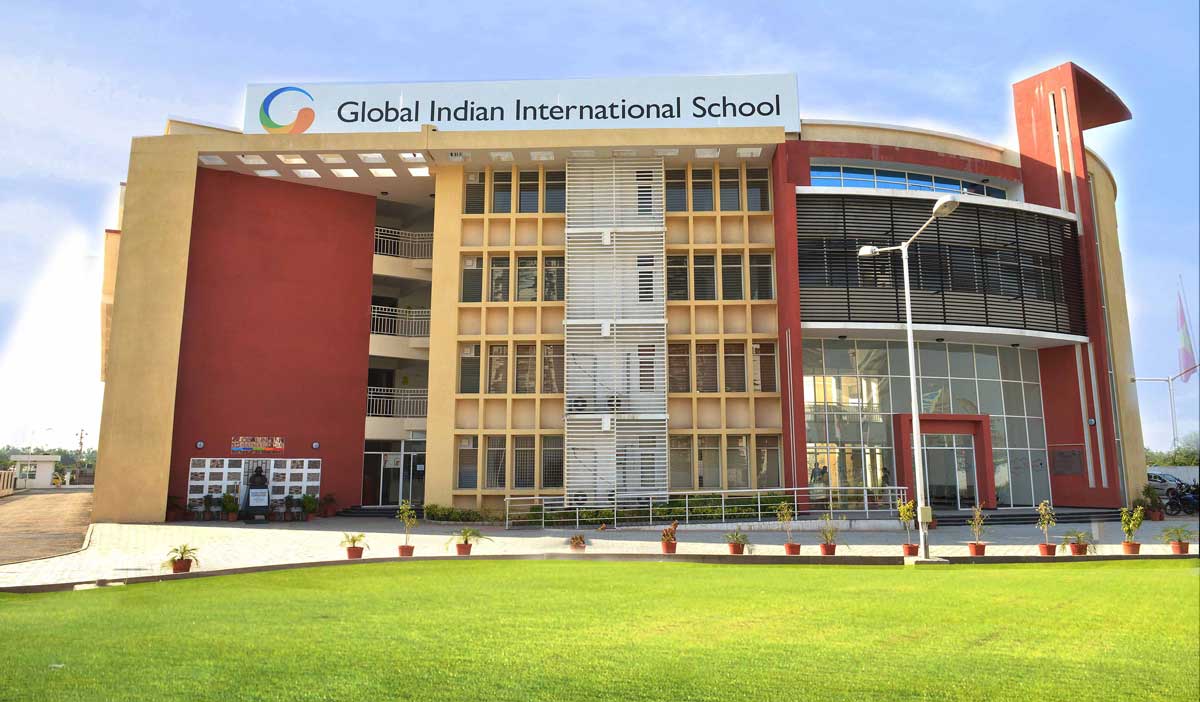 Ahmedabad Campus


![Global Montessori Programme [GMP]](https://globalindianschool.org/ahmedabad/wp-content/uploads/2023/09/l1.png)