Key Highlights
- Education is evolving towards a more flexible, student-focused approach, shaping future trends.
- Schools are teaching students about the world and how to work with others from different places.
- Personalised learning helps students learn at their own speed and understand better.
- Technology and blended learning are making classrooms more interactive, accessible, and engaging.
- Social and emotional learning supports students in developing confidence, communication, and real-life skills.
Education today is not what it used to be, and it is still evolving. Classrooms are changing, teaching methods are adapting, and the way students learn is becoming more flexible and practical.
Along with strong academic foundations, schools are now placing greater emphasis on helping students think independently, solve real-world problems, and develop essential life skills.
At the same time, learning is becoming more personalised. Students are encouraged to learn at their own pace, explore their interests, and stay curious. Technology, global exposure, and new teaching approaches are all playing a role in shaping this shift.
These changes clearly show how the future of education trends are moving towards a more balanced and meaningful learning experience.
In this blog, we will look at the key trends shaping the future of schooling and how they prepare students for what lies ahead.
Emphasis on Global Citizenship
Today’s students are growing up in a connected world. What happens in one part of the world can affect many others. This is why schools are placing greater focus on building global awareness and cultural understanding.
This idea of global citizenship goes beyond textbooks. It is about helping students become more aware of the world around them and encouraging them to think beyond their immediate environment.
International schools are actively integrating this approach into everyday learning. Students are exposed to global topics, participate in multicultural activities, and often collaborate with peers from different backgrounds. This helps them develop a broader outlook from an early age.
According to global education studies, skills like cultural awareness, communication, and collaboration are considered essential for future careers. Employers today value individuals who can work effectively in diverse environments.
This focus reflects how the future of international schools is evolving, not just to build academic knowledge, but to shape students into globally aware and socially responsible individuals.
The Rise of Personalised Learning
In many classrooms today, learning is becoming more flexible and student-focused. Instead of following the same pace for everyone, schools are gradually adapting teaching methods to suit individual learning needs.
This shift is an important part of how the future of schooling systems is evolving, moving towards learning that supports each student’s strengths, pace, and interests.
What this looks like in practice:
Students who need more time to understand a topic are given additional support through revision, practice, or guided learning. At the same time, students who quickly understand concepts are encouraged to explore more through advanced tasks or independent projects.
Teachers also rely on regular assessments, classroom participation, and digital tools to understand how each student is progressing. This helps them plan lessons more effectively and ensure that learning remains balanced for everyone in the class.
In some cases, students are even given choices in how they learn through videos, activities, or hands-on tasks, making the experience more engaging and meaningful.
The impact on students:
When learning is personalised, students tend to feel more confident and less pressured. They are able to focus on truly understanding concepts rather than keeping up with a fixed pace.
It also encourages curiosity, as students are given the space to explore topics in ways that suit them best.
Personalised learning reflects a broader shift in education, where success is not measured by how quickly students learn but by how well they understand and apply what they learn.
Increased Integration of Technology
Technology is now part of everyday learning, not separate from it. It is shaping how lessons are taught, understood, and practised in classrooms.
Here’s how this shift is visible:
- Classroom Learning
Lessons are supported with videos, simulations, and digital presentations. This helps students understand concepts more clearly and stay engaged.
- Assignments and Assessments
Students complete and submit work online, while teachers can review progress quickly and give timely feedback.
- Access to Learning Resources
Students can revisit lessons, explore additional material, and continue learning beyond school hours.
- A Growing Trend
Across the world, most schools now use digital tools regularly in teaching, showing how strongly technology is shaping modern education.
This reflects the future of international schools, where learning is becoming more connected, flexible, and aligned with real-world needs.
Focus on Social and Emotional Learning (SEL)
Pause and think: Is academic success alone enough for a child to succeed in life?
Probably not. Students also need the ability to understand emotions, build healthy relationships, and respond well to challenges.
As part of the evolving future of education trends, schools are placing greater importance on emotional well-being alongside academics.
Social and Emotional Learning (SEL) helps students understand their feelings, connect with others, and make good choices. It supports students’ behaviour, communication, and responses to challenges.
Why is this becoming important?
Research in education highlights that students with strong social and emotional skills tend to show better classroom behaviour, improved focus, and stronger overall performance.
Some global findings also suggest that SEL programmes can improve student development outcomes by around 10–15%, particularly in areas such as engagement and behaviour.
What students develop through SEL:
- Better self-awareness and confidence
- Stronger communication and teamwork skills
- Ability to manage stress and challenges
- Greater empathy and understanding of others
This change shows that education is becoming more balanced, emphasizing both school success and real-life skills.
Shift Towards Competency-Based Education
In many classrooms, there is a gradual shift in how student progress is measured. Instead of focusing only on marks, schools are paying more attention to what students actually understand and can apply.
This approach, often called competency-based learning, focuses on mastery. Students move forward only when they clearly understand a concept, rather than just completing it.
To understand this better, here’s a simple difference:
| Traditional Approach | Competency-Based Approach |
| Focus on marks and grades | Focus on understanding and skills |
| Fixed pace for all students | Flexible pace based on learning |
| Completion of syllabus is priority | Mastery of concepts is priority |
This shift is becoming an important part of the future of schooling systems, where learning is more meaningful and practical.
In such classrooms, students are encouraged to apply what they learn through projects, real-life examples, and problem-solving activities. This helps them connect concepts with real-world situations.
Over time, this approach builds confidence. Students are not just preparing for exams; they are developing skills that stay with them beyond the classroom.
Adoption of Blended Learning Models
Learning today is no longer limited to a single format. Classrooms are now combining traditional teaching with digital methods to create a more flexible learning experience.
This is known as blended learning.
Instead of choosing between online and offline learning, students benefit from both. They attend classroom sessions for direct interaction while also using online platforms for revision, practice, and additional support.
This balance is becoming a key part of the future of international schools, where flexibility and accessibility are equally important.
One of the biggest advantages of blended learning is continuity. Students can revisit lessons anytime, practise independently, and stay connected to their learning even outside school hours.
It also supports different learning styles. Some students learn better through discussions, while others prefer videos or online content.
As a result, learning becomes easier, more flexible, and student-friendly, helping students stay engaged without feeling limited to one method.
Sustainability in Education
Sustainability in education is no longer limited to theory. It is becoming a part of how students learn and act every day.
What students experience today:
- Climate change and environmental awareness
- Responsible use of resources
- Waste reduction and recycling practices
- Real-life eco projects and school initiatives
How does this change learning?
Students are not just understanding environmental issues; they are participating in solutions. Simple activities like school campaigns or eco-projects help them connect knowledge with action.
This reflects the future of education trends, where learning goes beyond textbooks and encourages responsible thinking from an early age.
Global Education Partnerships
As education becomes more connected, schools are building partnerships across countries to provide students with a broader learning experience.
Here’s how these global collaborations are shaping learning:
| Type of Collaboration | What It Means for Students |
| Virtual classroom exchanges | Students interact with peers from other countries in real time |
| Joint school projects | Work together on topics, sharing ideas and perspectives |
| International competitions | Exposure to global standards and healthy competition |
| Cultural exchange programmes | Understanding traditions, values, and lifestyles of other cultures |
These experiences go beyond academics. Students learn how to communicate across cultures, adapt to different viewpoints, and work as part of a global team.
This is becoming an important part of the future of international schools, where learning is not limited to one classroom but is connected across the world.
Conclusion: Shaping Future-Ready Learners
Education is moving toward learning that is more meaningful, flexible, and connected to the real world. From personalised learning and technology integration to global exposure and emotional development, students today are being prepared for much more than just academics.
These changes are shaping a more balanced approach in which knowledge, skills, and mindset all play important roles in a student’s growth. As the future of schooling systems keeps evolving, the focus is clearly on helping students become confident, adaptable, and prepared for new challenges.
Institutions like Global Indian International School Ahmedabad are aligning with these evolving trends by creating learning environments that support both academic excellence and overall development. Recognised as one of the leading secondary schools in Ahmedabad, the school demonstrates how modern education can prepare students for a dynamic and ever-changing world.
The future of education is not just about what students learn but how well they are prepared for what comes next.
FAQs
- What are the future trends in education?
Future education trends include personalised learning, technology integration, social and emotional learning, blended learning, and global collaboration in classrooms.
- Why is personalised learning important for students?
Personalized learning helps students learn at their own speed, understand concepts more clearly, and gain confidence without feeling pressured.
- How is technology shaping the future of education?
Technology is making learning easier, more available, and more flexible with digital tools, online platforms, and real-time feedback.
- How are future schooling systems changing?
The future of schools is more flexible and students-centred, focusing on skills, real-world learning, and personal progress instead of just exams.
- How are secondary schools in Ahmedabad preparing students for the future?
Many secondary schools in Ahmedabad are focusing on skill-based learning, digital education, and overall development to prepare students for higher education and careers.
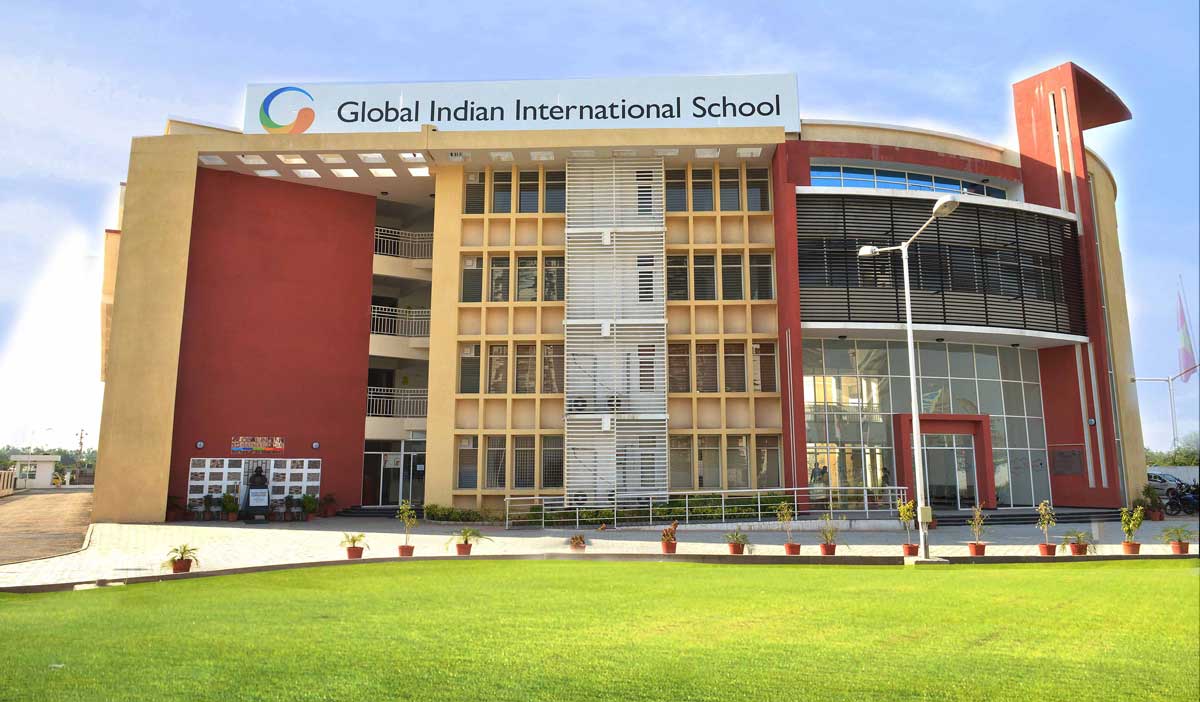 Ahmedabad Campus


![Global Montessori Programme [GMP]](https://globalindianschool.org/ahmedabad/wp-content/uploads/2023/09/l1.png)