Key Highlights
- Students become more creative when they think together, not alone.
- Structured group work improves both imagination and problem-solving.
- Clear roles prevent imbalance in teams.
- Safe discussion spaces encourage bold ideas.
- These collaborative learning tips double as powerful study tips.
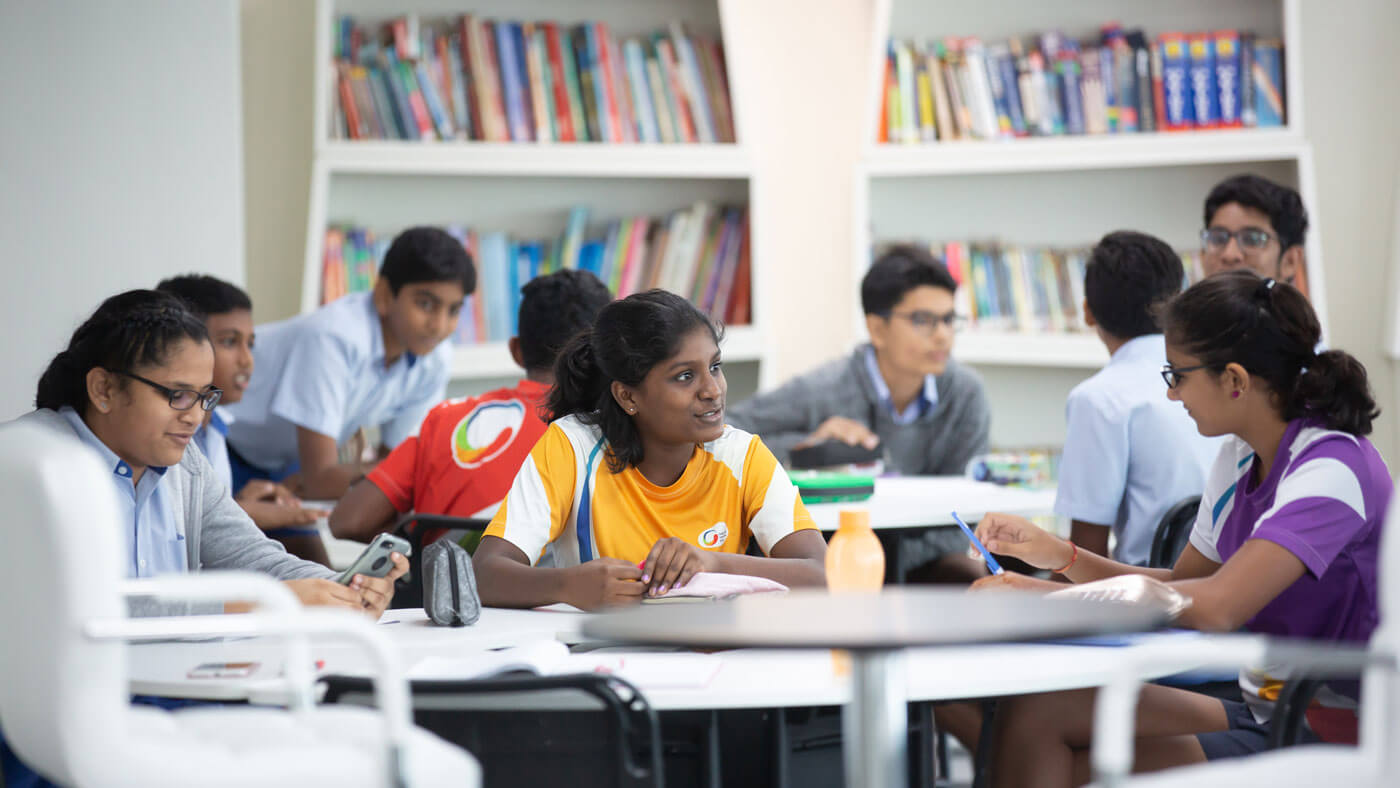
Collaborative learning simply means students learning together. They share ideas. They solve problems as a group. They build understanding through discussion.
Creativity, in school, is not just about art or music. It is about thinking differently. It is about solving problems in new ways. It is about asking better questions.
Psychologist Lev Vygotsky believed that learning is social. He argued that students grow when they interact with others. Ideas improve when they are tested in conversation.
Think about it.
When a child works alone, they only have one point of view.
When they work in a group, they are exposed to many.
That is where creativity begins.
Today’s careers demand teamwork. Engineers collaborate. Doctors work in teams. Designers brainstorm together. So strong collaborative skills are not just helpful; they are essential.
In this guide, we will explore practical learning tips and structured study tips that help teachers and parents guide students to use collaboration to boost creativity without chaos. For families exploring quality schools, including those considering mid -term school admission in Ahmedabad, understanding how institutions encourage collaborative learning can be an important factor in choosing the right academic environment.
The Role of Collaborative Learning in Creativity
Why does working together improve creative thinking?
When ideas come together, creativity grows.
When students talk about a subject, they make each other think. They hear things from different points of view. They tell you why they think that way. That process helps you understand more.
Albert Bandura, a psychologist, came up with the idea of social learning theory. He showed that people learn by watching other people. Students do more than just share answers in a group. They think the same way.
That is powerful.
A Simple Classroom Illustration
Picture a history class for ninth graders looking into what caused a revolution. One student is interested in economic issues. Another one points out political errors. A third one sees that there is social inequality. Each student sees one side of the picture. They see the whole picture together. That layered understanding helps people think creatively.
What happens if collaboration is ignored?
When learning is always done solely:
- Ideas start to sound the same.
- Students are afraid to share strange ideas.
- Less risk-taking in creative ways.
- Working together makes room for exploration.
But it needs to be organised. Without direction, group work turns into noise instead of progress.
What happens if collaboration is ignored?
When learning is always done solely:
- Ideas start to sound the same.
- Students are afraid to share strange ideas.
- Less risk-taking in creative ways.
Working together makes room for exploration.
But it needs to be organised. Without direction, group work turns into noise instead of progress.
Tip #1 – Encourage Group Problem-Solving Activities
Why does problem-solving boost creativity?
Open-ended problems demand multiple ideas. They cannot be solved with one correct answer.
Educational thinker John Dewey believed students learn best by doing. He argued that education should involve real problem-solving, not passive listening.
Group problem-solving reflects this idea.
Example
Students in a science class are asked the following:
“How can we cut down on the plastic waste in our school?”
Groups come up with ideas for how to fix things. One suggests the idea of reusable containers. Another makes posters to raise awareness. Another suggests a system of rewards.
The solution becomes stronger when these ideas come together.
How teachers can structure it
- Present real-world challenges.
- Assign roles (researcher, presenter, organiser).
- Set clear deadlines.
- Ask groups to justify their ideas.
A Simple Checklist
- Is the problem open-ended?
- Does every member have a role?
- Is discussion encouraged?
- Is reflection included?
These are practical study tips for making group work meaningful.
Tip #2 – Foster Open Communication and Active Listening
Why does listening matter for creativity?
Students can’t build on ideas they don’t hear. Students often talk over each other, which makes group work fail. Or worse, some people don’t say anything.
Carl Rogers, a psychologist, stressed the importance of psychological safety in learning. Students share freely when they feel safe.
That safety is important for creativity.
Useful strategies for the classroom
- Make rules for the discussion at the beginning.
- Tell students to rephrase what they read before answering.
- Use phrases like “I would like to add to that idea …”
What can parents do to help?
When you’re at home, ask your kids open-ended questions:
- “What did your group talk about today?”
- “Did anyone come up with an idea that surprised you?”
These conversations build reflection skills.
What happens if this is ignored?
Dominant voices take over.
Quieter students withdraw.
Creative potential shrinks.
Open communication is not optional. It is foundational.
Tip #3 – Use Diverse Grouping for Broader Perspectives
Why does diversity increase innovation?
When everyone thinks the same way, ideas stay limited.
Diversity includes:
- Different strengths
- Different interests
- Different cultural backgrounds
- Different learning styles
Creativity researcher Teresa Amabile found that varied expertise within teams increases innovation.
Example in the Classroom
For a design project:
One student is very good at drawing.
Another one is strong at maths.
The other one enjoys public speaking.
They work together to make a balanced and creative result.
How to Make Groups Work Better
- Avoid grouping only by friendship.
- Change teams often.
- Mix abilities on purpose.
A Balanced Note
Different groups may not agree as much.
That’s not a problem. It’s part of growing creatively. The most important thing is to teach how to talk to each other with respect.
These collaborative learning tips help students become more creative and emotionally smart.
Tip #4 – Provide Creative Freedom Within Structure
How much freedom is helpful?
Too much freedom causes confusion.
Too much control blocks imagination.
The balance lies in clear goals with flexible methods.
For example:
Students have to read a novel for an English project. But they can show their analysis like this:
- A podcast
- A debate
- A visual storyboard
- A written essay
The goal is set. The method is adaptable.
That combination makes students more interested.
Psychologist Benjamin Bloom pointed out that higher-level thinking includes both creating and analysing. Students can reach those levels when they have creative freedom.
A Simple Framework
Goal → Clear
Method → Flexible
Deadline → Defined
Assessment → Transparent
When structure supports exploration, creativity thrives.
Tip #5 – Use Brainstorming Sessions to Generate Ideas
Why does brainstorming work so well?
Brainstorming removes pressure.
When students know their ideas will not be judged immediately, they think more freely. That freedom increases idea flow.
Advertising executive Alex Osborn, who formalised brainstorming methods, suggested one key rule: defer judgement. When criticism pauses, creativity expands.
How to run a good brainstorming session
- Set one clear question.
- Allow all ideas, even unusual ones.
- Do not criticise during idea sharing.
- Write everything down.
Only after ideas are listed should the group evaluate them.
Example
In a geography lesson, students brainstorm ways to reduce air pollution in their city. Some ideas are simple. Others seem unrealistic at first. But when combined, they lead to more balanced and practical solutions.
Brainstorming is one of the simplest learning tips teachers can use to unlock creativity.
Tip #6 – Incorporate Technology for Collaborative Projects
Does technology help or distract?
Technology can do both things. The difference is in the way they are built.
Students can work on the same document together. Digital boards let people share ideas without talking. Tools for managing projects help you keep track of progress.
When used correctly, these tools help people work together.
Real-life examples
- Writing tasks that were done together using online documents.
- Collaborative presentations.
- Group research boards.
- Video storytelling projects.
Things teachers should look out for
- Clear digital roles.
- Time Limits.
- Defined learning goals.
Technology should help us think. It shouldn’t take the place of talking.
When used correctly, it strengthens modern study tips for teamwork.
Tip #7 – Assign Rotating Leadership Roles
Why rotate leadership?
When the same student is in charge every time, other students lose interest. Creativity gets smaller.
Every student gets a chance to lead the discussion by rotating leadership.
Some examples of leadership roles are:
- Discussion facilitator
- Timekeeper
- Research organiser
- Presenter
For example
One student is in charge of research today in a science group. Next week, another student will lead the presentation planning.
This makes them more confident and empathetic.
Students know what it takes to lead a group. That understanding makes it easier to work together.
Tip #8 – Set Clear Goals and Milestones for Group Work
Why are goals important in creative work?
Creativity without direction leads to confusion. Clear goals keep collaboration focused.
For example:
- Week 1: Research complete.
- Week 2: Draft idea approved.
- Week 3: Final presentation prepared.
Milestones prevent last-minute stress.
Simple structure for teachers
- Define the final outcome clearly.
- Break work into smaller steps.
- Review progress weekly.
Students remain motivated when they see progress.
These structured learning tips make group projects productive rather than chaotic.
Tip #9 – Encourage Reflection and Feedback
Why does reflection improve creativity?
Creativity improves through refinement.
Students need to ask:
- What went well?
- What could be better?
- Did everyone do their part?
Donald Schon, an educational researcher, said that reflective practice is learning from what you do. Mistakes happen again and again if you don’t reflect on them.
Ways to reflect on things in a useful way
- Brief group debriefs.
- Feedback from peers that is anonymous.
- Self-reflection in writing.
Reflection builds maturity.
It turns collaboration into continuous growth. It makes collaboration a way to keep growing.
Tip #10 – Celebrate Group Achievements
Why does celebration matter?
Recognition reinforces effort.
When creative outcomes are acknowledged, students feel valued.
Celebration can be simple:
- Displaying projects on classroom boards.
- Sharing work during assemblies.
- Verbal appreciation.
Recognition motivates students to participate fully next time.
It also builds group pride.
Common Challenges in Collaborative Learning
Even well-planned collaboration has obstacles.
Unequal effort
Solution: Assign clear roles and rotate them.
Dominant personalities
Solution: Use structured speaking turns.
Conflict within groups
Solution: Establish respectful discussion norms early.
Difficulty assessing fairly
Solution: Combine group marks with individual evaluation.
Honest discussion of these challenges strengthens trust. Collaboration works best when expectations are clear.
Building Creative Thinkers Through Meaningful Collaboration
Collaborative learning is not simply a group work. It is a structured approach that strengthens creativity, communication, and confidence.
The ten strategies discussed here offer practical learning and study tips for students, with guidance from teachers and parents.
When collaboration is guided well:
- Ideas improve.
- Confidence grows.
- Creative thinking expands.
At Global Indian International School, well-structured environments for collaboration allow students to share their ideas, ask questions, and, most importantly, build together. Through orderly teamwork and reflective dialogue, students are led to develop not only academic depth but also creative confidence.
Since innovation and teamwork are highly valued in today’s world, being able to work together and communicate effectively with others cannot be simply regarded as a matter of choice. They are, in fact, fundamental.
When students learn to think together, they learn to think better.
Frequently Asked Questions
- Does group workactually improveacademic results?
Yes, but only if it’s done right. When we work together, it’s easier to talk to each other, understand each other, and solve problems. But it needs to have clear goals and people who are responsible for them.
- My child is shy. Will collaborative learning make them uncomfortable?
Not necessarily. When there are clear rules for talking and teachers who are there to help, shy students often become more confident over time. Structured turn-taking makes sure that everyone can safely take part.
- What can parents do to support collaborative learning at home?
Encourage discussion. Ask questions that aren’t too specific. Let kids talk about what their group is up to. Not just results, but also hard work and working together.
- Can collaborative learning reduce individual performance?
Only if it is poorly managed. When roles and expectations are clear, collaboration often improves individual understanding rather than weakening it.
- Is online collaboration as effective as face-to-face discussion?
It can be, if guided carefully. Digital tools support teamwork, but they should encourage interaction, not passive sharing.
 Ahmedabad Campus








![Global Montessori Programme [GMP]](https://globalindianschool.org/ahmedabad/wp-content/uploads/2023/09/l1.png)