 Start your child’s journey to success.
 As the students’ attention spans vary depending on the interest they have in a topic, capturing and retaining their attention can be significantly challenging.
Traditional long lectures and dense textbooks focus on heavy content and light engagement that can overwhelm students and hinder long-term retention.
What practical steps can teachers take to boost students’ retention and learning?
Classroom strategies like microlearning offer a promising solution.
Tools like real-time collaboration and bite-sized modules are rapidly becoming the standard as students seek knowledge in shorter, more interactive bursts.
At Global Indian International School (GIIS), one of the best international schools in Bangalore, India, integrates microlearning in education to enhance learning outcomes and ensure our students retain it.
What is Microlearning?
Microlearning is an educational approach that breaks down information into small, focused, digestible pieces, making learning engaging and effective. The method is adaptable in the modern teaching method as learners seek quick, impactful learning moments.
Moreover, these short lessons make the lessons more engaging, and students are more likely to pay full attention for a few minutes than for a prolonged period.

Why Microlearning Helps Retention
Here’s how it helps students to increase retention:
- Focused Attention – Breaking complex lessons into short and focused lessons is more engaging, which helps students concentrate on one topic and leads to deeper comprehension.
- Promotes Active Listening – Microlearning formats incorporate interactive elements like quizzes, polls, and quick activities that require students to engage with the content actively.
- Offers Flexibility and Accessibility – Microlearning is a modern educational approach that allows students to learn at their own pace on their own schedule. Moreover, its adaptability to various learning styles and preferences makes it a valuable tool in modern education.
- Personalised Learning Experience – It tailors the learning experiences to individual preferences and styles, resulting in personalised learning experiences. Choosing content that fits their interests and learning styles gives students more control and a better learning experience.
- Reduce Learning Fatigue – It delivers learning in short, focused bursts that help students stay engaged and avoid mental exhaustion.
Practical Microlearning Techniques for Your Classroom
Implementing microlearning in education doesn’t require a complete overhaul of your curriculum. Here are some effective classroom teaching strategies that incorporate microlearning:
- Short Explainer Videos: Create or use brief (1-5 minute) videos that explain a single concept or process. These can be used as pre-class assignments, during class for quick explanations, or as review tools.
- Daily “Knowledge Nuggets”: Start or end a class with a quick 2-minute review of a key concept, a “fact of the day,” or a challenging question.
- Interactive Quizzes & Polls: Integrate short, single-concept quizzes or polls after introducing a new idea to check understanding and reinforce learning immediately.
- Digital Flashcards: Utilise apps or online platforms that students can use for quick review and self-testing of vocabulary, formulas, or key definitions.
- Infographics and Visual Summaries: Present complex information in visually appealing infographics that condense data into easily digestible visual chunks.
- Short Audio Clips/Podcasts: For specific subjects, quick audio explanations or short podcast snippets can be a great way to deliver content on the go.
- “Exit Tickets” with a Single Question: At the end of a lesson, ask students to answer one specific question related to the core concept taught that day.
- Concept Mapping: Have students create small concept maps or mind maps for a single topic, visually organising information in a brief format.
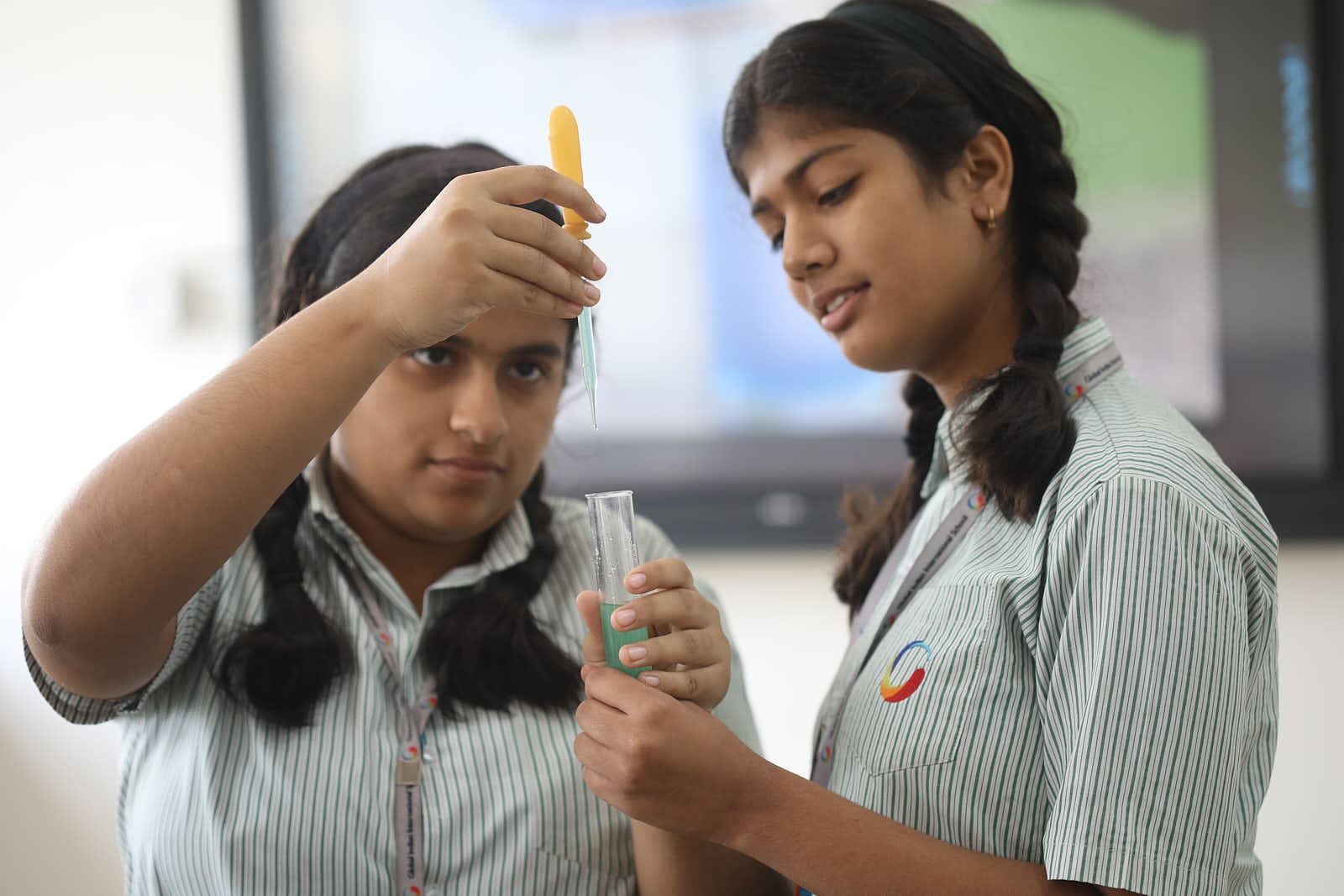
- Quick Demonstrations: Instead of lengthy explanations, use short, focused demonstrations to illustrate a principle or process.
- Gamified Mini-Challenges: Introduce short, game-like challenges that test understanding of a specific concept, with immediate feedback and small rewards.
Microlearning at GIIS Bangalore
At GIIS Bangalore, recognised among the best schools in South Bangalore CBSE, we are committed to providing a dynamic and unique learning experience.
Whether through digital platforms or in-class activities, our educators use modern teaching methods like micro-learning to provide a personalised learning experience that caters to students’ learning styles.
Our approach embraces innovative classroom teaching strategies like microlearning to ensure our students can grasp complex concepts with ease and retain them for a long time.
Conclusion
To make education work better, we need to keep more students in school. Teachers can transform how students interact with their lessons. Instead of just taking in information, students can get more involved and gain a deeper grasp of the subject. This happens when teachers use bite-sized learning methods.
Moreover, microlearning allows learners to access content whenever and wherever they need, which proves it to be more effective in many aspects compared to traditional methods.
At GIIS Bangalore, one of the good CBSE schools in Marathalli, provides students with a unique learning experience, empowering students to truly master subjects, fostering a love for continuous learning, and building a solid foundation for their academic and future success.
 Whitefield Campus
 Bannerghatta Campus