Picture this: You’re sipping your morning coffee, scrolling through school websites, and you realise the world of education is changing faster than ever. In 2025, over 24,000 schools in India follow the CBSE curriculum, serving millions of students. At the same time, more than 700 schools in India now offer the Cambridge IGCSE, with a 12% rise in IGCSE entries just this year. Globally, Cambridge International reaches nearly two million students across 160 countries, and the international school market in India is booming, now the second largest in the world.
But what does this mean for your child? Should you choose the tried-and-tested CBSE, or is the globally recognised Cambridge IGCSE the better fit? At GIIS Bangalore, you have both options under one roof, and the choice you make could shape your child’s future in ways you might not expect.
Let’s break down the CBSE vs IGCSE debate, hard data, and a parent-to-parent conversation.
The Core: What Sets CBSE and Cambridge IGCSE Apart?
Curriculum Structure and Flexibility
- CBSE is structured, standardised, and focuses on core subjects like Science and Mathematics. It’s the backbone for students aiming for Indian competitive exams such as JEE and NEET. The subject choices are fixed, and the learning path is clear.
- Cambridge IGCSE is all about flexibility. Students can choose from over 70 subjects, tailoring their education to their interests and strengths. The curriculum is designed to nurture critical thinking, creativity, and global citizenship.
| Feature | CBSE Curriculum | Cambridge (IGCSE) Curriculum |
| Structure | Standardised, fixed subjects | Flexible, wide subject choices |
| Learning Approach | Teacher-led, exam-focused | Student-centric, inquiry-based |
| Assessment | Summative, board exams | Continuous, application-based |
| Recognition | National (India) | International (160+ countries) |
| Strengths | Core academics, affordability | Critical thinking, global exposure |
| Best For | Indian competitive exams, local study | Study abroad, holistic development |
Learning Approach: How Will Your Child Learn?
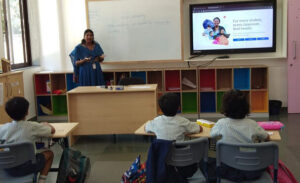
CBSE classrooms are often teacher-led, with a focus on content delivery and exam preparation. The system rewards discipline and strong memory skills. Many CBSE students excel in national Olympiads and competitive exams, and the curriculum is affordable and accessible.
Cambridge IGCSE, on the other hand, is student-centric. It encourages inquiry, research, and real-world application. Assessments include projects, practicals, and coursework, not just final exams. This approach helps students develop 21st-century skills like problem-solving, communication, and adaptability, skills that are in high demand globally.
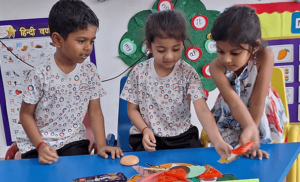
At GIIS, this approach begins early through our montessori kindergarten curriculum, where young learners explore concepts through play, curiosity, and creativity. It sets the stage for lifelong learning and builds a strong foundation for whichever academic path parents choose later.
Assessment: How Is Success Measured?
- CBSE relies on periodic and final board exams. Marks matter, and the pressure can be intense, but it prepares students well for the rigour of Indian entrance tests.
- Cambridge IGCSE uses a mix of coursework, projects, and written exams. The focus is on understanding, analysis, and the ability to apply knowledge. This reduces exam stress and gives a more rounded picture of your child’s abilities.
Global Recognition and University Pathways
Here’s where the CBSE vs Cambridge board question gets interesting. CBSE is highly respected in India and is the gold standard for Indian university admissions. However, for international universities, CBSE students may need to take extra standardised tests like the SAT or IELTS.
Cambridge IGCSE is recognised by universities in over 160 countries. Over 90% of Cambridge International A Level students receive offers from their top five university choices in the UK, including Oxford and Cambridge. In the US, Cambridge students are accepted at all Ivy League universities, often with college credits for A-Level results.
Skill Development and Future Careers
Let’s talk about the future. The world is changing, and employers are looking for more than just good grades. They want critical thinkers, problem solvers, and global citizens.
- CBSE gives a strong foundation in academics, especially for careers in engineering, medicine, and government services in India. But there’s growing concern that students may need extra training in soft skills and adaptability for modern workplaces.
- Cambridge IGCSE is designed to build those very skills. Students learn to work in teams, communicate effectively, and tackle real-world problems. This makes them attractive to employers and universities worldwide.
What Are Parents in Bangalore Choosing?
In Bangalore, the trend is clear. Urban, globally-minded families are increasingly opting for international curricula like Cambridge IGCSE. The number of international schools in India has grown by 14% in the last five years, with student enrolment surging by 40%. Yet, CBSE remains the top choice for families focused on Indian higher education and competitive exams.
| Criteria | International Curricula (Cambridge/IB) | National Curricula (CBSE) |
| Global Recognition | High | Moderate |
| Skill Development | Emphasised (21st-century skills) | Focus on academics |
| Assessment Methods | Coursework + Exams | Primarily exams |
| Affordability | Expensive | More affordable |
| University Pathways | Global | Indian (and some global) |
| Parent Demographic | Affluent, globally-minded | Middle-class, traditional |
| Growth Trend | Rapidly increasing | Stable |
The Big Question: IGCSE vs CBSE, which is better?
There’s no one-size-fits-all answer. If your child dreams of studying abroad, exploring diverse subjects, and building global skills, Cambridge IGCSE is a fantastic choice. If your family values a structured, affordable education with a focus on Indian universities and competitive exams, CBSE is the way to go.
For parents starting their school search early, GIIS Bangalore also offers pre nursery admission in Bangalore, ensuring that even the youngest learners begin their educational journey in a nurturing, globally aligned environment.
The Final Word: Your Child, Your Choice
Choosing between CBSE and Cambridge IGCSE is a big decision, but it’s also an exciting one. At GIIS Bangalore, you have the unique advantage of both options, supported by our 9GEMS holistic framework and a tech-savvy environment.
If you’re still wondering about the difference between CBSE and IGCSE, think about your child’s strengths, interests, and future goals. Talk to our counsellors, visit our campuses, and see for yourself how we nurture every child’s potential.
Ready to take the next step? Reach out to us at GIIS Bangalore, and let’s shape your child’s future together.
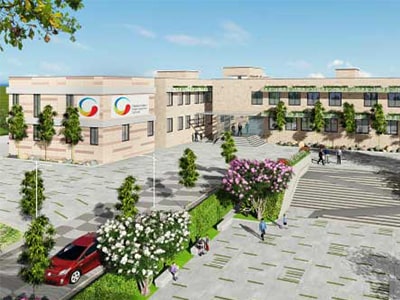
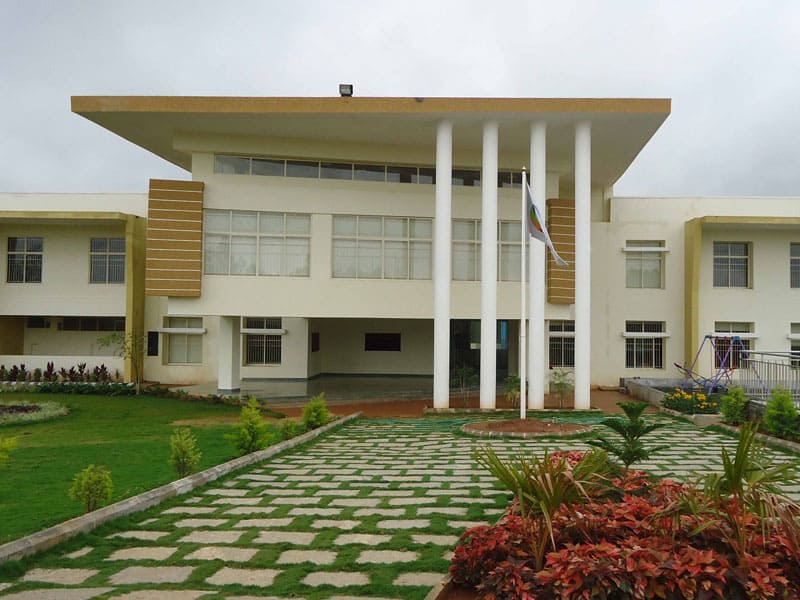 Whitefield Campus
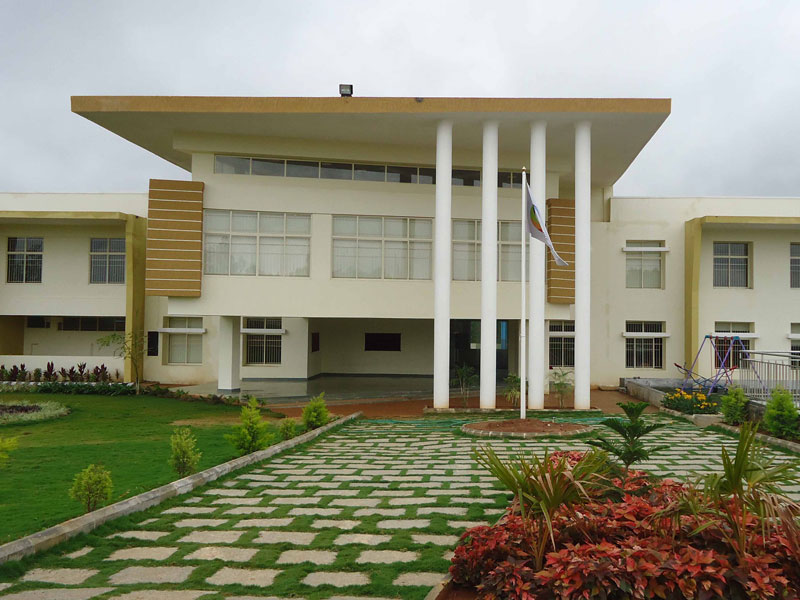
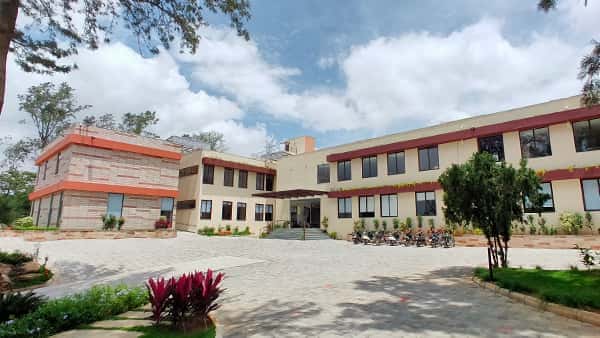 Bannerghatta Campus