 Start your child’s journey to success.
 Globalisation and the age of the internet have made the world a smaller place,making real-time communication easier across continents. With millions of individuals falling under the group of employable population worldwide, many business organisations have expanded their boundaries for hiring talents from across the globe.
With education and employment opportunities expanding across borders, it is vital for students to be fluent in a global language. English is one such language that has been a thread that binds people worldwide when it comes to communication. In this article, we understand the role of language and how English as a language has been a vital component in connecting the world in this age of globalisation! We also look at a few challenges of learning the language and how top schools in Bangalore are helping students become fluent in this global language!!
What is the Role of English in Global Communication?
- English has been a global language for the past two centuries and is a crucial factor in global communication.
- Its widespread influence has impacted millions of global citizens, making it an effective and efficient tool for communication in today’s globalised world.
- The popularity of English internationally is largely due to the influence of the United Kingdom and the United States on global economics.
- There are approximately 1.5 to 2 billion English speakers worldwide, highlighting its importance in global communication.
English has become an indispensable part of daily life, serving as a common language across cultures and countries.
Second Language To Asia & Latin America
The role of language in daily communication is vital for economies around the world to function. In regions like Latin America, Africa and Asia, English has become a second language, thanks to the already existing linguistic diversity.
Centuries of native cultural influence have helped the English language evolve in many ways in various parts of Asia, Africa and South America. These vast continents with a plethora of native languages use English as a medium to communicate with each other and expand their horizons by being part of the global workforce!
Students worldwide use English in their academics and as a main medium of communication on a global scale, showing the role of language across diverse ages and cultures.
In Asia, over 500 million people are learning English as a second language. (Source)
Language Of The Masses
The influence of the English language has rubbed off on hundreds of countries, making it a language spoken by the masses across cultural lines. Though only a few countries have recognised English as their official language, most of the Earth’s population across continents use English in their daily lives!
The language’s popularity has nudged many countries to actively use their resources to teach most of their population the global language and guide them into the global workforce and student groups so that every individual can reap the benefits of globalisation and education.
Cultures across the globe have adapted to the international language and have added a tinge of their own to make it more accessible to the local population thereby making it a language of the masses!
English is an official or widely used language in more than 75 countries globally. (Source)

A Student’s Language
We at the Global Indian International School,have always believed that education has no borders and that acquiring knowledge is every student’s right.
In this journey, we have realised that the English language has been the one factor that has helped students learn various subjects, making it a uniform language for discussion and dialogues. This makes the role of language, the English language, a student’s language for unlocking their ultimate academic potential! Universities and schools worldwide teach English to students to ensure that their students can be part of larger communication groups and help the world become a better place!
The GIIS is known as the best school in Bangalore, with a fee structure that is affordable to all without compromising the quality of education and ensuring that all our students become global communicators with excellent English speaking, writing, understanding and listening skills!
Over 1.5 billion people globally use English either as a first or second language, highlighting its importance as a student’s language for academic and professional communication. (Source)
A Vital Ingredient In Technology
Over the past few decades, we have witnessed the rapid evolution of technology in many fields, and the education sector is no exception. The English language has been at the centre of innovative teaching methodologies and modern technology, making it a vital component of the modern education world.
Schools like the GIIS leverage technology to ensure that students benefit from technological evolution, showcasing the decisive role of the language, which is evident in education!
A 2023 report by EF English Proficiency Index shows that countries with higher English proficiency have better access to technology-enabled education, indicating the crucial role of English in leveraging modern teaching methods. (Source)
Challenges Of Learning The English Language

While the English language is used by billions worldwide, the vast majority of the population still does not have the facilities to learn the global language and be part of global communication. A few challenges while learning the English Language are –
Difficult For Non-Native Speakers
In many parts of the world, the grammar and diction of the native language can be very different from English, making it difficult for non-native speakers to learn and use the language in their day-to-day lives! Events like English Language Day bring awareness among individuals towards utilising resources to learn the language, showing a positive approach towards understanding the international language.
Around 75% of the world’s population are non-native English speakers, facing challenges in learning the language due to differences in grammar, vocabulary, and pronunciation. (Source)
Lack Of Resources
Many countries do not have dedicated resources to help individuals learn English, making it difficult for native language speakers to learn and use it in their daily lives. With increasing awareness among youngsters on the importance of learning the global language and a determination to be part of global communication, more and more resources are being developed to help the masses learn English so that they can be part of many global industries and educational institutions.
Cultural Backlash
The combination of lack of resources and awareness and rigid cultural customs has led to many young minds not learning English. In recent years, many international schools and universities have created awareness of the need to learn the global language and have deployed several resources to help non-native English speakers learn the language.
According to a 2022 global survey, 40% of students in certain regions report cultural and social barriers as a significant challenge to learning English. (Source)
With this article, we hope you have understood the importance of a global language and the role the English language plays in global communication. Click here to learn more about the admissions procedure at the top school in Bangalore, the GIIS and for more insightful articles to fuel the fire of knowledge within you!
FAQ – Frequently Asked Questions:
What is the role of English in global communication?
English serves as a global language that connects people across continents, facilitating communication in education, business, and international collaboration.
Why is English considered a second language in Asia and Latin America?
English is widely adopted as a second language in these regions to bridge linguistic diversity, support global workforce participation, and enhance educational opportunities.
How many people worldwide speak English?
Approximately 1.5 to 2 billion people use English globally, either as a first or second language, making it an essential tool for academic and professional communication.
How does English help students academically?
English acts as a uniform medium of instruction in schools and universities, helping students learn various subjects, communicate effectively, and access global educational resources.
What challenges do non-native English speakers face?
Around 75% of the world’s population are non-native speakers, and they often face difficulties with grammar, vocabulary, pronunciation, lack of resources, and cultural barriers while learning English.
Why is English important in technology-enabled education?
Countries with higher English proficiency tend to have better access to technology-based learning, making English a crucial component in leveraging modern teaching methods.
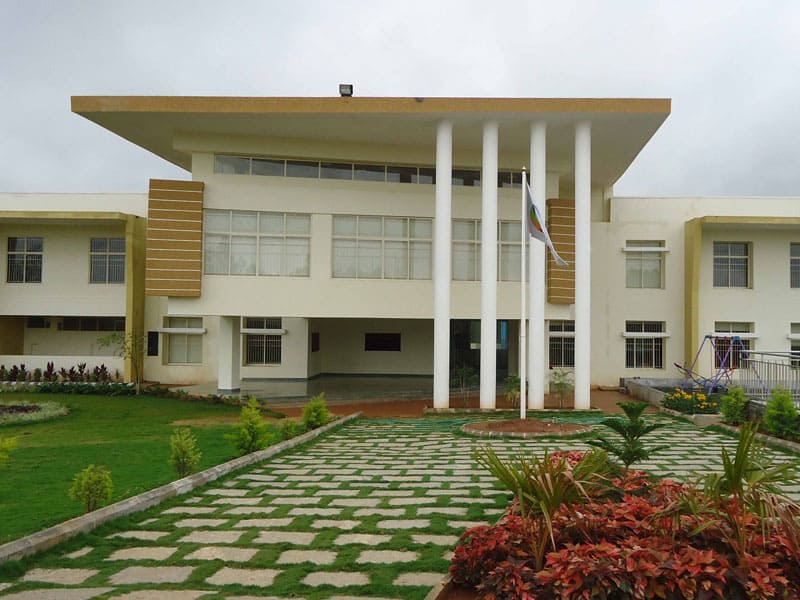 Whitefield Campus
 Bannerghatta Campus