Children today live in a world where borders are less about maps and more about understanding. The ability to speak more than one language is no longer just a skill; it is a way to connect with people, cultures, and ideas.
Parents often ask – what is multilingualism? In simple words, it is the ability to use two or more languages to communicate and express thoughts. When schools make space for different languages in the classroom, they open doors for creativity and confidence. At GIIS Nagpur, we believe that helping children learn and love multiple languages gives them a strong start in a global world.
Understanding Multilingualism in the Classroom
Understanding multilingualism in the classroom begins with recognising that every child learns differently. Some children grow up hearing several languages at home. Others are introduced to new ones at school.
A student in a multilingual classroom is exposed to the four language skills, i.e., listening, speaking, reading, and writing, in more than one language. Such a process not only develops the language skills but also the virtues, patience, and awareness. A student learning Hindi, English, and French will be able to change languages quickly. The ability to do so is called trilingualism. When a person knows many languages, it is known as polyglotism.
The role of multilingualism in education goes beyond vocabulary and grammar. It shapes the way children think, process information, and relate to the world around them.
The Benefits of Multilingual Education
Languages are the building blocks of thought. They help children understand new ideas and express feelings clearly. The advantages of bilingual education and multilingual learning are seen in both academics and daily life.
Students who speak more than one language often show better focus and memory. Their brains are trained to switch between languages, which strengthens their problem-solving ability. Researchers say that bilingualism can improve creativity and even delay cognitive decline later in life.
There are also social benefits. Children in multilingual classrooms learn to listen closely and understand perspectives different from their own. They develop empathy and cultural awareness. For example, when a student understands another language, they also learn about the people and traditions behind it. At institutions that value inclusive education, such as GIIS, various scholarships for students in Nagpur are also available to encourage talented learners to explore diverse language programs and global cultures.
Another important concept is translanguaging with multilingual students. This means allowing children to use all the languages they know to express ideas freely. It helps them think clearly and stay confident.
In short, multilingual learning builds sharper minds and kinder hearts.
Supporting and Managing Multilingual Classrooms
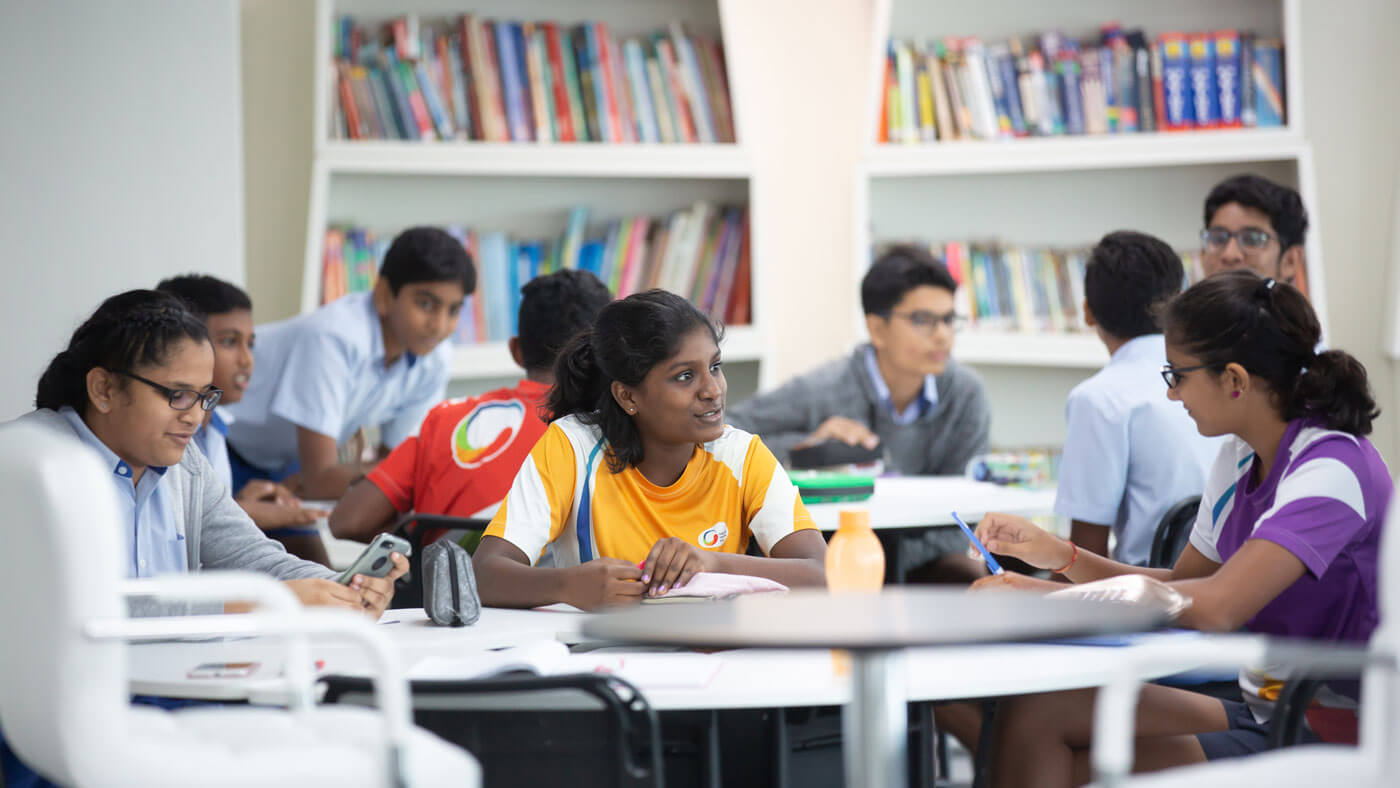
Teachers play an important role in managing multilingualism in the classroom. They give students the freedom to speak in different languages without the fear of being shy or getting mixed up. For instance, a student can be permitted to explain a science concept in both Hindi and English and students can be asked to translate short stories from one language to another.
Supporting multilingual classrooms also means celebrating each language equally. Teachers encourage peer learning, where students help each other with pronunciation and new words. Visual aids, songs, and games make the process interactive and fun.
At the same time, teachers guide students to strengthen grammar, reading, and writing in every language. This balance helps children become fluent while staying motivated. A classroom that values all languages becomes a place where every child feels seen and included.
Language Programs at GIIS Nagpur
At GIIS Nagpur, language learning is part of our everyday culture. Our language programs help students explore and enjoy the beauty of words from around the world. From bilingual education in English and Hindi to global languages like French or Sanskrit, students experience the joy of learning something new every day.
Teachers use a mix of reading, storytelling, and conversation to make classes engaging. Students are encouraged to speak confidently, even if they make mistakes. Over time, they develop the fluency and courage to express themselves anywhere they go.
We also integrate cultural learning into our language programs. Through songs, festivals, and literature, students understand that every language carries its own story and spirit.
This approach ensures that our learners grow into confident communicators who can connect across cultures. It also prepares them for opportunities that reach far beyond the classroom.
Building Global Citizens through Language
Language is more than communication; it is a connection. When children learn multiple languages, they learn how to listen, respect, and understand people from different backgrounds. It prepares them for a life filled with curiosity, opportunity, and cultural appreciation.
At Global Indian International School (GIIS), we believe multilingualism is an essential part of holistic education. Our classrooms are places where children grow into thinkers who can speak many languages and understand many hearts. Through our language programs, we aim to nurture students who are not just fluent speakers but also empathetic learners who see the world as one community.
 Nagpur Campus