 Start your child’s journey to success.
 Most studies and research on the Montessori curriculum have proven that it is one of the best programs for a child who has just begun her schooling. There is equal emphasis on academic concepts, personality development, life-skills mastery and social interaction. Research also shows that children from a Montessori set up have far better practical life-skills than that of their counterparts.
Practical life skills go a long way in enhancing self-care and practical life skills are those skills that are used in the everyday life of a child inside her home and in her outside world. It is the knowledge that the child imbibes by observing her surroundings and her environment, which the child later on uses in a purposeful way.
History of the Montessori Curriculum
Montessori was originally designed by Dr. Maria Montessori in the early 1900s and the sole purpose was to imbibe learning through independence by using hands-on tools and concepts. Later on, it went on to become one of the most successful methods in teaching preschool concepts to all children.
7 key things to know about the Montessori curriculum
1. Activities designed for the sensory needs of every child
The activities inside a Montessori classroom give the children the much needed sensory information to develop their 5 senses of seeing, hearing, touching, tasting, and smelling. The activities are centered around the differences between shapes, sizes, textures, patterns, smells and tastes. While they grasp these practical concepts, they also learn the art of presenting these activities by the help of their teachers.
2. Learning concepts and lessons through self-initiation and practice
The classrooms are lined with colourful activities and children are given the freedom to choose their activity for the hour. This self-initiated learning also gives them the confidence to use trial and error methods and this eventually leads them to the right solution. This kind of practice helps them perfect the concept and this leads to a great foundation.
3. Social grace and courtesy towards self and others
Every activity that takes place inside a classroom has a certain way of presentation. The teacher presents these activities gracefully and the children follow suit when they get a chance to do it themselves. And children are taught to use courtesy words like please, thank you, welcome, sorry etc. whenever appropriate. This leads to a healthy communication pattern and helps children understand the value of respect towards people and things.
4. A mix of different age-groups
Montessori classrooms are a healthy mix between different age groups (Nursery, KG 1 and KG 2). This gives the younger students a chance to learn and observe from their older peers. The setting of different age-groups helps the older children understand the importance of helping their younger counterparts and this leads to improved patience levels and acceptance.

5. Teachers as role models
Montessori teachers are trained not just in academic concepts but also in the art of presentation with poise and dignity. This quality in the teachers is observed by children and very often, most of these children cultivate the same habits. Also, teachers act like guides and intervene only when the child is stuck or doesn’t seem to understand the next step. Children appreciate this aspect while they explore new concepts on their own.
6. A strong foundation for math and literacy
Practice makes perfect and when children are given the independence to learn their own lessons, they often remember concepts and lessons for a long time. The use of interesting props and flashcards aid in visual learning, which is one of the most effective ways to help children understand their lessons faster. And since the materials are designed for practical understanding of the concepts, they are often retained more effectively.
7. Uninterrupted activity time
A Montessori classroom environment is often peaceful and organised. Children find this the perfect setting to go about exploring and practising their activities without too much disturbance and interruption. Children are not hurried to finish their activities and are given a good amount of time to help them achieve their activity’s objective.
How does an International Public School design its Montessori classroom?
Children thrive in an environment that has different elements of nature. They are the happiest in a surrounding that has enough sunlight, air and space. Therefore , Montessori classrooms in International Public Schools are designed keeping these basic elements in mind.
1. Round tables to encourage group activities
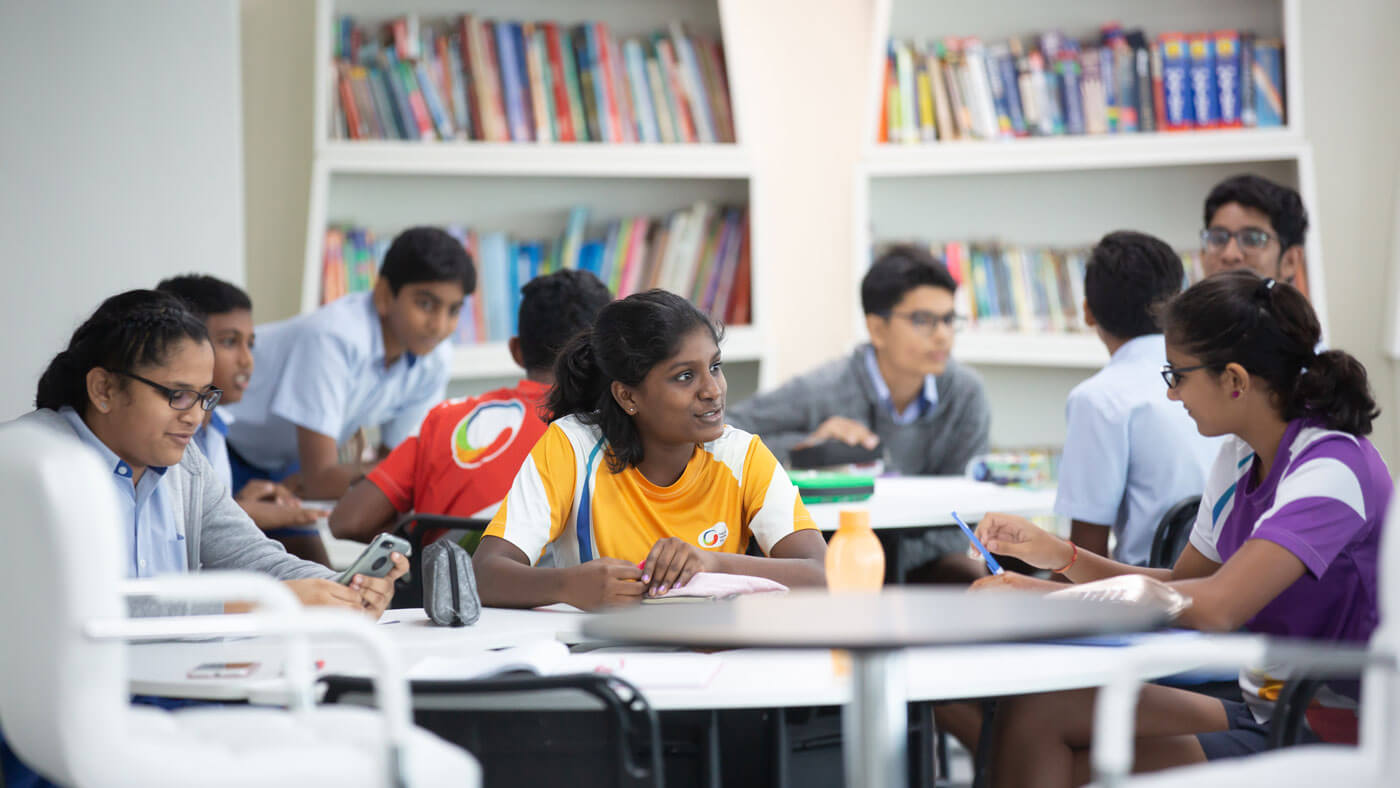
In a Montessori curriculum, there are activities that are performed in groups and in order to create a convenient space, there are round tables for each group of children and chairs with proper heights. The teacher takes turns with each group to be involved in these activities and to gauge the child’s style of learning and its progress. The classroom is designed to help the teacher get a complete view of all the children and their activities.
2. Low lined shelves and drawers for easy accessibility
To keep things accessible to these tiny tots, the furniture inside the classroom is designed accordingly for ease of practicality. And having said that, children are also taught to arrange the activities in a neat and orderly manner to maintain an organised environment. This also imbibes a sense of discipline and respect towards their surroundings.
3. Engaging materials to pique curiosity
Montessori materials are often made of very high quality and are easy to handle. Children are often piqued by the different colours and concepts that the array of activities in the classrooms offer. Children often seek to satisfy their sensory needs and these materials are the perfect tools to cater to their needs.
Respect, consideration toward the environment, social ethics and discipline are some of the most important values that children learn in a Montessori setup. A good Montessori school also engages its children in outdoor playgrounds, libraries and virtual labs to help expend their energies in the right direction.
Most International Public schools offer a good blend of the Montessori curriculum and other extracurricular activities like Sports, Music, Art etc. that aid in giving the right balance in your child’s educational years.
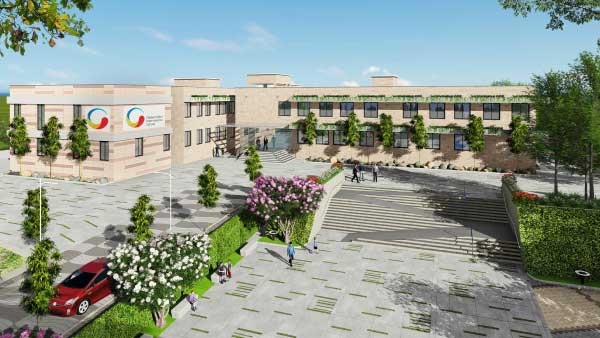
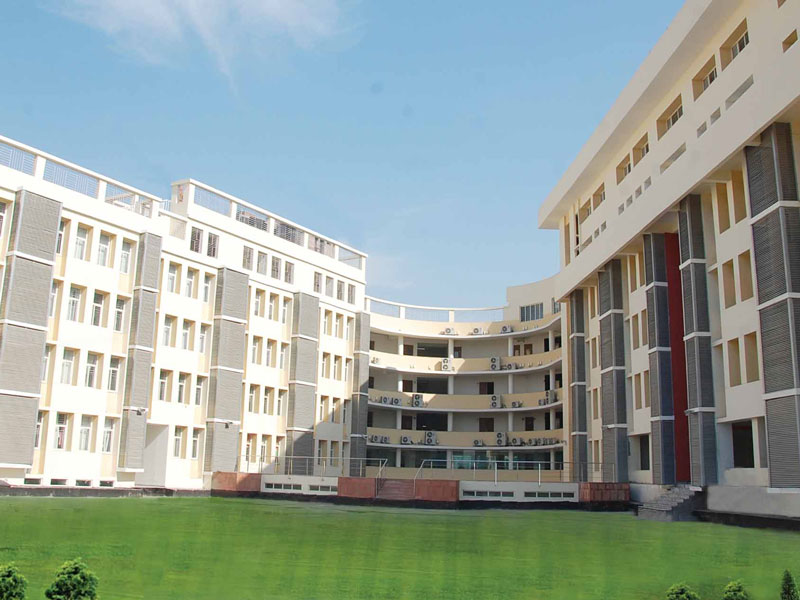 Noida Campus