What does it actually mean to build a strong learning foundation for a child?
Well, a strong foundation teaches your child to think, ask questions, solve problems, and even love the learning process. And the curriculum we select is one of the most effective instruments to achieve that.
Now comes the next question: what is curriculum?
It is, in fact, the road map for what a child learns and how they learn it.
Nowadays, more parents and schools are adopting the International Primary Curriculum as a contemporary approach. According to statistics, more than 1,000 schools in over 90 countries follow this IPC. Let’s check out what makes it so special and how it builds a strong foundation for your child.
Types of Education Curriculum
There are various forms of educational curricula in schools today, each with a unique vision and teaching approach. Let us explain the most common types of educational curriculum so you can decide what suits your child the best.
1. National Curriculum
These are officially sanctioned curricula that aim to fulfil national education standards. They tend to be systematic, exam-oriented, and commonly accepted in their nation. In India, we have the CBSE, ICSE, and state boards as national curricula.
They usually follow a textbook-centred teaching that closely aligns with the fixed syllabus content. And that’s good to build a strong foundation in subjects like Math, Science, and English.
Yet, most national curricula focus on memorisation, rather than creativity or collaboration.
2. International Baccalaureate Primary Years Programme (IB PYP)
The IB PYP, known for its inquiry-driven approach, encourages students to ask questions and explore big ideas. It places an equal emphasis on academics, personal development, and international-mindedness. The curriculum follows a student-centred learning style with plenty of projects and discussions.
However, keep in mind that the curriculum may not always align with local education boards. School transitions will become more challenging in the future.
3. Montessori Curriculum
Based on the philosophy of Maria Montessori, this curriculum focuses on independent and self-paced learning in a thoughtfully prepared environment. They concentrate on life skill development through sensory learning and emotional maturity.
It’s a great choice for early childhood, though transitioning into traditional schooling later may require some adjustments.

4. International Primary Curriculum
The International Primary Curriculum is a globally recognised curriculum that connects different subjects under one central topic. Parents who desire their children to become future-ready often choose international primary schools.
IPC encourages a hands-on and skill-based learning approach. Unlike other models, the curriculum ensures that children learn how subjects connect.
How IPC Builds a Strong Learning Foundation
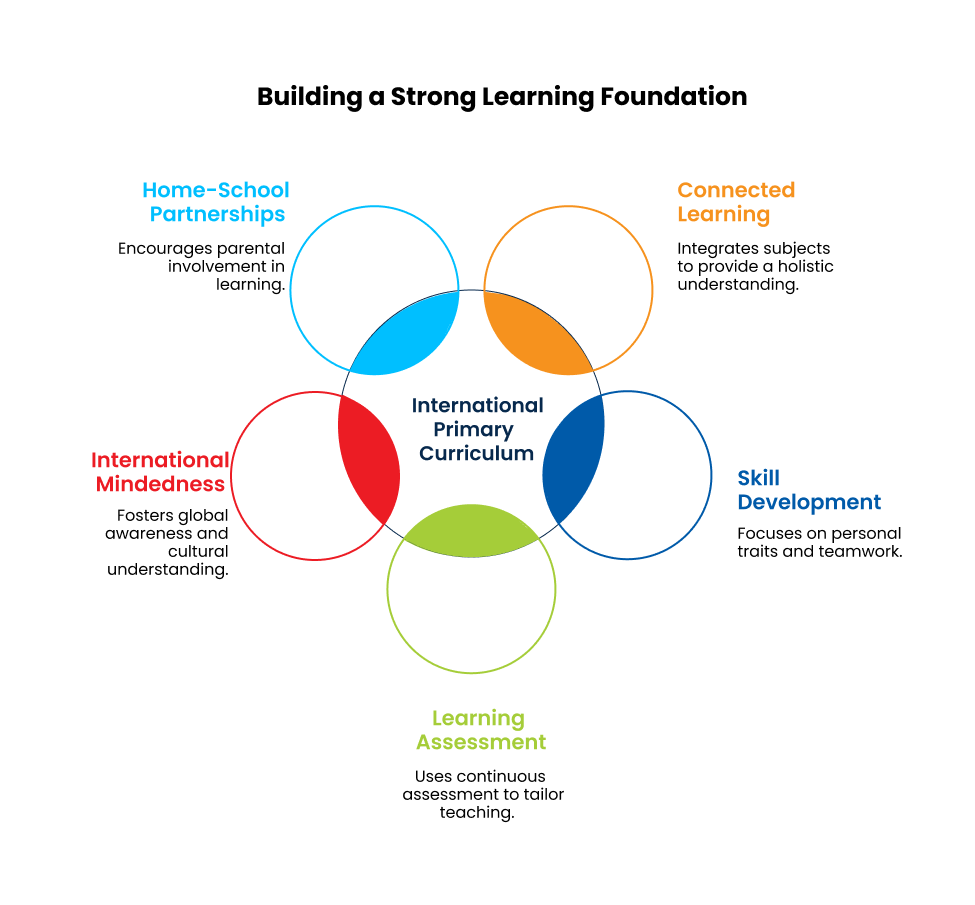
Now let’s zoom in on the International Primary Curriculum and have a look at how it’s created to establish solid learning foundations:
1. Connected Learning
IPC differs from other typical curricula in that it doesn’t isolate subjects as distinct silos. Rather, it connects them together by theme.
For example, a Rainforest lesson can involve aspects from Science, Geography, English, and even Ethics to make learning more meaningful.
This type of integrated learning enables children to view the bigger picture and apply that knowledge to real-life situations. It’s something most traditional curricula fail to accomplish.
Also Read: Developing Care for the Environment: Practices for Sustainability in Schools
2. Skill Development
No doubts. Academic success is important. But character building is also equally important. That’s why IPC prioritises eight personal traits in each unit:
- Respect
- Cooperation
- Communication
- Resilience
- Thoughtfulness
- Morality
- Enquiry
- Adaptability
Kids learn how to work in teams, ask thought-provoking questions, respect differences, and persevere when faced with challenges.
3. Learning Assessment
The International Primary Curriculum employs continuous assessment instead of relying solely on tests. Many international primary schools in Noida regularly conduct tests to assess what students know, what they can do, and how deeply they understand each concept. If needed, teachers will fine-tune the strategies based on the results. Thus, no child is left behind.
4. International Mindedness
One of IPC’s strongest pillars is making children world citizens. Students often learn about different cultures, perspectives, and global issues.
This widens their perspective and fosters awareness. And guess what? Children who understand global issues from a young age are better equipped for international opportunities later in life.
5. Strong Home-School Partnerships
IPC encourages parents to be active partners in their child’s learning process. Most units come with home activities and family discussions to create meaningful family moments. If you’re exploring primary admissions, this collaborative approach is worth considering.
Conclusion
The International Primary Curriculum shows us how a theme-based approach can make education more meaningful. It serves as a reminder that children develop only when education has a purpose.
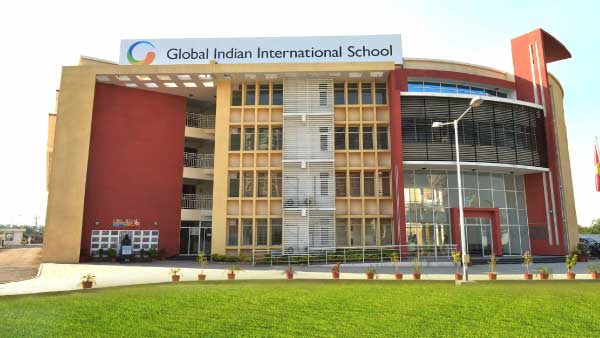
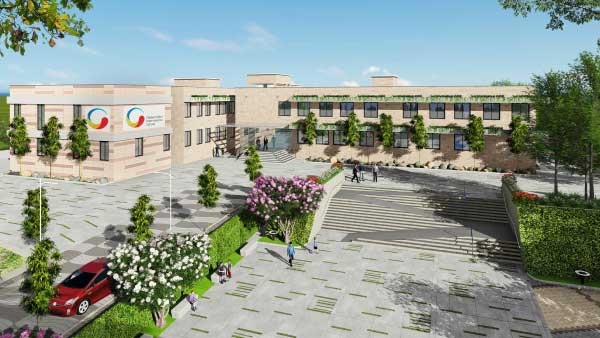
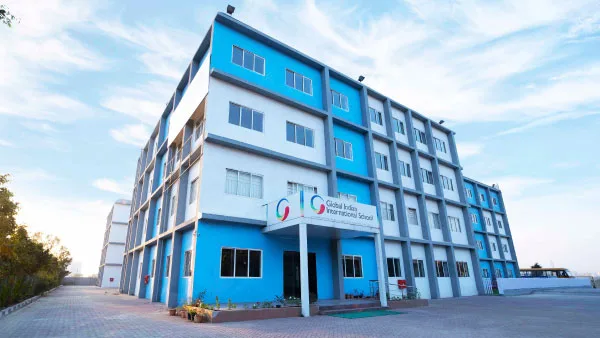
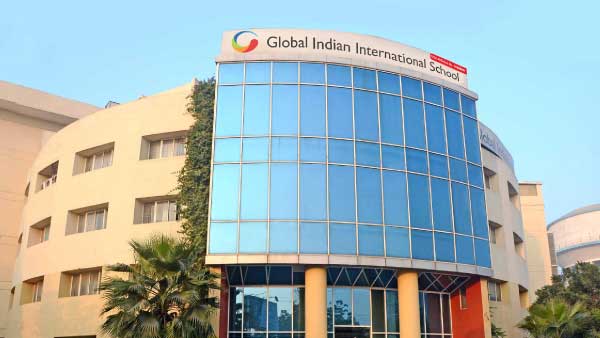
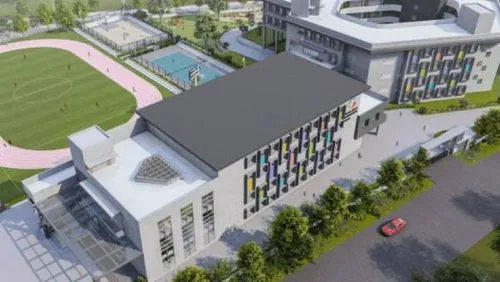
At GIIS Noida, our vision is the same: nurturing young minds through life skills that really matter. We’ve top-notch infrastructure and innovative labs to make purposeful learning an integral part of everyday life. And that might just be the start your child deserves.
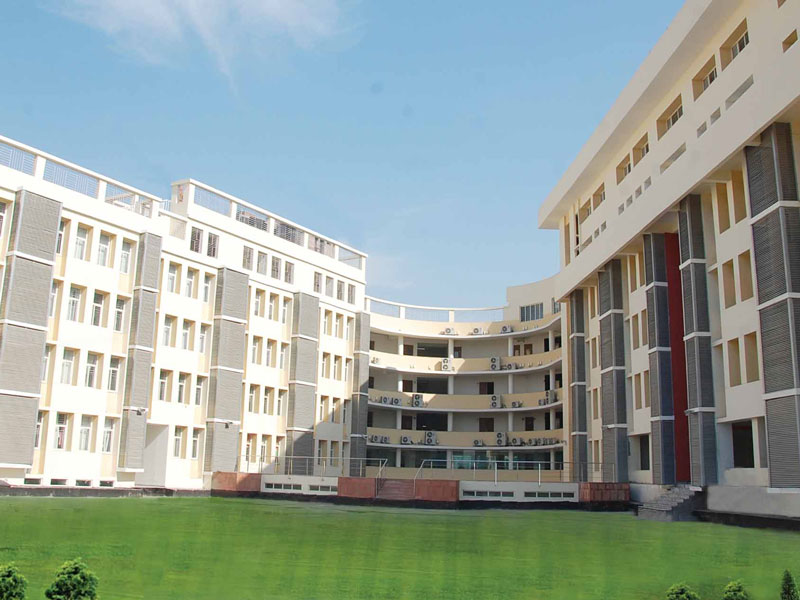 Noida Campus