CBSE board exams are often considered the first significant milestone in a student’s academic career. In an attempt to give their kids an edge, many parents rush to enrol them in coaching centres.
But let’s be realistic for a second. Does that approach really work for everyone?
Not always. Unfortunately, coaching centres often follow a one-size-fits-all method, which leaves little opportunity for individualised learning preferences. In reality, students require a customised plan.
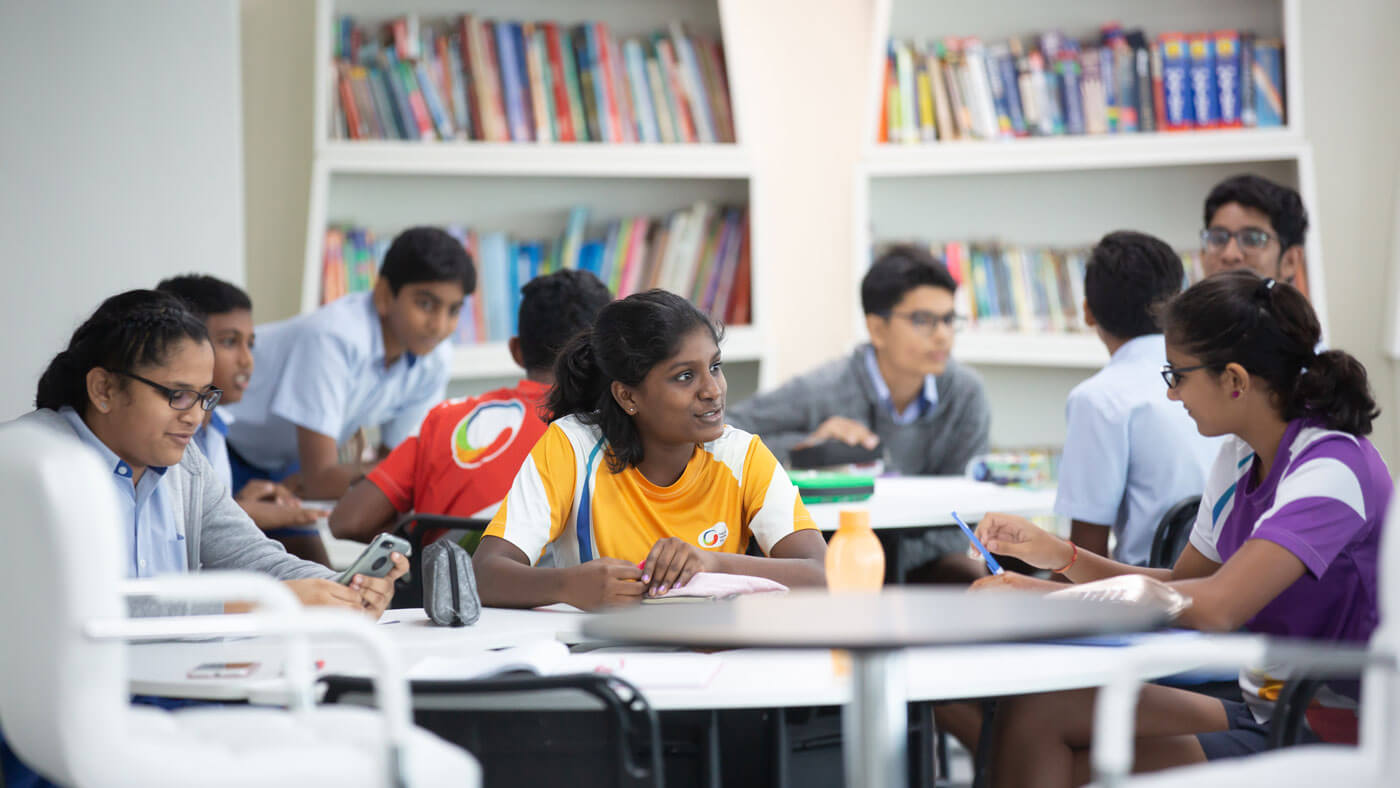
That’s why self-study is seen as more effective. And it works. A study at Vinschool Ocean Park in Hanoi found that 93.6% of students saw their grades improve with self-study periods.
In this blog, we’ll break down exactly how you can cover the 10 CBSE board syllabus completely through self-study methods.
Creating Your Personal Study Environment
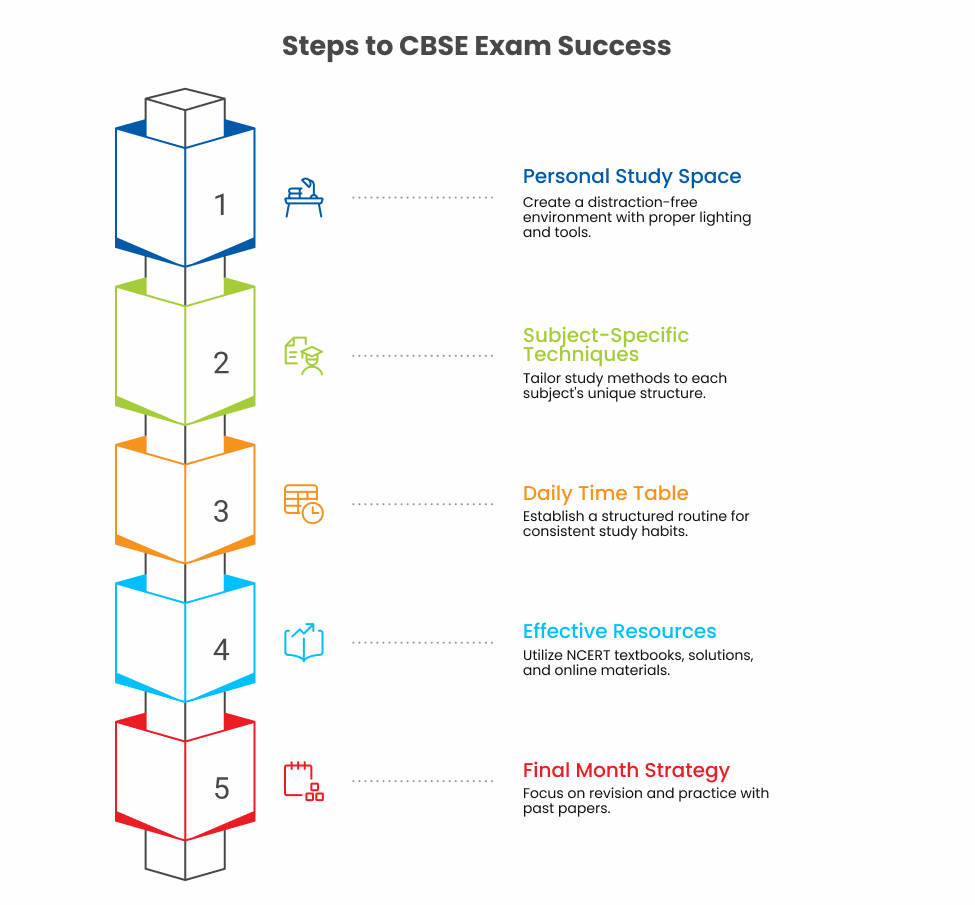
Your environment has a direct effect on how well you are able to learn. So, try to set a space where your brain can concentrate.
You can start by selecting a dedicated area in your house with little distraction. Ensure that the lighting is sufficient to keep you awake and your body posture maintained. Never study in bed.
You can make use of tools such as:
- Noise-cancelling headphones or white noise (experiment using apps such as Noisli)
- Wall planner to monitor progress through the 10 CBSE board syllabus
- Mini whiteboard or sticky notes for hasty reminders
- Keep your phone away or use it only for study apps like Forest or Focus To-Do (Pomodoro timer).
According to a study by the Princeton Neuroscience Institute, visual clutter competes with your attention and decreases focus.
Use the Right Study Techniques for Each Subject
Treating all subjects in the same way is where most coaching centres go wrong. In the CBSE syllabus, each topic is structured differently with its own depth and way of testing.
So, a customised method is required. Self-study gives you the freedom to adopt a unique approach to each topic. Here’s how to do it:
- Science: Divide each chapter into concept blocks (e.g., “Chemical Reactions” → Types + Balancing + Real-life examples). You can make use of flowcharts to grasp some tough concepts like digestion or electricity easily. Still, finding them difficult? Watch simple YouTube tutorials to understand the concepts deeply.
- Mathematics: Practice 10–15 sums a day from each topic. You can keep a formula sheet. Update it regularly and revise it every morning.
- Social Science: Try to make dull historical timelines a storyboard or an infographic. Paste it on your wall to generate interest among those chapters.
- Languages: You must practice reading comprehension passages out loud for fluency. Similarly, while studying, always keep a grammar correction notebook to note every mistake and fix it.
Create a Daily Time Table
A well-planned routine is a basic necessity for exam preparation. Here’s a sample daily time table for class 10 students designed for self-study:
| Time | Activity |
| 5:30 AM | Wake up and practice light exercise |
| 6:00 – 7:00 | Revise yesterday’s notes |
| 7:00 – 7:30 | Breakfast |
| 8:00 – 8:30 | Prepare for school |
| 8:30 – 3:30 | School Hours |
| 3:30 – 4:30 | Snacks and Break |
| 4:30 – 5:30 | Practice MCQs/sample papers |
| 5:30 – 6:30 | Light Walk |
| 6:30 – 8:00 | Language practice |
| 8:00 – 9:00 | Dinner and relaxation |
| 9:00 – 9:30 | Light revision |
| 10:00 PM | Sleep |

Practice with the Right Resources
Most students accumulate too many books and end up confused. In fact, you just need:
- NCERT Textbooks: Your primary resource for studying the subjects.
- NCERT Solutions: Available free on the official NCERT website. You can use it for deeper practice.
- Previous Year Papers: The last 10 years are available on the official CBSE website. Download sample papers, also.
- Online Resources: Channels like Vedantu, Unacademy, and BYJU’S offer free content.
Many prestigious international board schools in Noida even offer premium study resources for free. Yet, success lies not in the institution but in how effectively you make use of the available resources and maintain consistent practice.
Also Read: Developing Care for the Environment: Practices for Sustainability in Schools
Final Month Preparation Strategy
The final 30 days leading up to your test are the equivalent of the final lap in a race. What you do during this period can greatly determine your outcome. This is when your energy should be devoted to revising what you already know rather than learning new material.
During the first week, review your handwritten notes and summary sheets. Read them chapter by chapter, checking whether you can recall the key points without looking. If it does not feel solid, read it over one more time in detail and create a mini note to cement it in your head.
The second week is all about building speed and confidence. Start solving previous years’ board papers and sample papers regularly.
As you move into the third week, try to shift into a rapid revision mode. You can use checklists for each subject to tick off topics you’ve revised.
The last 7–10 days before the exam should be calm and balanced. Don’t overload yourself with new information. Instead, spend time revising high-scoring areas and weak topics only.
It’s also a good time to think about your future. Many students begin exploring their next steps, including streams and schools in Noida for class 11, with the right learning environment..
Conclusion
There isn’t a ‘perfect’ method for preparing to cover the 10 CBSE board syllabus effectively. Some take coaching, while others don’t.
Self-study is obviously a strong decision. It teaches you time management skills as well as self-discipline. And those are precisely the kinds of life skills that go far beyond exams.
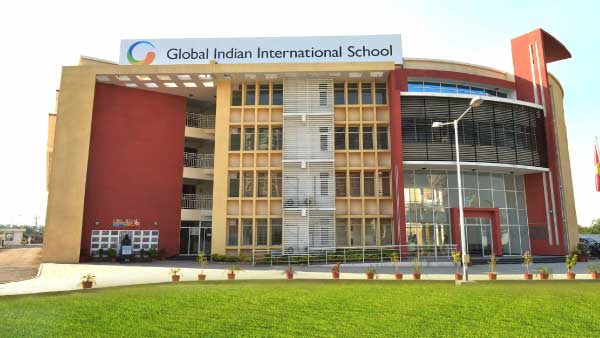
At GIIS Noida, we’ve witnessed hundreds of students succeed just by using the appropriate self-study strategies. Our teachers are committed to assisting students with self-preparation through clear planning and guided learning. And that’s a lesson no textbook can teach.
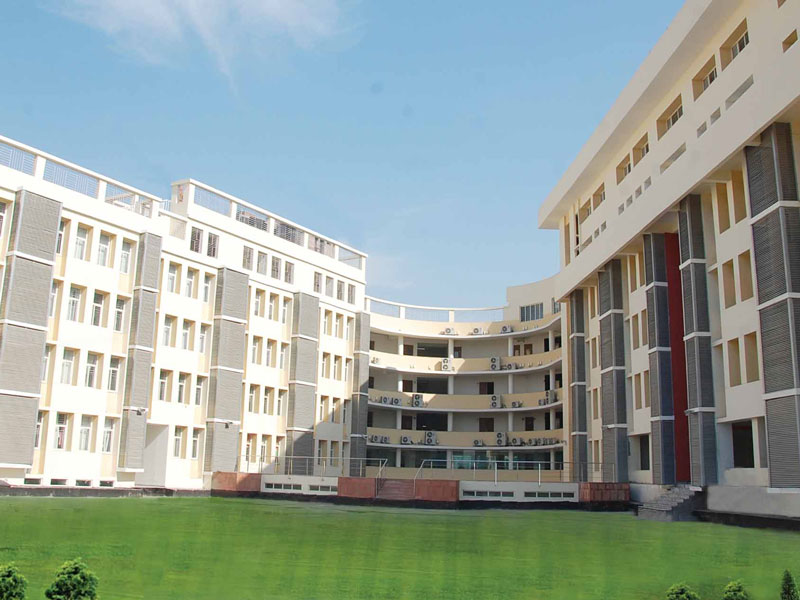 Noida Campus