Every parent has seen it — a child remembers a story better when it is read aloud, or learns a math concept faster when it involves pictures or blocks. That is because children do not all learn in the same way. Some understand better by hearing, others by doing, and many through a mix of senses.
This is what educators call multisensory learning. It is a teaching method that helps students learn using more than one sense at a time — sight, sound, touch, and movement. By combining these experiences, schools make lessons more interactive, engaging, and memorable for every child.
What Is Multisensory Learning
Multisensory learning is a method that educators use to engage various senses in students to enable them to grasp the information. Rather than just reading or listening, students are also provided with pictures, sounds, movements, and hands-on activities.
So, if the teacher is teaching the alphabet, one way of doing it would be the teacher showing the flashcards (visual) and saying the sound (auditory), and then having the students run their fingers over the letters in the sand (tactile). By doing these small things, the child gets to see, hear, and feel the same thing, which thus helps memory andcomprehension.
The idea behind multisensory instruction is simple — the more senses involved in learning, the stronger the connection the brain makes with the information.
The Multisensory Approach in Classrooms
The multisensory approach is now widely used in schools because it supports different learning styles. It allows teachers to reach children who may find traditional classroom lessons challenging.
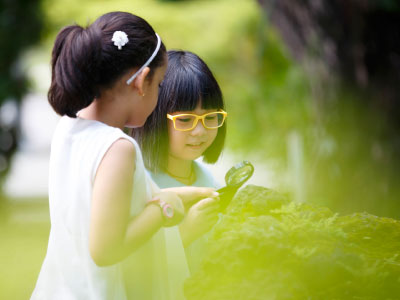
Teachers use multi sensory teaching techniques such as drawing, singing, building, or moving to explain concepts. In a science lesson, students might learn about planets by making models. In language classes, they might act out a poem to understand tone and rhythm. Math can include colourful beads or blocks to teach counting and patterns.
This approach turns abstract concepts into concrete experiences. It makes lessons more inclusive so that every child can participate and succeed.
Benefits of Multisensory Learning
The benefits of multisensory learning go beyond academic performance. It nurtures confidence, independence, and a lifelong love for learning.
- Better Memory and Retention
Children who use multiple senses are more likely to remember a lesson that they have learned in more than one way.
- Improved Focus
Interaction with the material helps students be more focused and thus experience less distraction and boredom.
- Enhanced Understanding
When kids are allowed to see, touch, or hear something, abstract concepts become more understandable.
- Encourages Creativity and Expression
Through multisensory learning, children can communicate their ideas through visual, musical, or kinaesthetic means, which in turn fosters their creativity and self-confidence.
- Supports Emotional Growth
Trying all the senses at once is less likely to cause the feeling of frustration and more likely to make the students feel that they are able and that their contribution to the class is valuable.
When learning feels enjoyable and natural, children develop a lifelong love for knowledge.
Multisensory Activities and Techniques
Teachers use many multisensory activities and techniques to make learning fun and effective. Here are a few examples you might see in the classroom:
- Using flashcards with bright images and sounds to teach vocabulary.
- Creating clay models or craft projects to understand shapes and structures.
- Singing songs to memorise facts or formulas.
- Using movement games to learn directions or body parts.
- Listening to stories and drawing scenes from imagination.
These activities not only improve understanding but also help students express what they have learned in their own unique ways.
Which Students Benefit the Most
While every child benefits from a multisensory classroom, it is especially helpful for students who face challenges with traditional methods. Children with learning differences such as dyslexia, ADHD, or slower processing speeds often respond very well to multisensory instruction.
By combining sight, sound, and touch, the approach reduces stress and builds confidence. It allows them to learn in a way that fits their natural strengths. At the same time, students who already learn well through reading or listening also gain because the lessons become more engaging and enjoyable for everyone.
Simply put, multisensory learning benefits all children by creating equal opportunities to succeed.
How GIIS Noida Uses the Multisensory Approach
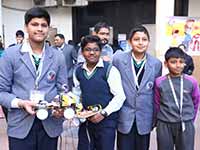
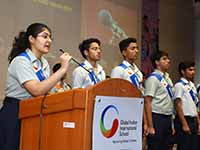
At Global Indian International School (GIIS) Noida, we believe that learning should be active, joyful, and meaningful. Our teachers integrate the multisensory approach into daily lessons to make every topic come alive.
From art-infused science activities to storytelling sessions in language classes, our classrooms are designed to connect knowledge with experience. Students build, explore, and express — not just memorise.
By using multi sensory teaching techniques, we help students understand complex ideas, stay engaged, and grow into confident learners who enjoy every moment of discovery.
Conclusion
Multisensory learning proves that education works best when it reaches every child in their own way. It helps them see, hear, touch, and feel ideas rather than just read about them. When learning involves all senses, understanding becomes deeper and more lasting.
At GIIS Noida, we create classrooms that inspire children to learn through every sense and enjoy the process of discovery every day.
 Noida Campus