Navigating the landscape of international education is a significant milestone for any family. As IB admissions experts with over a decade of experience placing students in top-tier global universities, we understand how the International Baccalaureate (IB) curriculum transforms young learners into inquisitive, global-minded leaders.
With 2026 approaching, the IB remains the ‘gold standard’ for holistic education. This IB Curriculum guide for parents in 2026 provides a definitive breakdown of the IB framework, specifically designed to help parents make informed decisions about their child’s academic future.
What is the IB Curriculum? An Overview
The International Baccalaureate (IB) is a non-profit foundation offering four highly respected programs of international education. Unlike national curricula that focus on rote memorisation, the IB is a framework-based system that emphasises critical thinking, intercultural understanding, and exposure to a variety of points of view.
At its core, the IB is governed by the IB Learner Profile- ten attributes that develop students as responsible members of local, national, and global communities.
The IB Learner Profile Explained for Families:
The IB aims to develop learners who are:
- Inquirers: Nurturing curiosity.
- Knowledgeable: Exploring concepts across disciplines.
- Thinkers: Using critical and creative thinking.
- Communicators: Expressing ideas confidently in more than one language.
- Principled: Acting with integrity and honesty.
- Open-minded: Appreciating their own cultures and those of others.
- Caring: Showing empathy and compassion.
- Risk-takers: Approaching uncertainty with forethought.
- Balanced: Understanding the importance of intellectual, physical, and emotional balance.
- Reflective: Giving thoughtful consideration to their own learning.
Let’s understand IB PYP MYP DP differences explained by schools like Global Indian International School:
1. IB Primary Years Programme (PYP): Ages 3–12
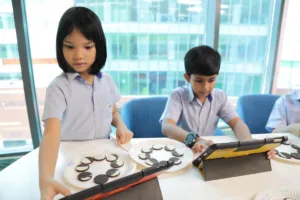
The IB Primary Years Programme is designed for students in preschool and primary school. It focuses on the development of the whole child as an inquirer, both in the classroom and in the world outside.
- Approach: Transdisciplinary learning. Instead of isolated subjects, students explore ‘Units of Inquiry’ that weave together math, language, and science.
- The Culmination: The PYP Exhibition, where students conduct a collaborative inquiry into a real-world issue.
2. IB Middle Years Programme (MYP): Ages 11–16
The MYP provides a challenging framework that encourages students to make practical connections between their studies and the real world.
- Structure: 8 Subject Groups (Language Acquisition, Language and Literature, Individuals and Societies, Sciences, Mathematics, Arts, Physical and Health Education, and Design).
- Assessment: Focuses on conceptual understanding rather than just content.
- The Personal Project: A year-long independent project in the final year of the MYP that demonstrates the student’s ability to manage their own learning.
3. IB Diploma Programme (DP): Ages 16–19
The IB Diploma Programme (DP) is the most famous of the four. It is a rigorous two-year pre-university course that leads to examinations and is recognised by the world’s leading universities.
The IB Core Explained: Why It’s Central to the Diploma Programme Experience
To earn the Diploma, students must complete three core requirements:
- Theory of Knowledge (TOK): A course on the nature of knowledge (how we know what we claim to know).
- Extended Essay (EE): A 4,000-word independent research paper.
- Creativity, Activity, Service (CAS): Projects involving community service, physical activity, and creative pursuits.
In addition to these core components, students must take six academic subjects and achieve a minimum overall score (typically 24 points or more) to be awarded the diploma.
Comparison: IB vs. A-Levels for University Admission
To understand the benefits of the IB Diploma programme, a common question for parents is whether to choose the IB or the British A-Levels.
| Feature | IBディプロマ・プログラム | A-Levels |
| Breadth | Study 6 subjects (3 Higher Level, 3 Standard Level) | Study 3 or 4 subjects in-depth |
| Core Requirements | TOK, EE, and CAS included | No mandatory core/extracurriculars |
| Assessment | Internal assessments + Final exams | Primarily final exams |
| University Prep | Highly regarded for research and time management | Highly regarded for subject-specific depth |
It is observed that while A-Levels allow for early specialisation, the IB is often preferred by top-tier universities (Ivy League, Oxbridge) because it produces well-rounded students who are already accustomed to university-level research.
Is the IB Diploma Worth it for College?
In 2026, university admissions are more competitive than ever. Admissions officers look for more than just high grades; they look for intellectual stamina.
- University Acceptance Rates: Statistics consistently show that IB students have a higher acceptance rate at Ivy League universities compared to the total population of applicants.
- University Readiness: IB graduates tend to skip introductory courses in college due to the depth of their High School Diploma coursework.
- Global Mobility: The IB is a ‘portable’ qualification. If your family moves from Singapore to London or New York, the IB remains a recognised curriculum of education.
Final Take: Is the IB Right for Your Child?
The IB curriculum is ideal for students who are curious, motivated, and want a global perspective. Schools like Global Indian International School (GIIS) provide a nurturing environment where the IB framework is combined with state-of-the-art facilities to ensure students maximise their potential.
Choosing the right path:
- Choose the PYP/MYP if you want your child to develop ‘learning how to learn’ skills early on.
- Choose the IB Diploma if your child aims for top global universities and enjoys a broad, challenging range of subjects.
よくある質問
How does the IB Middle Years Programme (MYP) differ from a traditional High School Diploma?
While a traditional High School Diploma often focuses on textbook-led learning and specific subject credits, the IB MYP vs. High School Diploma distinction lies in the framework. The MYP emphasises global contexts, requiring students to apply scientific or historical concepts to real-world issues like climate change or digital ethics. Additionally, the MYP requires a personal project- which develops independent research skills that traditional diplomas typically don’t introduce until the final year of school.
What are the specific benefits of the IB Diploma Programme for STEM students?
The Benefits of the IB Diploma Programme for STEM-focused students include a mandatory science project and the requirement to study Mathematics alongside social sciences. Because IB students must complete the Internal Assessment (IA), a lab-based research paper, they often enter university with superior laboratory reporting and data analysis skills compared to their peers.
Is the IB curriculum suitable for students who are not ‘all-rounders’?
A common myth is that the IB is only for students who excel at everything. In reality, the IB PYP MYP DP differences allow for flexibility. In the Diploma Programme, students choose three subjects at ‘Standard Level’ (SL) and three at ‘Higher Level’ (HL). This allows a student to focus their primary effort on their strengths (e.g., HL Arts and Languages) while still maintaining a functional competency in other areas, supported by the holistic Learner Profile.
How do universities in 2026 view the IB Extended Essay during admissions?
Admissions officers view the IB Extended Essay (EE) as a litmus test for university readiness. When answering ‘Is the IB Diploma worth it for college?’, the EE is the deciding factor. It provides a concrete example of a student’s ability to conduct 4,000 words of independent, academic research. Many IB students use their EE topic as a focal point in their university personal statements to demonstrate ‘super-curricular’ depth in their chosen field of study.
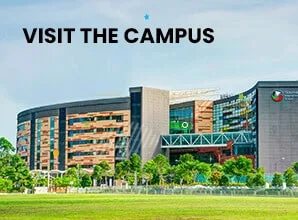
Ready to explore the IB for your child? Visit GIIS Singapore to see how the IB framework is implemented in a world-class setting.

チームGIIS
チームGIISは、GIISシンガポールの活気ある世界を魅力的なブログ記事で伝える熱心なライター集団です。GIISの教育方法、革新的な学習環境、IB、ケンブリッジ、CBSEなどの多様なカリキュラムを紹介し、保護者、教育関係者、生徒とつながり、学校コミュニティを刺激し、情報を提供する洞察やストーリーを共有することを目的としています。