 Start your child’s journey to success.
 Every student who has appeared or is preparing to appear for the 12th board exam wonders, “What can I do after 12th?” Today, students have several career options to choose from.
There are not just science, arts, and commerce courses, but a host of professional diploma and degree courses that students can choose from for a career of their dreams.
All it takes is making the right decision based on their preferred subjects, passion, and goals besides finding the right information regarding the many courses.
Here is a detailed list of the best career options after the 12th, as well as information about courses that offer brilliant job opportunities, high salaries, and a great career ahead.
Here is the List of Career Options After 12th
Career Options after 12th: Science
Based on their subjects, students can select courses from the top domains, such as engineering, medical, law, architecture, business management, humanities, etc.
Besides these, there are multiple courses in the arts, science, and commerce stream that are unique and also offer good career opportunities.
Career Options after 12th Science for PCM Students
Career options after 12th science (PCM) include courses that focus on technology, infrastructure, planning, multimedia, and healthcare. Some of the career options are:
● Software engineer: Software engineering is a 4-year degree course. A software engineer creates tools, applications, and digital solutions.
● Environmental engineer: Environmental Engineering is a 4-year degree course that teaches social science and engineering to design technology that preserves the environment.
● Aeronautical engineer: This is a 4-year bachelor’s degree that teaches study, design, and manufacture of commercial and military aircraft, missiles, and spacecraft.
● Chemical engineer: Chemical engineers play an important role in research, energy, and manufacturing.
● Product designers: They analyze trends and consumer needs, and design products for the benefit of the consumers.
● Pharmacist: They develop and manufacture medicines
● Architect: B.Arch. is a 5-year degree course that teaches you the designing of structures, such as homes, office buildings, stadiums, and other outdoor spaces.
● Mathematician: The mathematician applies theorems and principles in functions like architecture, business processes, and computer graphics.
● Data scientist: Data scientists have to complete a 4-year degree course in data science. They use numbers and algorithms to study data.
● Machine learning engineer: A 4-year degree course in computer science or data science is required to become a Machine Learning Engineer. They work with data scientists, data engineers, and analysts.
Career Options after 12th Science for PCB Students
There are many PCB career options for students after the 12th standard. A good percentage helps get admission for these courses.
Here are some of the career options for PCB students, the duration of the courses, and the marks required to qualify for admission:
● MBBS (Bachelor of Medicine and Bachelor of Surgery): This is a 5.5 to 6-year degree course and requires above 60% aggregate marks.
● BAMS (Bachelor of Ayurvedic Medicine and Surgery): A 4.5 to 5-year degree course, which needs a minimum of 60% aggregate marks
● BHMS (Bachelor of Homeopathic Medicine and Surgery): This is a 5.5-year degree course that requires 50% aggregate marks with Science and English as core subjects.
● B.Sc. (Bachelor of Science): This is a 3-year degree course that requires 50% aggregate marks and Science and English as core subjects.
● BDS (Bachelor of Dental Surgery): This is a 4-year degree course that requires 50-60% aggregate marks.
● B.Pharm. (Bachelor of Pharmacy): This is a 4-year degree course that requires 50% aggregate marks with PCB subjects.
● BPT (Bachelor of Physiotherapy): This is a 4-year course that requires 50% aggregate marks with PCB and English subjects.
● Forensic Sciences: This is a 4-year degree course and requires 50% aggregate marks with PCB and English subjects.
Career Options after 12th: Commerce
Knowing the different options you have after 12th helps you narrow down the field you would like to specialize in. Building on your skillset and grabbing the right opportunities will help you get the job of your dreams and fulfill your career goals. Here are some of the career options after 12th in Commerce:
● B.Com (Bachelor of Commerce)
● BE (Bachelor of Economics)
● BAF (Bachelor of Accounting and Finance)
● BBI (Bachelor in Banking and Insurance)
● BFM (Bachelor of Commerce in Financial Market)
Career Options in Commerce without Maths
There are several career options in Commerce without maths for students not interested in maths. These are:
● B.Com (Bachelor of Commerce): This is a 3-year course with subjects, such as commerce, business law, economics, accountancy, taxation, and finance.
● B.Com (H) (Bachelor of Commerce Honors): The subjects for B.Com (H) are marketing, finance, economics, accounting, management, information science, international business, human resources, etc.
● BBA (Bachelor of Business Administration): This course teaches the basics of management, business method, and other related subjects.
● LLB (Bachelor in Law): Although LLB is a postgraduate course, you can get this degree through an integrated course, such as BA+LLB, or B.Com + LLB.
● CA (Chartered Accountancy): Maths isn’t necessary for this course. It has 3 stages: Foundation course, Intermediate course, and CA Final.
● CMA (Certified Management Accountancy): For this course, you need to have a working knowledge of maths and expertise in accounting.
● CS (Company Secretary): This course also doesn’t need maths as a compulsory subject. You can become a CS by enrolling in the ICSI foundation course, followed by the intermediate course.
Career Options after 12th: Arts/Humanities
Career options in arts/humanities are varied. You can take up journalism, law, marketing, fashion and textiles, physical education, etc. Here’s the entire list of career options after 12th arts/humanities. These are 3-year Undergraduate degree courses for students of Humanities:
● BA (Bachelor of Arts) in Sociology
● BA in Psychology
● BA in Humanities and Social Sciences
● BA in Economics
● BA in Philosophy
● BA in Geography
● BA in Political Science
● BA in Social Work
● BA in Mathematics
● Bachelor of Arts and Bachelor of Law (B.A.L.L.B)
You can also take up Fashion Designing courses after 12th arts:
● BA in Apparel Designing and Merchandising
● BA in Fine Arts
Mass communication and Film and Journalism courses after 12th arts:
● BA (Hons.) in English
● BA in Programme with Functional Hindi
● BA in English
● BA in Mass Communication
● BA in Media and Communication
● BA in Journalism
● BA in Tourism
Conclusion
With a wide array of professional degree and diploma courses after 12th, students can take time to decide where their interests lie and which courses will help them in meeting their career goals.
The best CBSE school in Noida helps students prepare for their 12th exams and their careers beyond 12th through reputed curriculum and teaching methodologies.
An International public school also provides career counseling sessions for high school students. This helps them make the right career decisions when the time comes and enjoy a secure future.
FAQs on Career After 12th
What should I do after 12th for a high salary?
The science stream offers a wide range of courses after the 12th. These courses have brilliant career opportunities in the fields of technology and innovation.
Besides the medical field, there are many courses in the non-medical field that are popular as well as high salaried, such as Engineering.
In this field, apart from Civil, Mechanical, Electrical, and Electronics, you have courses such as Aerospace, Automation Engineering, Fire and Safety Engineering, Highway Engineering.
Other high salary courses after 12th are Medicine, Dentistry, Clinical Psychology, Hospital Management, Nutrition and Dietetics, Forensics, Optometry, Occupational Therapy, Biomedical Engineering, etc.
Management courses after the 12th, such as hotel management, hospitality management, business administration, healthcare management, are also highly salaried and offer great career opportunities.
High salaried Art, Design, and Media courses after the 12th include textile and fashion design and technology, interior design, multimedia, photography, journalism, digital advertising, and fine arts courses.

What should I do after the 12th to become a CEO?
A CEO is a Chief Executive Officer. Being a CEO means being responsible for an organization, or a company.
Class 12th is the first step of the journey to becoming a CEO, which requires hard work, patience, dedication, and perseverance besides experience, skills, and the right degrees.
Those with a family-owned business can become a CEO after the 12th. However, it’s a responsibility that needs experience, decision-making, and leadership skills.
Another way to become a CEO is to start your own business. You will need practical knowledge, business acumen, and relevant skills to run the business and fulfill your responsibilities as a CEO.
To become a CEO of an organization or a business, you will need to earn the right degrees, experience, and skills. You will also need to prove your capabilities, which will require time, effort, and patience.
The degrees you need to become a CEO are:
● Bachelor’s degree in Arts/Science/Commerce
● MBA (Masters in Business Administration) in Management, Finance, and Business
● Ph.D. in Business Administration [Not mandatory]
Besides these degrees, you will need the following skills:
● Judgment and decision making skills
● Complex problem-solving skills
● Critical thinking
● Speaking and active listening
● Systems analysis and evaluation
● Strategic thinking and planning
● Persuasion and negotiation
● Stakeholder management
● Management of personnel resources
● Management of financial resources
● Management of material resources
Which field is easy after 12th?
There is no easy field to choose from. Every field requires 100% hard work, patience, and perseverance, only then can students perform well and make a career in their chosen field.
What are the professional courses after Class 12th?
Professional courses are vocational courses that prepare you for jobs in a particular industry. They are different from academic-oriented courses and are more practical.
These courses help you develop the required skills, learn the latest trends of the industry, and gain hands-on experience. You can opt for a diploma course after the 12th.
Diploma courses are of 6 months to 2 years duration. They offer you a strong base for a degree course in the same field in the future.
Here’s a list of professional diploma courses after class 12th:
● Diploma in Hotel Management
● Diploma in Medical Laboratory Technology
● Diploma in X-Ray Technician
● Diploma in Gemology
● Diploma in Photography
● Diploma in Nutrition and Dietetics
● Diploma in Food and Beverage Services
● Diploma in Travel and Tourism
● Diploma in Animation and Multimedia
● Diploma in Journalism and Mass Communication
● Diploma in Script Writing/Creative Writing
● Diploma in Communicative English
● Diploma in Office Management
The 3-year professional degree courses after 12th help you pursue a Master’s degree as well as offer you more job opportunities. Here’s a list of professional degree courses after 12th:
● Bachelor of Optometry
● B.A. in Fashion and Textile Design
● Bachelor in Visual Communication
● Bachelor in Animation
● Bachelor of Travel and Tourism
● Bachelor of Fine Arts
● Bachelor in Jewelry and Accessory Design
● Bachelor of Vocation in Software Development
What are Some of the Unique Career Options for Students?
Thanks to modernization, today students have a wide range of courses to choose from that are unique and cater to their varied personalities.
These courses can be done after graduation to improve your career options. You need to have the basic skills and an inclination towards these fields that will help you fuel your creativity further.
Here are some of the unique career options to choose from:
● Photography
● Graphic designer
● Writer
● Sound Engineer
● Ethical Hacker
● Tea Taster
● Chef
● Registered Nurse
● Driver
● Politician
● Event Planner
● Stylist
● Bartender
● Classical Dancer
● Fire Fighter
● Farmer
● Architect
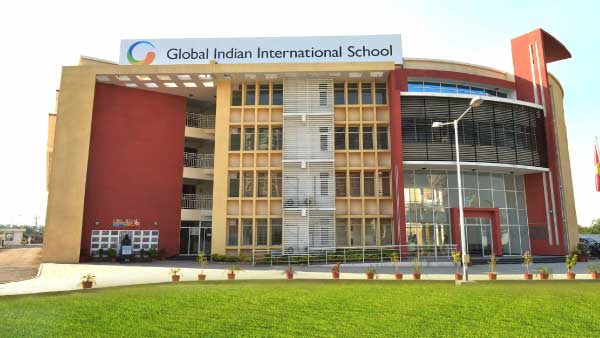
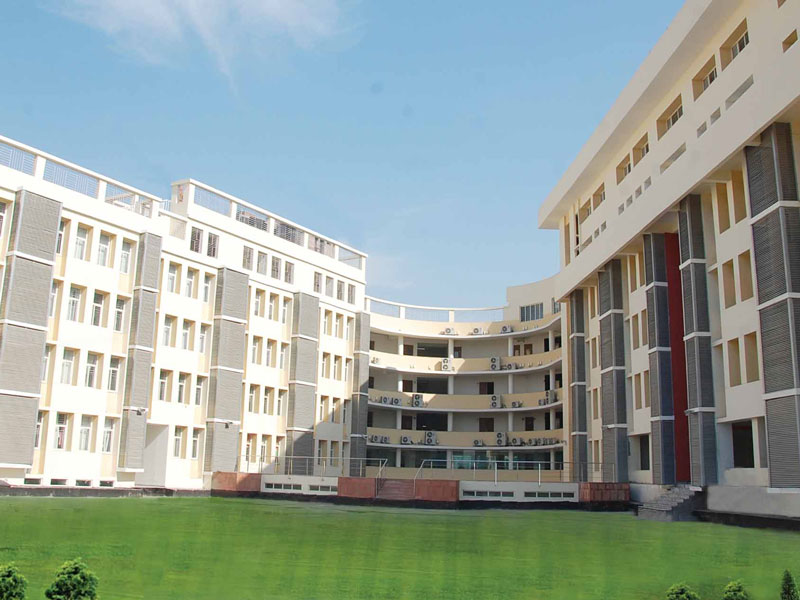 Noida Campus