Education creates personalities. It empowers individuals to live their lives in the most meaningful way possible and provides them with the ability to win every situation in life with strategic thinking and strong willpower.
But more than that, it has the power to shape the destiny of a country. Especially one that is as diverse and populous as India.
In this blog, we will discuss the key points of the education system in India, including what its defining features are and how it has changed over time.
Brief History of The Indian Education System
India has always placed great importance on educating its youth. However, the methods changed over time to accommodate the needs of the new times.
The roots of India’s education system can be traced back to the Gurukul era. The Indian residential schooling system, Gurukuls, dates back to 5000 BC. In this unique arrangement, the shishyas (students) and gurus (teachers) used to live in the same premises, referred to as the ‘ashrams’. The mode of communication used to be ancient Sanskrit, and learning at Gurukuls focused more on deep understanding than rote memorisation.
The education system of this ancient era focused solely on the holistic development of children, which included physical, cognitive, spiritual, and mental well-being. However, it was gatekept by a certain section of society.
As a result, this education was not accessible to everyone.
Education System in India – Post 1800s
The world changed, and India moved on from the moral and ethical education of ‘Gurukuls’ to a grade-based, more inclusive scientific learning method of the modern Indian education system.
Lord Thomas Babington Macaulay introduced India to this modern schooling system in the 1830s. And it was only then that science and mathematics replaced philosophy and metaphysics. Later, the 10+2 system was formally introduced under the National Policy on Education, 1986.
What is the Education System in India Post-2020s?
Our current education system follows the structure set by the National Education Policy (NEP) 2020. After 34 years since the last policy, the Indian government introduced this major educational reform.
Its main objective was to make both schooling and higher education more skill-oriented, holistic, flexible, and inclusive. Now, let’s check out what is the education system that we follow presently.
Current Education System
Replacing the previous 10+2 system, the NEP policy introduces a 5+3+3+4 system. It breaks down the education system into 4 vital stages that include:
- 5 years of foundational stage: Ages 3–8, which consists of pre-school and Grades 1–2.
- 3 years of preparatory stage: Includes Grades 3–5.
- 3 years of middle stage: Includes Grades 6–8.
- 4 years of secondary stage: Includes Grades 9–12.
Brief Overview of Key Stages
Presently, the education system in India is huge and multifaceted. Beginning with pre-primary education, it goes up to higher education and includes both formal and informal education. The main stages of this system are:
- Pre-primary
- Primary
- Elementary
- Secondary
- Higher education
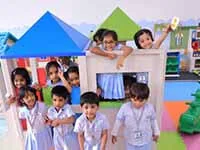
GIIS Modern Montessori International Noida is setting the benchmarks for pre-primary education through a contemporary teaching methodology. Similarly, we offer organised routes for students to follow as they advance through the elementary and secondary school stages.
Together, all five stages focus on the social, intellectual, and physical development of Indian students. National bodies such as UGC, NCERT (National Council of Educational Research and Training), and AICTE (All India Council for Technical Education) are involved in India’s education system.
Role of education boards in Indian education system
We have four main education boards in India, whose primary tasks are to:
- Design an age-appropriate and relevant curriculum for students
- Organise examinations, assessments, and grading systems
- Set academic standards for facilities, infrastructure, and teaching staff
- Grant affiliations to schools that meet that standard
- Implement educational reforms and innovations as per government policies
The board performs all of these tasks to ensure uniformity in the consistency of education across schools all over India.
In addition to guaranteeing uniformity throughout the nation, these boards allow for creativity and flexibility in instructional strategies. In urban educational centres like Noida, where there is a growing demand for a global academic standard, this flexibility has become more crucial.
As a result of this demand, international board schools in Noida have become leaders in combining international best practices with national educational objectives. These schools implement progressive curricula like those from Cambridge or the IB to make the educational experience more international. But at the same time, they follow the rules set forth by Indian education authorities while implementing.
Major education boards of our country
| Board | Description |
| CBSE (Central Board of Secondary Education) | Most popular national board. CBSE curriculum focuses on conceptual learning and nationwide standardisation. |
| ICSE/ISC (CISCE) | The board provides a comprehensive curriculum in English that focuses on language and the arts. |
| State Boards | Operate in individual states. Medium can vary (regional languages/English). Curricula may differ across states. |
| NIOS (National Institute of Open Schooling) | Offers flexible learning for dropouts, working students, or those needing alternative education. |
Final thoughts
With NEP in place, the Indian education system stays up-to-date with the advancements in the international education field. This policy also helps affiliated schools to remain focused on the development of their students while actively seeking innovative teaching skills.
We at GIIS Noida are proud to support these objectives. Our teaching strategies are based on a solid foundation in Indian values with the best international practices. Like many progressive schools, we remain dedicated to fostering our students’ social and intellectual development.
When educational institutions work in sync with government-given initiatives, they create well-rounded kids and a better future for the whole nation.
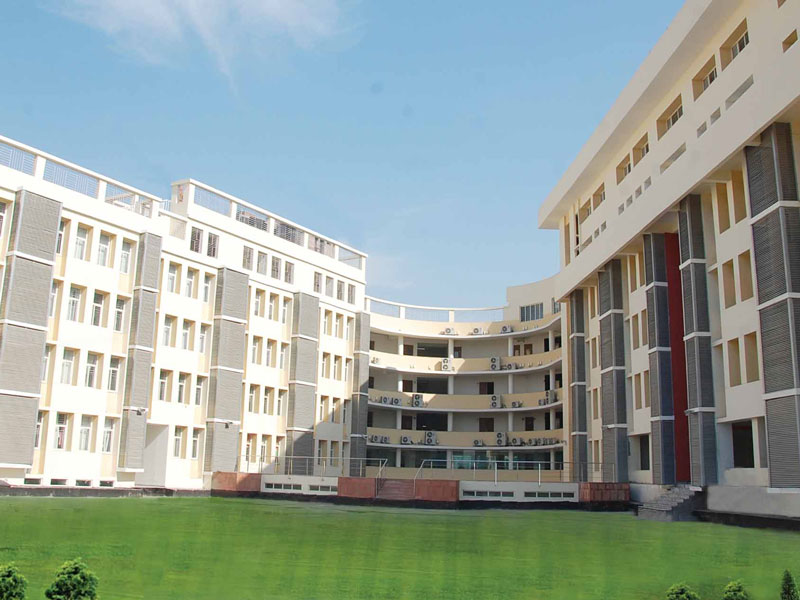 Noida Campus
!['s_Career_Prospects_through_Primary_Education_Opportunities[1]](https://globalindianschool.org/noida/wp-content/uploads/2024/12/Enhance_Your_Childs_Career_Prospects_through_Primary_Education_Opportunities1-300x169.png)