CBSE is a well-paced curriculum that is designed to promote deeper learning. However, due to the tough structure, students often end up cramming instead of understanding. That’s a gap a well-planned routine can fix. A well-planned routine can fill that gap.
And here’s the proof for it: an Oxford study revealed that routines help students improve grades by increasing organisation and reducing stress.
Read on to learn how to create a daily schedule for your child that complements the CBSE syllabus.
Why Your Child Needs a CBSE-Aligned Routine
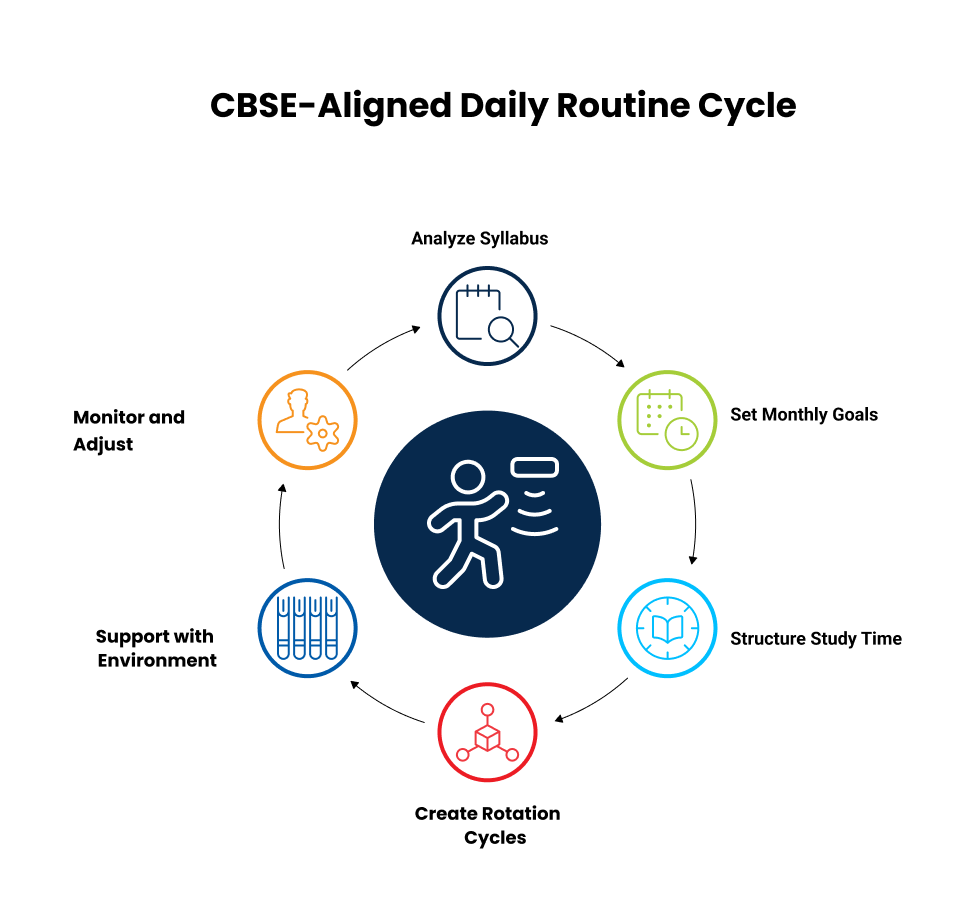
Developing a day-by-day routine that is in sync with the CBSE syllabus can be really beneficial in improving academic performance. Here’s why:
- The CBSE curriculum is cumulative and structured: One concept leads to another. A routine ensures continuity.
- When there is daily progress, students won’t panic at the last moment before exams.
- Students know precisely what and when they need to study. That improves time management.
- Consistent progress through the syllabus gives a feeling of accomplishment and academic confidence.
- Balanced timetables provide time for rest and revision. So, the chances of burnout are minimised.
As per a Stanford Report, students who applied a strategic approach to studying improved their exam scores by an average of one-third of a letter grade. That’s why GIIS Noida and other top CBSE schools for 11th and 12th promote mentorship programs as part of academic life.
Step-by-Step: How to Build a Daily Routine Around the CBSE Syllabus
The CBSE syllabus gives you a strong framework. Your job is to structure your day around it. Check out how to do it:
1. Analyse the CBSE Syllabus
First of all, you must know what you’re dealing with. Remember, the CBSE syllabus is strategically designed with specific learning outcomes. Try to understand it deeply.
You can start by collecting all subject syllabi for your child’s grade. They will have well-defined unit divisions and weightage patterns. Many quality CBSE schools in Noida usually provide this breakdown during orientation sessions.
For example, in class 10 mathematics, Algebra carries 20 marks while Statistics carries only 6 marks. That gives an idea as to where you must focus more.
You can prepare a simple spreadsheet with:
- Subject name
- Total units/chapters
- Mark weightage for each unit
- Estimated study hours required
- Difficulty level (your child’s perspective)
2. Break Down Into Monthly Goals
Now, break down the subject units into monthly milestones and weekly objectives. This keeps your child aligned with their school’s pace while developing responsibility.
The problem is that most families overestimate available study time. To avoid that, you can monitor your kid’s current routine for a complete week. Jot down everything — school timing, travel time, meals, after-school activities, screen time, and sleeping time. You will most likely find ‘lost’ hours that can be diverted towards studies.
On average, a student can dedicate 3-4 hours to studies on weekdays and 6-8 hours on weekends.

3. Structure the Study Time Effectively
Not every topic in the syllabus is worthy of the same attention. You can divide the units into three classes as per the mark weightage:
- High Priority: Allocate 40% of the child’s study time for concepts with maximum marks weightage. You can also include important topics that your child struggles to understand.
- Medium Priority: You can set moderate weightage topics and application-based problems under this category. Set aside 35% of study time for these units.
- Lower Priority: Schedule just 25% of study time for lower weightage concepts that your child can easily pick up.
This aligns well with the evaluation patterns followed by top CBSE secondary schools and ensures holistic preparation.
Also Read: Developing Care for the Environment: Practices for Sustainability in Schools
4. Create Subject Rotation Cycles
The human mind learns more with variety. So, make rotation cycles according to your child’s attention span rather than studying one subject for hours. For instance:
- Mornings are perfect for concept-oriented subjects such as Math and Science.
- Post-school sessions can be utilised for light revision of reading-oriented subjects such as Social Science, Hindi, English, etc.
- Let students complete homework or some MCQ practice sessions for the night.
And remember, CBSE focuses on well-rounded student development. That makes co-curriculars a necessity. Therefore, leave at least 45 minutes a day for hobbies.
How Parents Can Support the Routine
As a parent, your role is to facilitate the study environment. Have a look at how to do it:
- Designate a specific study space that’s free from distractions without a phone or TV in the room. You can stock it with necessary supplies so study time isn’t interrupted by searching for material.
- Place a printed calendar on the wall to let the child see the day ahead.
- Never create daily pressure. You just need to have a weekly check-in to make small adjustments.
Sample Daily Routine Based on the CBSE Syllabus
Here’s a sample CBSE-aligned routine for a high school student:
| Time | Activity |
| 6:30 AM | Wake up and freshen up |
| 7:00 AM | Light exercise and breakfast |
| 7:30 AM | Conceptual study (Math/Science) |
| 8:30 AM | Get ready for school |
| 9:00 AM–3:00 PM | School hours |
| 3:30 PM | 30-minute break with snacks |
| 4:00 PM | Study light subjects |
| 5:00 PM | Project preparation |
| 6:00 PM | Outdoor play or a hobby |
| 7:00 PM | Dinner and relaxation |
| 8:00 PM | Sample paper/homework |
| 9:30 PM | Light reading or journaling |
| 10:00 PM | Sleep |
Conclusion
A routine should be a habit-forming system that closely resembles the structure and goals of the child. When it is aligned with the CBSE syllabus, kids start to learn with purpose. That makes them well-prepared to face real-life challenges.
At GIIS Noida, this mindset is a part of daily learning. We support students in setting realistic goals and managing their time effectively through our structured mentoring programs. Join us now!
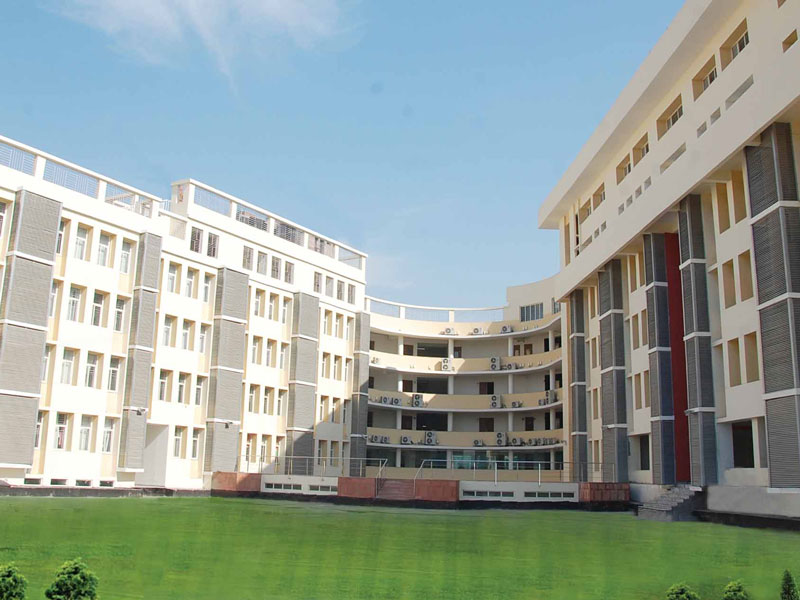 Noida Campus