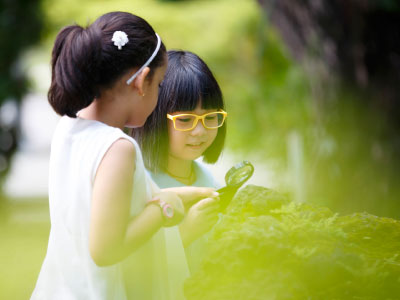
Nowadays, more schools are moving beyond rote methods and trying something deeper: joyful learning. It’s a way of teaching that evokes curiosity and encourages children to enjoy the process.
When children feel emotionally connected, they absorb knowledge more naturally. They ask more questions. They try harder without being asked. Over time, this kind of emotional safety builds confidence and a deeper love for learning.
A study in Indonesia showed that applying the Joyful Learning method in elementary school classrooms increased the average percentage of student learning activities from 71.25% to 85% between two cycles.
Let’s check out what is joyful learning and why it matters.
What is Joyful Learning?
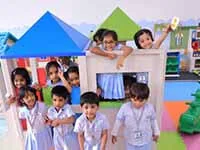
Joyful learning is a teaching approach where children learn through happiness. It involves storytelling, nature walks, collaboration, music, roleplay, and hands-on activities. The main idea behind this is to make children love the learning process.
When kids are happy and feel secure, their brains are more receptive to learning. Positive feelings release a substance called dopamine. It helps them increase their attention span and memory retention.
Therefore, when learning is enjoyable, it sticks better. Kids learn more actively, ask more questions, and have a stronger affinity with what they are learning.
And this approach aligns well with modern early education programmes like the GMP curriculum, where the core focus is on experiential learning.
Role of Joyful Learning in a Child’s Journey
Joyful learning has an incredibly strong influence on how a child will learn and develop over the years. The following are its main advantages:
Creates Emotional Security and Confidence
When learning environments are positive, kids feel emotionally safe. This eliminates the fear of failure which is one of the biggest obstacles in learning. Students will be more likely to raise their hands to contribute ideas and try something new.
Improves Long-Term Memory
Joyful brains are better at remembering. When learning is fun, ideas linger in a child’s memory longer. They are remembered more easily during exams.
According to Harvard University’s Center on the Developing Child, emotional experiences during early childhood literally become attached to the developing brain. They can have a long-lasting effect on the memory pathways. Students will be able to apply what they have learned in real-life situations even better.
Supports Overall Child Development
Positive learning environment improves the child’s social and emotional abilities as well. For instance, when kids work on a collaborative project, they have to learn to share, listen, and solve problems together as a team. Not to mention, these kinds of skills are really valuable in a professional setting.
Makes the Learning Process Natural and Active
In traditional settings, children are usually passive learners. Most of them just listen and repeat with the teachers.
Joyful learning reverses that. It makes students active participants, where they are required to explore and think. When the child becomes involved in the learning process, understanding is more meaningful and deeper. That’s why many top international CBSE schools are now adopting this approach.
Establishes a Stronger Connection With the Subject
Joyful learning enables kids to find out what they love most. It may be through science experiments, stories, puzzles, or music. If students become emotionally attached to a subject, they will want to learn it more and nurture genuine passion over a period of time.
Fosters Curiosity and Critical Thinking
Kids in joyful learning classrooms ask more questions. They are not learning solely for marks. They will be curious about the why and the how parts. This is the basis of critical thinking. Over time, they will know how to analyse and come to their own conclusions.
How Schools Bring Joy Into the Classroom
Check out how schools include joyful learning activities in classrooms:
- Storytelling: Children can learn character, history, and morality through storytelling, without having to memorise dry facts.
- Music and Movement: Subjects like maths or language may incorporate rhythm activities such as clapping syllables, singing times tables, etc. All these make the classroom engaging while reinforcing academic goals.
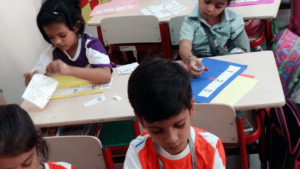
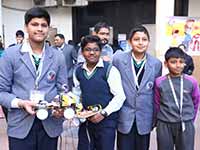
- Project-based Work: Students will be asked to work on real problems that matter, like designing posters for a local issue, building a model city, or exploring how solar energy works at home. These add a sense of relevance to the subject topics.
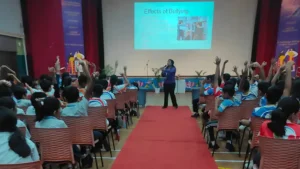
- Celebration of Learning: Schools usually have events in which children present what they’ve accomplished. It makes them feel a sense of accomplishment and lets parents see the smile in action.
GIIS Noida makes sure that such events are an ongoing part of classroom life. Being one of the top international curriculum schools in Noida, we maintain a healthy balance between structure and creativity to make learning engaging to students.
Conclusion
Joyful learning changes a child’s perspective on education. It brings energy into the classroom and lets the concepts stick in their mind forever.
But creating such a space is pretty challenging. It requires attentive teachers and a school culture that celebrates the unique journey of every student. That’s exactly what we are!
At GIIS Noida, we make joy a natural part of everyday learning through active hands-on activities. Let your child be nurtured in a positive learning environment!
 Noida Campus