Have you ever looked up at the night sky and wondered what lies beyond those stars? The sky is full of mysteries: shining planets, glowing moons, and countless stars that form our beautiful universe. Every time you see the Sun rise or the moonlight fill the sky, you are actually looking at a small part of something much bigger — the Solar System.
From the blazing Sun at the centre to distant icy planets, our Solar System is like a giant cosmic family. Each planet is different; some are hot and rocky, while others are cold and covered in gas or ice. Together, they form one of the most fascinating parts of science that children love to learn about.
In this blog, we’ll explore the meaning of the solar system, learn fun facts about each planet, and share some creative Solar System activities and projects that make learning about space enjoyable and easy to understand.
What Is the Solar System?
The Solar System is the big family of objects that includes the Sun and everything that orbits it. This consists of the eight planets, along with their moons, asteroids, and comets.
The word “solar” derives from “Sol,” meaning Sun. That’s why it’s called the Solar System — because everything in it depends on the Sun. The Sun’s strong pull, called gravity, keeps all the planets moving in their orbits around it. These paths are called orbits.
Imagine the Sun as the centre of a giant merry-go-round and the planets as horses going around it in circles. That’s how our Solar System works!
The Sun
At the centre of our Solar System shines the Sun, a huge ball of hot gases that gives us light and heat. Without the Sun, there would be no life on Earth — no plants, no animals, and no humans. It is the reason we can see during the day and stay warm even when we are millions of kilometres away from it.
The Sun’s gravity is extreme. It keeps all the planets from tiny Mercury to big Neptune — moving around it in their orbits. Think of the Sun as a magnet that holds the entire Solar System together.
Here are some facts about the Sun:
- The Sun is more than 1 million times bigger than Earth.
- It’s mostly made of gases, including hydrogen and helium.
- Sunlight takes about 8 minutes to get to Earth.
- The Sun appears yellow, but it actually emits white light.
So, the Sun is not just another star in the sky; it’s the most important member of our Solar System. It gives life, light, and energy to everything around it.
Which are the Eight Planets of the Solar System?
There are eight planets in our Solar System. All of them move around the Sun in fixed paths called orbits. Each planet is unique; some are small and rocky, while others are large and made of gas or ice. Let’s learn a little about each one!
1. Mercury – The Speedy Planet
Mercury is the closest and smallest planet orbiting the Sun. Because it’s so near the Sun, days on Mercury are extremely hot, while nights are cold. Mercury moves very quickly around the Sun — it completes one orbit in just 88 Earth days!
Fact: If you lived on Mercury, your birthday would come four times faster than on Earth!
2. Venus – The Brightest Planet
Venus shines brightly in the sky and can often be seen just before sunrise or after sunset. It is also known as the “Morning Star” or the “Evening Star.”
Even though it’s the second planet from the Sun, it’s the hottest one because thick clouds trap the heat. Venus is almost the same size as Earth, which is why it’s sometimes called Earth’s twin.
Fact: A day on Venus is longer than a year on Venus — it spins very slowly!
3. Earth – Our Beautiful Home
Earth is the third planet from the Sun and the only one known to have life. It has air to breathe, water to drink, and just the right temperature to live comfortably. About 70% of Earth’s surface is covered with water, which makes it look blue from space.
Fact: Earth has one moon and takes 365 days to go around the Sun.
4. Mars – The Red Planet
Mars is called the Red Planet because its soil contains iron dust that gives it a reddish appearance. Scientists have found signs that water may have once existed on Mars. Because of this, Mars is one of the most studied planets — many robots and rovers have visited it to find out more!
Fact: Mars has two tiny moons called Phobos and Deimos.
5. Jupiter – The Giant Planet
Jupiter is the largest planet in our Solar System; so big that more than 1,000 Earths could fit inside it! It’s a gas giant, meaning it’s made mostly of gases like hydrogen and helium. Jupiter has powerful storms, including one huge one called the Great Red Spot, which has been spinning for hundreds of years.
Fact: Jupiter has more than 90 moons!
6. Saturn – The Planet with Rings
Saturn is known for its beautiful rings, made up of ice, dust, and tiny rocks. It’s the second-largest planet in the Solar System and also a gas giant like Jupiter. Saturn’s rings can be seen even through a small telescope.
Fact: Saturn could float in water if there were a big enough ocean because it’s very light for its size!
7. Uranus – The Sideways Planet
Uranus is a blue-green planet because of the gas methane in its atmosphere. What makes it special is that it spins on its side; unlike any other planet! It’s also extremely cold because it’s far from the Sun.
Fact: Uranus has 27 moons and takes 84 Earth years to complete one orbit around the Sun.
8. Neptune – The Windy Planet
Neptune is the most distant planet from the Sun and also the coldest. It’s known for its strong winds that blow faster than the speed of sound. Like Uranus, Neptune looks blue because of methane gas in its atmosphere.
Fact: Neptune has a big dark storm, just like Jupiter’s Great Red Spot.
Other Amazing Members of the Solar System
Our Solar System is not made up of just the Sun and the eight planets. Many other exciting celestial bodies orbit the Sun. These members may be small, but they play an important role in helping scientists better understand space.
1. Dwarf Planets
Dwarf planets are smaller than normal planets, but they also move around the Sun. The most famous one is Pluto, which was once called the ninth planet. Other dwarf planets include Ceres, Eris, and Makemake.
Fact: Pluto is smaller than Earth’s moon!
2. Moons
Many planets have moons that orbit around them, just like our Moon orbits the Earth. Some planets have only one moon, while others have many.
- Earth has 1 moon.
- Mars has 2 small moons.
- Jupiter has more than 90 moons!
Moons are made of rock or ice and reflect sunlight, which is why we can see them shine in the night sky.
3. Asteroids
Asteroids are rocky pieces that orbit the Sun. Most of them are found in the Asteroid Belt between Mars and Jupiter. Some are as small as pebbles, and others can be hundreds of kilometres wide.
4. Comets
Comets are like dirty snowballs made of ice, rock, and gas. When they come close to the Sun, the ice starts to melt, forming a glowing tail that stretches across space. That’s why comets look so bright when we see them in the sky.
5. Meteoroids
Meteoroids are small rocks or dust floating in space. When they enter Earth’s atmosphere and burn up, they make a bright streak of light; what we call a shooting star!
Fun Solar System Facts for Kids
The Solar System is full of amazing wonders that can surprise anyone who learns about it. Every planet, moon, and star has something special about it. Here are some fun and easy-to-remember facts that make space learning even more exciting!
| Topic | Fun Fact |
| The Sun | Light from the Sun takes just 8 minutes to reach Earth. |
| Mercury | A single day on Mercury lasts nearly 59 Earth days! |
| Venus | It’s the hottest planet even though it’s not the closest to the Sun. |
| Earth | About 70% of the Earth’s surface is water. |
| Mars | The red colour comes from iron dust on its surface. |
| Jupiter | The largest planet could fit more than 1,000 Earths inside it! |
| Saturn | Its beautiful rings are made of ice and tiny rocks. |
| Uranus | It spins on its side, unlike any other planet. |
| Neptune | Has the strongest winds in the Solar System. |
| Pluto (Dwarf Planet) | So small that five Plutos could fit across Earth’s width. |
Learning these facts gives children fun solar system information that they can share in class or use for their Solar System Projects. These interesting details also help in creating colourful Solar System Activities, such as quiz games, chart-making, and space drawings.
Solar System Activities for Kids
Learning about space is even more fun when you get to do something with it!
Here are a few simple Solar System Activities that help children understand how the planets move and what makes each one special:
- Make a Paper Solar System: Cut out circles of different sizes to show the planets. Colour them and stick them in order around the Sun.
- Planet Order Song: Create a short rhyme or song to remember the planets. It’s a fun way to learn their order!
- Observe the Sky: Look at the night sky with your parents or teachers. Try to spot the Moon, bright planets, or constellations.
These easy Solar System Activities make learning more interesting and help children remember important solar system information in a creative way.
Solar System Projects and Ideas
School projects are a great way to show what you’ve learned about space. Here are a few simple and fun Solar System Projects you can try:
- Clay Planet Model: Use coloured clay to make small planets and arrange them around a big yellow Sun.
- Hanging Mobile Project: Make a hanging model using strings and paper planets to show how they orbit the Sun.
- Science Fair Display: Add facts, drawings, and labels to create a mini solar system science project for school exhibitions.
These Solar System Projects not only make studying science enjoyable but also help students understand how planets and other celestial bodies orbit the Sun.
Why Learning About the Solar System Is Important
Learning about the Solar System helps children understand more about the world beyond Earth. They discover how the Sun, planets, and moons move and work together. Many CBSE schools in Pune offer scholarships to encourage this kind of curiosity, as it helps children think deeply, explore new ideas, and develop a lasting interest in science.
Here’s why learning about the Solar System matters for young minds:
- Builds Curiosity:
Children begin to ask questions like “Why does the Earth move around the Sun?” or “How far is Mars?” Curiosity is the initial step in learning science.
- Encourages Discovery:
Knowing basic solar system information helps students explore how the universe works and inspires them to discover more.
- Makes Learning Fun:
Through Solar System projects and simple activities, children learn by doing, whether by building models, drawing planets, or creating charts.
- Teaches Observation:
When children watch the sky, spot stars, or track the Moon, they develop focus and observation skills.
- Creates Awareness:
Understanding space helps children appreciate Earth and teaches them why it’s important to protect it.
Explore the Universe, One Planet at a Time!
The Solar System is full of amazing things waiting to be explored. From the shining Sun to the faraway planet Neptune, every part of it teaches us something new about space, light, and life. Learning about the planets, moons, and other space bodies helps children understand where Earth belongs in the vast universe.
Whether through reading, sky-watching, or creative Solar System projects, every child can discover something exciting about our cosmic home. These small steps of curiosity often lead to big dreams of becoming scientists, astronauts, or simply lifelong learners who love to explore.
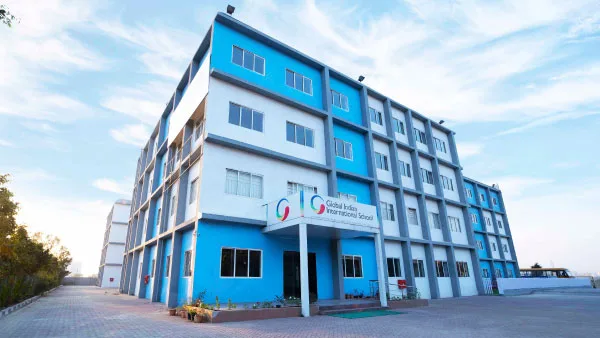
At Global Indian International School, Pune, students are encouraged to learn beyond books, observe the world around them, and stay curious about how things work. The more they explore, the more they realise that every discovery begins with one simple question — what’s out there?
FAQs
1. What is the meaning of the Solar System?
The meaning of the Solar System is simple — it is a group of planets and other space bodies that move around the Sun. The Sun’s strong gravity keeps everything, including planets, moons, and asteroids, in their orbits.
2. How can students make a Solar System Science Project?
Students can create a solar system science project using simple materials like paper, clay, or cardboard. They can build models of planets, label them in order from the Sun, or show how they orbit. These projects help children learn visually and remember how each planet is different.
3. What kind of Solar System Information should kids know?
Children should know basic solar system information, such as the names and order of the eight planets, how the Sun provides light and heat, and what makes each planet special. They can also learn about moons, comets, and asteroids to understand how the Solar System works together.