Are your students getting anxious before exams? Do they feel ready one day and confused the next? This happens to many children across schools, no matter how smart they are. The pressure is real, but so is the solution.
Knowing how to prepare for exams is not just about studying more hours. It’s about using the right method, the right way, at the right time. And this is where teachers and parents can make a real difference.
How to Prepare for Exams: The Basics You Must Know First
Let’s begin with the truth. Every child learns differently. But some basic steps help everyone stay focused and score better. If you’re guiding a child through the cbse curriculum or even international boards, the approach below will still work.
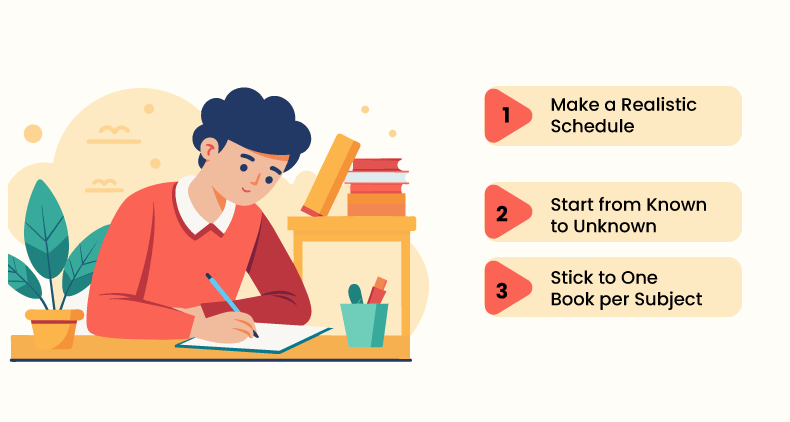
Make a Realistic Schedule:
Don’t tell students to study 10 hours. Instead, help them divide subjects over weeks. Keep shorter study times with regular breaks. Use the 90-20 rule – 90 minutes of study, 20 minutes of full break. Students follow better when it doesn’t feel forced.
Start from Known to Unknown:
Begin revision with topics the child feels confident in. Then move slowly to difficult ones. This builds momentum. They feel in control instead of panicking.
Stick to One Book per Subject:
Too many reference books confuse. Stick to textbooks and classroom notes. Especially for those in the Best International Schools or schools using CBSE books, NCERT is enough.
How to Study for Exams – Right Way, Every Day
Parents and teachers often ask how to study for exams in a way that sticks. It’s not just about reading pages. It’s about engagement.
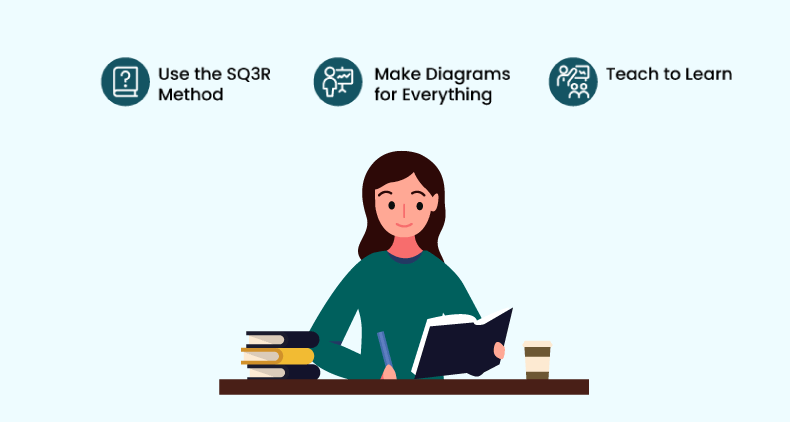
Use the SQ3R Method:
It stands for Survey, Question, Read, Recite, Review. Ask students to skim the chapter first. Then write questions from headings. After reading, answer those questions. Then review once again.
Make Diagrams for Everything:
Science, history, geography – all get easier with flowcharts. Students remember visuals longer than plain text.
Teach to Learn:
Ask the child to teach a topic to someone. Even a teddy bear. It’s part of the Feynman technique. When they explain something, they understand it deeper.
How to Study Effectively for Exams – Real Techniques That Work
Different students need different tools. But the methods below help almost everyone when done right. These work especially well for students in schools like those in Schools in Amanora Park Town, where exam preparation is structured but flexible.
| Technique Name | What It Does | When to Use It | Best For Subjects |
| Pomodoro Technique | Boosts focus and rest balance | When attention drops fast | Maths, Science |
| Active Recall | Tests memory and recall speed | One week before exams | History, Biology |
| Mind Mapping | Organises big concepts visually | For revisions | Geography, Literature |
| Flash Cards | Quick testing and memory trigger | During daily reviews | Vocabulary, Formulas |
| Past Paper Solving | Builds exam strategy | 15 days before exams | All subjects |
Encourage students to mix and match based on subject and energy levels. Some students prefer flash cards while walking. Some like mind maps on their walls. Make it personal.
How to Revise Effectively Without Feeling Bored
The biggest mistake most students make is revising without strategy. Random revision wastes time. If you really want to guide your student on how to revise effectively, here’s what helps:
Set Weekly Revision Goals:
Don’t try to revise everything daily. Fix 3 days a week for deep revision of one subject each.
Use Colour Codes:
Let them mark chapters using green, yellow, and red – green is done, yellow needs more work, red is weak. Visual markers push the brain into action.
Also use group revision sometimes. In schools following the CBSE Curriculum, subject teachers can run revision quizzes in groups to boost interest.
How to Practice for Exams and Not Just Study
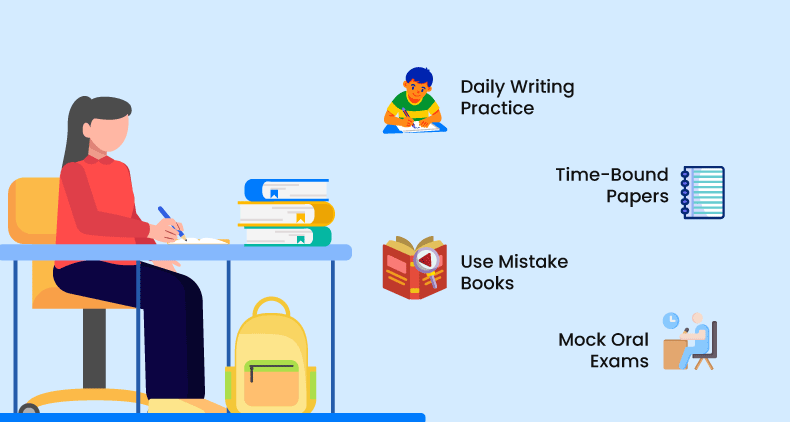
This step is ignored by many. But if students don’t practise enough, they forget all that reading during the exam. To know how to practice for exams, keep these in mind:
Daily Writing Practice:
Even if it’s one answer, make them write daily. Writing helps improve speed and reduces panic in actual exam.
Time-Bound Papers:
Ask students to solve one paper every week under exam conditions. Set timer. No help. Check after.
Use Mistake Books:
Every mistake must go into one notebook. Wrong maths step? Wrong date in history? It should be written and reviewed. This avoids repeat mistakes.
Mock Oral Exams:
Teachers can try oral Q&A sessions. This works well for language and social studies.
Remember, practice is the real test before the actual one.
The Numbers Don’t Lie
In 2024, out of 1.63 million registered students, 1.45 million passed, with a pass percentage of 87.98%. That’s a small jump from 87.33% in 2023. This shows students are improving, slowly but surely. And right preparation is the reason.
Conclusion: How to Prepare for Exams Starts With the Right Support
If you want to guide your child on how to prepare for exams, focus more on the method than the hours. Don’t push for long study hours. Help them use techniques that make their time count.
If you’re looking for structured exam support, GIIS Pune offers smart preparation modules under trained teachers and personalised guidance. Contact us today to learn more.