Key Highlights
- A Montessori school focuses on child-led learning through hands-on activities and exploration
- Preschool education activities play a key role in building creativity, motor skills, and independence
- Montessori learning supports self-confidence, curiosity, and early problem-solving skills
- Parent involvement, trained educators, and a safe environment are essential for effective Montessori education
- The right school choice shapes a child’s lifelong attitude towards learning and growth
Early childhood is the most important stage of learning. This is when children start building habits, thinking patterns, and basic life skills that stay with them for years.
At this stage, the right school environment makes a big difference. A Montessori school is known for its simple, child-focused approach to learning. It allows children to learn by doing, exploring, and moving at their own pace.
Today, many parents search for a Montessori preschool near their homes, but it is not always easy to know which one is the right fit. Every school may look similar, but the approach and quality can be very different.
This blog will help parents identify the key factors to consider when choosing the right Montessori school for their child.
Understanding the Montessori Approach
The Montessori approach is a simple way of learning in which children are given the freedom to explore and learn at their own pace. Instead of only listening to lessons, children learn by doing real activities in a prepared environment.
In a Montessori school, the focus is on helping children become independent, confident, and curious learners from an early age.
How it works in simple terms:
- Children choose activities based on interest
- Learning happens through hands-on materials
- Teachers guide instead of directly instructing
- Mixed-age classrooms encourage peer learning
This approach supports natural learning and builds strong thinking skills in the early years.
International Curriculum & Global Exposure
Many modern Montessori schools follow an international curriculum to provide children with a broader learning experience. This helps them understand different ideas, cultures, and learning styles from an early stage.
Parents often look for Montessori schools in Ahmedabad or Mumbai that offer both Montessori methods and global exposure.
Why it matters:
- Children get exposure to modern teaching methods
- Learning is not limited to textbooks
- Builds early awareness of global cultures
- Encourages communication and confidence
What parents should look for:
- Balanced curriculum with academics and activities
- Exposure to preschool education activities like art, storytelling, and group play
- Opportunities for creative and practical learning
A good international approach ensures children are prepared for future learning stages with confidence.
Qualified & Experienced Educators
Teachers play the most important role in a child’s early learning journey. In a Montessori setup, educators are not just instructors; they are guides who support each child’s natural learning pace.
A good Montessori school focuses on training teachers to understand child behaviour, learning speed, and emotional needs.
What parents should look for:
- Teachers trained in Montessori methods
- Calm and patient classroom approach
- Ability to observe and guide, not control
- Focus on individual child development
Experienced educators help children feel safe, confident, and motivated to learn every day.
Safe & Stimulating Learning Environment
A child learns best in a space that is both safe and engaging. The environment in a Montessori classroom is carefully designed to support independence and curiosity.
Key features of a good Montessori environment:
- Child-sized furniture and learning tools
- Clean, organised, and safe spaces
- Easy access to learning materials
- Freedom to move and explore safely
Quick Comparison: Ideal vs Poor Learning Environment
| Ideal Montessori Environment | Poor Learning Environment |
| Child-friendly setup | Overcrowded classrooms |
| Organised learning zones | No structure or clarity |
| Hands-on materials available | Limited learning tools |
| Safe movement space | Restricted or unsafe layout |
A well-designed environment encourages children to explore confidently and supports better preschool education activities in daily learning.
Focus on Holistic Development
A good Montessori school does not focus only on academics. It focuses on the child’s overall growth. This includes thinking skills, emotions, social behaviour, and physical development.
In the early years, this balanced growth is more important than marks or exams.
How holistic development is supported:
- Learning through play and real-life activities
- Building independence in daily tasks
- Encouraging creativity through art and music
- Developing social skills through group interaction
What parents should observe:
- The child shows curiosity in learning
- Improved confidence in communication
- Better ability to work with others
A strong focus on holistic growth ensures children are ready for future learning with the right foundation.
Parent Involvement & Communication
Parent involvement is a key part of early education. When parents and schools work together, children feel more supported and secure in their learning journey.
A good Montessori school maintains regular and clear communication with parents.
How schools keep parents involved:
- Regular updates on child progress
- Parent-teacher meetings
- Sharing daily or weekly learning activities
- Open discussions about child development
Simple parent-school connection flow:
Home → Observation → School Feedback → Improved Learning → Better Development
When parents stay involved, children adjust better and show steady improvement in both behaviour and learning.
Reputation & Reviews
When choosing a Montessori school, real experiences from other parents can give clear insight into how the school actually functions. Reputation is built over time through consistency in teaching quality, safety, and child development outcomes.
Instead of focusing only on what the school claims, parents should also consider what others say.
What to check before deciding:
- Parent feedback and testimonials
- Consistency in teaching approach
- How children respond after joining
- Overall trust and long-term reputation
Quick evaluation lens:
If most reviews highlight happy children, caring teachers, and steady progress, it is usually a positive sign.
A strong reputation often reflects a reliable Montessori school experience in real practice.
Location & Accessibility
Location may seem like a simple factor, but it plays a big role in a child’s daily routine. Long travel time can affect energy levels, mood, and attendance consistency.
Many parents searching for a “Montessori preschool near me” often prioritise convenience, but it should be balanced with quality.
Why location matters:
- Short travel time reduces fatigue
- Easier daily drop-off and pick-up
- Better consistency in attendance
- More time for rest and family activities
Smart decision balance:
| Convenience First | Balanced Choice |
| Closest school only | Quality + manageable distance |
| Limited options checked | Multiple schools compared |
| Focus only on travel time | Focus on learning + comfort |
The best choice is a school that is both accessible and offers strong early learning experiences.
Questions Parents Should Ask
Before finalising a Montessori school, parents should actively ask questions. This helps in understanding the real learning environment beyond brochures and websites.
Instead of guessing, the right questions give clarity and confidence.
Key questions to ask:
- How is learning planned for each child?
- What is the teacher-to-student ratio?
- How are preschool education activities structured on a daily basis?
- How do teachers handle behaviour or emotional needs?
- What kind of parent communication is followed?
Final Thoughts: Making the Right Start for Your Child’s Learning Journey
Choosing the right early education environment is one of the most meaningful decisions a parent can make. A strong Montessori school does more than teach basics; it builds independence, confidence, and a lifelong love for learning.
From understanding the teaching approach and checking educator quality to evaluating safety, location, and parent feedback, each factor plays an important role in finding the right fit. Parents who carefully compare options, including Montessori schools in Ahmedabad, are better able to identify a learning space that truly supports their child’s growth.
Today, many families also explore options like nearby Montessori preschools to find a balance between quality education and convenience. The right choice is always one that combines a nurturing environment with strong learning experiences and meaningful preschool education activities.
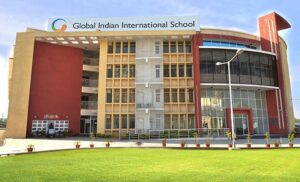
Institutions like Global Indian International School focus on creating such balanced early learning environments, where children are encouraged to explore, learn, and grow with confidence at every stage of their journey.
With the right Montessori school, parents are not just choosing a classroom; they are choosing the foundation of their child’s future.
FAQs
- What is a Montessori school?
A Montessori school is a child-centred learning environment where children learn through hands-on activities, exploration, and self-paced learning, rather than through traditional teaching methods.
- How do I find the best Montessori preschool near me?
To find the best Montessori preschool, check teaching methods, teacher experience, safety, parent reviews, and learning environment before making a decision.
- What are the benefits of preschool education activities in Montessori schools?
Preschool education activities in Montessori schools help children develop motor skills, creativity, independence, and early problem-solving skills.
- How is a Montessori school different from a regular preschool?
A Montessori school focuses on self-directed learning and practical activities, while traditional preschools often follow structured, teacher-led lessons.
- Is Montessori education suitable for all children?
Yes, Montessori education suits most children as it adapts to individual learning pace and encourages independence and curiosity.
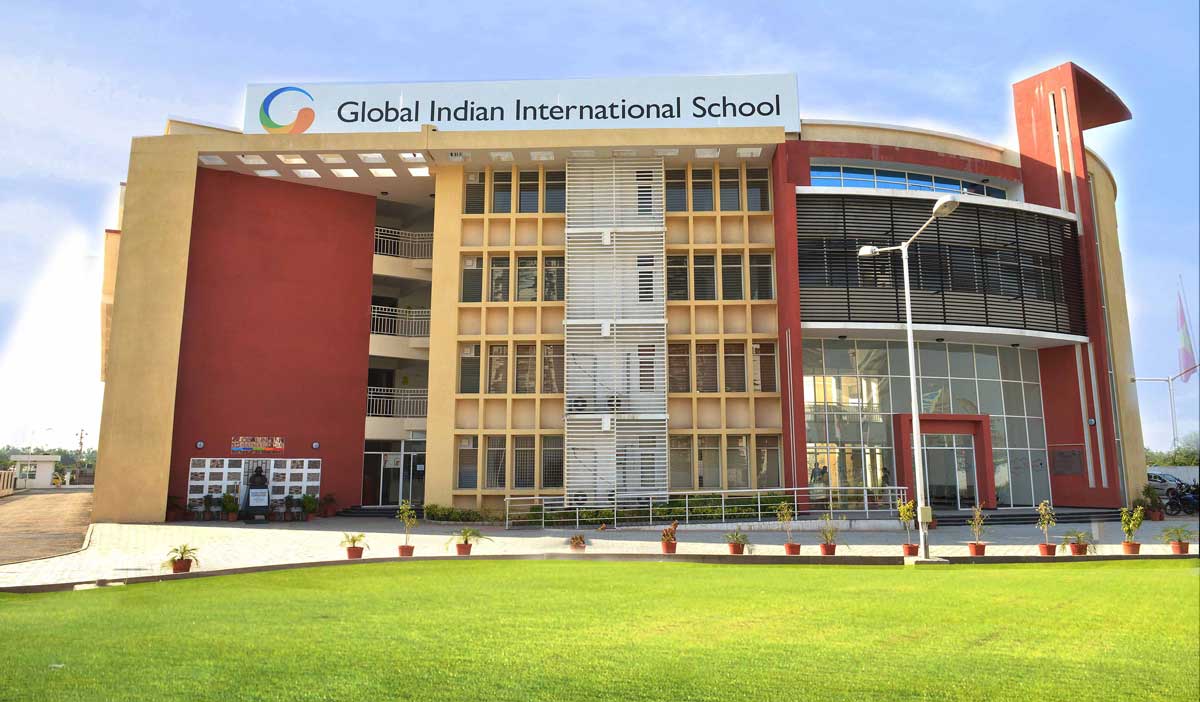 Ahmedabad Campus



![Global Montessori Programme [GMP]](https://globalindianschool.org/ahmedabad/wp-content/uploads/2023/09/l1.png)