The CBSE full form is the Central Board of Secondary Education, a name familiar to millions of students, parents, and educators across India and abroad. It is one of the country’s most recognised and followed school education boards. This covers what makes CBSE different, how it works, and why it’s preferred.
A Quick Look at the CBSE Board
The CBSE full form in education is Central Board of Secondary Education. It represents a national-level education system regulated by the Indian Government. CBSE governs public and private schools and ensures all affiliated institutions follow the NCERT curriculum, which focuses on uniform standards and structured content across subjects.
The board conducts two major school-level exams yearly: AISSE (All India Secondary School Examination) for Class 10 and AISSCE for Class 12. It also conducts national entrance exams like NEET, JEE, and CTET.
A Brief History of CBSE
CBSE’s roots go back to 1921, when the Board of High School and Intermediate Education was established. Later, in 1929, the Indian government reorganised it into what we now know as the Central Board of Secondary Education.
From its Delhi headquarters, CBSE oversees over 27,000 schools in India and over 220 international schools across 28 countries. Today, the board aims to maintain educational consistency and quality.
Key Objectives of CBSE
CBSE’s goals go beyond exams. Some of CBSE’s objectives include:
- Promoting stress-free, child-centred learning
- Regularly upgrading the curriculum based on educational feedback
- Encouraging co-curricular development
- Training teachers to enhance instructional quality
- Aligning with national educational goals
This structured approach helps CBSE school students prepare well for board exams and competitive tests.
CBSE Exams and Eligibility
If you’re a student enrolled in a CBSE-affiliated school, you are eligible to take:
- AISSE (All India Secondary School Examination) after Class 10
- AISSCE (All India Senior School Certificate Examination) after Class 12
The board also conducts exams like:
- JEE (Joint Entrance Examination) for engineering aspirants
- NEET (National Eligibility cum Entrance Test) for medical college admissions
- CTET (Central Teacher Eligibility Test)
- NET (National Eligibility Test) for college-level teaching
These exams are nationally respected and provide a fair platform for all students.
Language and Reach
The CBSE’s full form in English is the Central Board of Secondary Education. It operates in both English and Hindi as official languages. Its vast reach includes urban and rural schools, helping bridge educational gaps across regions.
Unsurprisingly, parents looking for Good International Schools in Pune often consider CBSE due to their balance of academics, structure, and exam readiness.
Regional Presence
CBSE has regional offices to ensure smooth administration. A few of them are included in the list below:
- Delhi (NCT and foreign schools)
- Chennai (South India)
- Ajmer (Rajasthan, Gujarat)
- Guwahati (North-East)
- Panchkula (North India)
- Dehradun (Uttarakhand, UP)
This decentralised system helps address issues and streamline communications for schools and students.
Advantages of CBSE Curriculum
- Uniformity: Students moving between states or cities can continue their education without interruption.
- Competitive Exam Ready: Most entrance exams in India are aligned with the CBSE syllabus.
- Language Proficiency: Students typically perform well in English compared to regional boards.
- Balanced Approach: Equal importance is given to academics and extracurricular activities.
- Ease of Learning: Structured textbooks and clear exam guidelines reduce student stress.
Parents searching for Top Nursery Schools in Pune often check if the school eventually aligns with CBSE to ensure a smooth academic transition later.
CBSE in the 21st Century
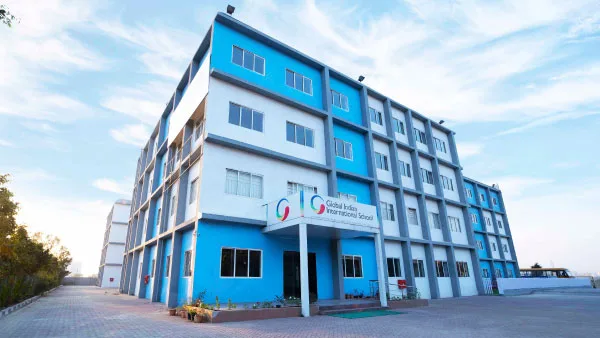
Today, CBSE continues to evolve with changes in education technology, incorporating AI tools, coding, and vocational training into its curriculum. Schools like GIIS (Global Indian International School) adopt such innovations to help students stay ahead. While GIIS follows the CBSE and international curricula, it also integrates global learning methods to enhance classroom delivery and student outcomes.
This adaptability is one reason many families prefer CBSE Schools in Pune for 11th and 12th grades, as senior classes under CBSE effectively prepare students for higher education, both in India and abroad.
CBSE is more than an education board—it stands for consistency, accessibility, and academic excellence. Knowing about CBSE helps families make informed decisions about their child’s learning journey.
With its clear objectives, structured curriculum, and national recognition, the CBSE board full form remains relevant in an ever-changing educational landscape. Whether searching for good international schools in Pune or planning for senior secondary education, understanding how CBSE works can provide a strong foundation for your child’s future.