Gifted education is a specialised approach to teaching students who show advanced abilities, strong potential or exceptional interest in one or more areas. It provides suitable challenges, enrichment activities, and learning opportunities that go beyond the standard curriculum. The goal is to help gifted learners develop their strengths while also supporting their social, emotional and overall development.
Introduction
Every child learns differently. Some children may show an early interest in complex ideas, learn new concepts quickly, ask detailed questions, or demonstrate strong abilities in a particular subject or creative area. These learners may benefit from educational experiences that go beyond the standard classroom curriculum.
This is where gifted education can play an important role. It is designed to provide suitable levels of challenge, enrichment and support to students who demonstrate advanced abilities or strong potential in one or more areas. Giftedness can appear in academic, creative, artistic, leadership or other domains, and children with these abilities may have different learning needs.
For parents, understanding gifted education can help them recognise their child’s strengths and make informed decisions about learning opportunities.
What Is Gifted Education?
Gifted education refers to specialised educational approaches designed to support students who demonstrate, or have the potential to demonstrate, advanced abilities in one or more areas.
The focus is not simply on giving a child more schoolwork. Instead, gifted education aims to provide learning experiences that match the student’s level of readiness, interests and abilities. This can include deeper exploration of subjects, enrichment activities, advanced learning opportunities, problem-solving tasks and, where appropriate, acceleration.
The National Association for Gifted Children notes that gifted learners may need modifications to their educational experiences to develop their potential. It also highlights that gifted students can come from different backgrounds and may have different social, emotional and learning needs.
Therefore, gifted education should not be viewed as a single fixed teaching model. A well-designed approach can include different forms of support depending on the student’s needs.
How Does a Gifted Education Programme Work?
A gifted education programme may use a combination of classroom strategies and specialised learning opportunities. The exact approach can vary between schools and depends on factors such as the child’s age, abilities, interests and learning progress.
Some common approaches include:
- Enrichment: Students explore topics in greater depth or study areas beyond the regular curriculum.
- Acceleration: A student may move through content at a faster pace when appropriate.
- Advanced learning: Students may receive more challenging assignments or work with concepts beyond their usual grade level.
- Flexible grouping: Students may sometimes work with peers who have similar learning needs or interests.
- Project-based learning: Open-ended projects can allow students to investigate questions, conduct research and develop solutions.
- Individualised support: Teachers can adapt instruction based on a student’s strengths, progress and areas that require support.
The NAGC recommends a continuum of services that provides different levels of challenge and support according to individual learners’ needs. Parents exploring CBSE schools in Pune can ask how differentiated instruction and enrichment are incorporated into everyday learning.
Key Features of a Gifted and Talented Education Programme
A good gifted and talented education programme should go beyond simply identifying high-performing students. It should provide meaningful opportunities for them to develop their abilities.
- Challenging Learning Experiences
Gifted learners may need activities that encourage deeper thinking rather than simply more repetition. Teachers can use complex questions, research tasks and problem-solving activities to encourage students to analyse and apply what they know.
- Opportunities for Enrichment
Enrichment gives students the opportunity to explore topics beyond the standard curriculum. For example, a student interested in science may conduct an independent investigation, while a student interested in literature may explore different writing styles or themes.
- Scope for Independent Learning
Gifted students can benefit from opportunities to make choices about what and how they learn. Independent projects can help them develop research, organisation and decision-making skills.
- Support Beyond Academics
Academic ability is only one part of a child’s development. Gifted learners may also need support with collaboration, communication, emotional development and managing expectations. NAGC highlights the importance of social and emotional support alongside talent development.
What Is Gifted Learning?
Gifted learning refers to learning experiences that provide an appropriate level of challenge for students with advanced abilities or potential.
It does not necessarily mean that a child should be placed in a separate classroom. In many cases, teachers can adapt regular classroom instruction through deeper questions, differentiated tasks, enrichment activities or flexible grouping.
For example, instead of asking a student to complete ten similar mathematics problems, a teacher could provide a real-world problem that requires the student to identify different ways of reaching a solution. This can encourage reasoning, creativity and higher-order thinking.
The aim is to ensure that capable learners continue to learn rather than simply repeat concepts they have already mastered.
What Are the Gifted Education Benefits for Students?
The gifted education benefits can vary depending on the quality of the programme and the individual learner. A suitable approach can help students experience greater academic challenge while developing skills beyond subject knowledge.
Some potential benefits include:
- Deeper Understanding of Subjects
Students can explore concepts beyond the basic curriculum. This allows them to develop a stronger understanding of subjects that interest them.
- Stronger Critical Thinking
Open-ended questions, research and complex problems can encourage students to compare information, evaluate ideas and develop logical solutions.
- Greater Creativity
Enrichment and project-based activities can give students space to experiment, develop original ideas and approach problems from different perspectives.
- Better Learning Motivation
When students receive work that matches their level of readiness, they may find classroom learning more engaging. However, motivation depends on several factors, so gifted education should be personalised rather than based on assumptions about every gifted learner.
- Development of Personal Strengths
A student may have strong abilities in mathematics, language, science, arts, technology or leadership. Appropriate learning opportunities can help them recognise and develop these strengths.
A recent research also suggests that well-designed enrichment programmes can support both cognitive and affective development among gifted students, although outcomes can vary across interventions and learners.
How Can Parents Support Gifted Learners?
Parents do not need to design a specialised curriculum at home. Their role can be to understand the child’s interests, provide suitable opportunities and work with teachers.
Here are some practical ways parents can help:
- Observe the child’s interests: Notice which subjects, activities or questions consistently capture their attention.
- Encourage curiosity: Allow children to ask questions and explore topics beyond their textbooks.
- Provide age-appropriate challenges: Puzzles, books, experiments, creative projects and problem-solving activities can encourage deeper thinking.
- Avoid excessive pressure: Being advanced in one area does not mean a child should excel in everything.
- Focus on effort and learning: Praise curiosity, persistence and improvement rather than only high marks.
- Communicate with teachers: Discuss the child’s strengths, interests and classroom experiences regularly.
- Support social and emotional development: Encourage friendships, teamwork and healthy ways of handling mistakes or setbacks.
Parents should also remember that giftedness may not always be immediately visible through examination scores. Children can demonstrate advanced potential in different ways and may require different forms of support.
How Schools in Pune Support Gifted Education
Schools in Pune are increasingly focused on providing learning experiences that support academic achievement alongside broader skill development. When evaluating a school, parents can look beyond the presence of a programme labelled as gifted education and examine how the school identifies strengths, differentiates instruction and provides enrichment opportunities.
Not every school uses the formal label “gifted education.” Some schools support advanced learners through differentiated teaching, enrichment, competitions, projects and personalised learning opportunities.
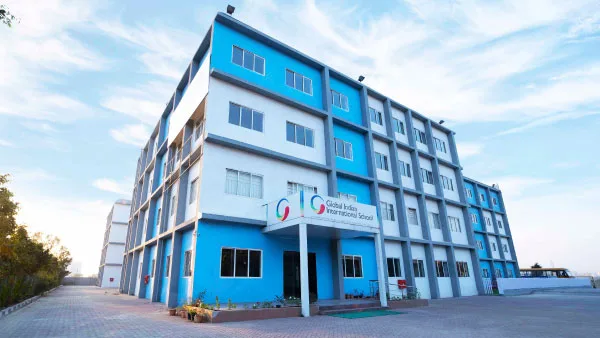
At Global Indian International School (GIIS) Pune, the 9GEMS framework combines academics with opportunities in leadership, innovation, sports, arts and community engagement. For students who demonstrate advanced interests or abilities, parents should ask how teachers differentiate classroom tasks, provide subject-specific challenges and create opportunities for independent projects or competitions.
GIIS Pune offers the CBSE curriculum and Global Montessori Plus Programme, with opportunities for students to develop their academic and non-academic interests. Its school-level information also highlights opportunities for students to showcase their talents through activities, service projects and field trips.
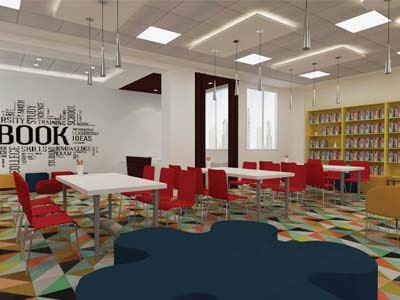
The school’s SMART Campus approach also incorporates technology-enabled classrooms, laboratories and other learning spaces designed to support diverse learning experiences. GIIS has campuses in Hadapsar, Balewadi and Charholi, giving Pune families multiple campus options.
For parents considering a school for a child with advanced abilities, the key is to understand how the school identifies individual strengths and provides opportunities for students to explore them at an appropriate level.
Supporting Every Child’s Potential Through Gifted Education
Gifted education is about more than helping high-achieving students score better. It is about understanding individual abilities and providing the right level of challenge, enrichment and guidance to help children develop their potential.
The benefits of gifted education can include deeper learning, stronger critical thinking, creativity and opportunities to explore individual interests. However, effective support should also consider a child’s social, emotional and personal development.
Parents can begin by observing their child’s interests, discussing their learning needs with teachers and looking for schools that offer opportunities for academic and holistic development. A school environment that recognises different strengths can help children remain curious, engaged and confident as they continue learning.
Frequently Asked Questions (FAQ)
1. What is the purpose of gifted education?
The purpose of gifted education is to provide appropriate challenge, enrichment and support to students who demonstrate advanced abilities or potential in one or more areas.
2. What is included in a gifted education programme?
A gifted education programme may include enrichment activities, advanced learning, differentiated instruction, flexible grouping, independent projects and acceleration where appropriate. The exact approach depends on the student’s needs.
3. Is gifted education only for students who score high marks?
No. Giftedness can appear in different areas, including intellectual, creative, artistic, leadership and specific academic abilities. Identification should consider more than examination performance alone.
4. What are the benefits of gifted education?
The benefits of gifted education may include deeper subject understanding, improved critical thinking, creativity, greater engagement and opportunities to develop individual strengths. The outcomes depend on the quality and suitability of the educational approach.
5. How can parents identify whether their child may need gifted learning opportunities?
Parents can observe whether their child consistently demonstrates advanced understanding, unusual curiosity, strong problem-solving abilities or exceptional interest in particular areas. They can then discuss these observations with teachers and explore appropriate assessment or enrichment options.