Switching from CBSE to an International Baccalaureate (IB) programme changes more than a student’s textbooks. Depending on their age and the programme they enter, they may encounter more inquiry, discussion, research and varied assessments. The transition can build useful skills, but it may also take time to adjust to new expectations. Before deciding, families should check the programme, subjects, entry requirements and support offered by the prospective school.
Is Switching from CBSE to IB Right for Your Child?
CBSE and IB can both provide a strong education, but the student experience depends on the programme, school and stage of entry. CBSE sets out subject curricula and assessment requirements; IB provides four programmes across different age groups, each with its own approach to learning and assessment. Academics Unit : Curriculum/Syllabus
A useful starting point is to ask why your family is considering the move. Is your child seeking a different classroom experience? Are you relocating? Does a future education plan call for particular subjects or qualifications? The answers will help you judge whether a change is worthwhile for your child.
Key Highlights
- CBSE and IB follow different approaches to curriculum delivery and assessment.
- Moving from CBSE to IB can require students to become more independent in their learning.
- IB places strong emphasis on inquiry, research, reflection, collaboration, and conceptual understanding.
- Students may need time to adjust to new forms of assessment and classroom participation.
- The transition can develop skills such as research, communication, self-management, and critical thinking.
- Parents should consider the student’s age, academic stage, learning preferences, and future education plans before making a change.
- A school’s teaching approach and support system are important parts of the transition.
What Changes When a Student Moves From CBSE to IB?
The first major change is the way learning may be experienced in the classroom.
CBSE students may be accustomed to a structured curriculum with defined subjects, prescribed content, textbooks, school assessments, and board examinations at relevant stages. CBSE’s official curriculum provides detailed subject and scheme-of-study information for secondary and senior secondary education.
IB programmes use a learner-centred approach. According to the IB, its teaching style focuses on learners, inquiry, global contexts, conceptual and interdisciplinary understanding, and cycles of inquiry, action, and reflection.
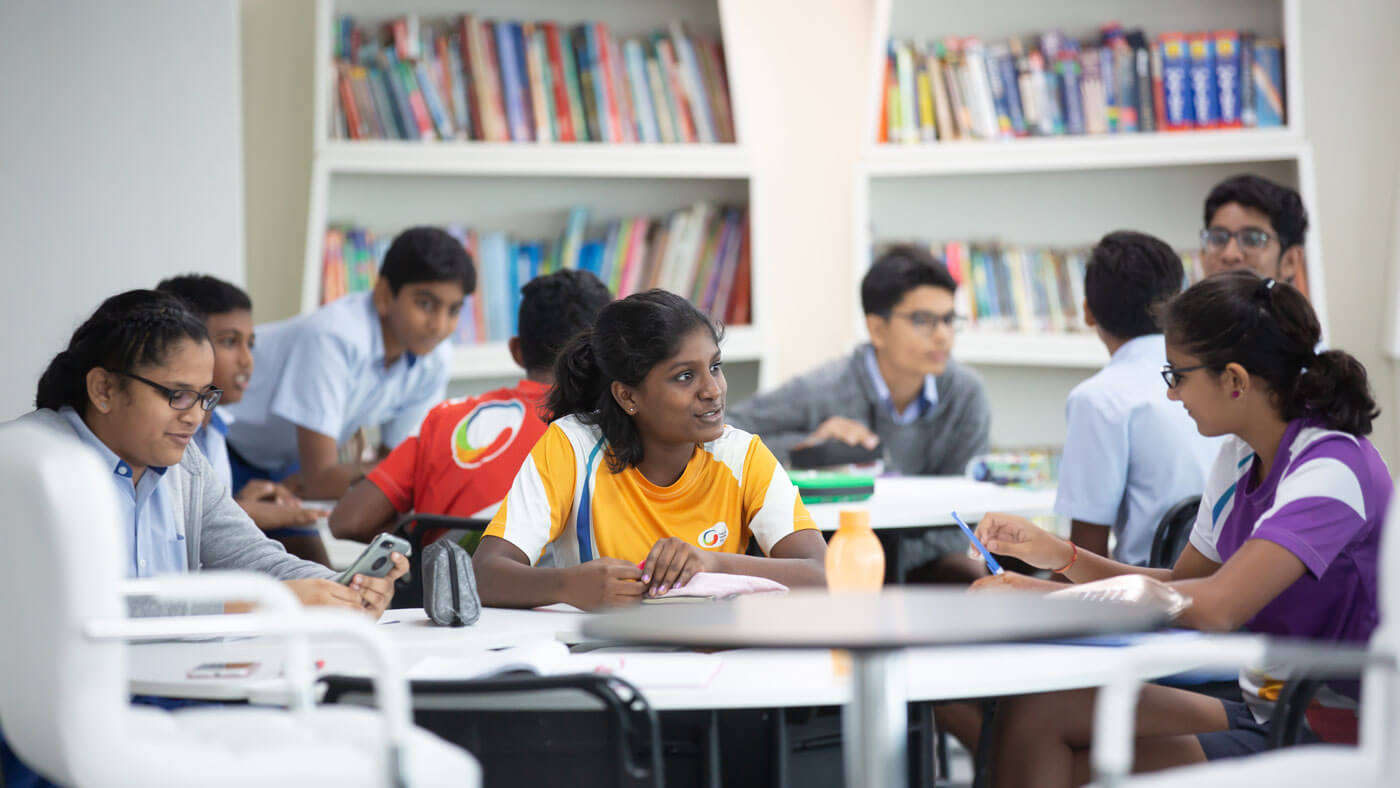
This does not mean that every CBSE classroom follows one teaching method or that every IB classroom looks the same. Individual schools and teachers can have different practices. However, students switching to IB may notice greater emphasis on asking questions, explaining reasoning, conducting research, participating in discussions, and connecting ideas across subjects.
The change can therefore involve more than learning new subjects. It can involve learning how to learn in a different environment.
Why Do Students Switch from CBSE to IB?
There can be several reasons for considering curriculum change.
Some families may be looking for a more inquiry-based learning environment. Others may want students to experience an internationally oriented curriculum or develop stronger research and communication skills.
Students may also change curricula because of relocation, a change in academic goals, or a desire for a different classroom experience.
The IB states that its programmes aim to develop students through academic learning as well as personal development, critical thinking, intercultural understanding, and ownership of learning.
At the same time, CBSE offers its own range of academic and skill-based options. Its curriculum includes subjects across sciences, mathematics, humanities, commerce, languages, computer-related areas, arts, physical education, and skill education.
Therefore, the reason for switching matters. A curriculum change should be based on the student’s educational requirements rather than the assumption that one curriculum is universally better.
When Is the Right Time to Switch from CBSE to IB?
There is no ideal grade for every child. The timing depends on the student’s current stage, the programme offered by the new school, and how their previous learning fits its entry expectations.
The IB offers the Primary Years Programme (PYP) for ages 3–12, Middle Years Programme (MYP) for ages 11–16, and Diploma Programme (DP) and Career-related Programme (CP) for ages 16–19. These age ranges overlap, so ask the school which programme and year group your child would actually enter. International Baccalaureate®
A move nearer the start of senior secondary education calls for particular care. Check subject availability, any prerequisites, assessment requirements and whether the student would have enough time to settle into the programme. Ask the prospective school:
- Which programme and year group would my child enter?
- How will you review their previous learning?
- Which subjects and language options are available?
- Are there entry requirements or gaps to address?
- What support is available during the first term?
This can help families understand the practical implications before making a decision.
Where Does the Learning Experience Differ?
The classroom is one of the clearest areas where students may notice a difference.
In a traditional structured learning setting, students may spend significant time understanding prescribed concepts, completing exercises, preparing assessments, and revising academic content.
IB learning can place greater emphasis on questions, investigations, discussion, research, reflection, and connections between concepts. The IB describes its teaching approach as learner-centred and inquiry-based, with teachers supporting students as they develop approaches to learning.
For example, instead of only asking students to remember a scientific concept, a teacher may encourage them to investigate a problem, interpret evidence, explain their findings, and reflect on what they learned.
This can require students to become active participants rather than relying only on teacher-led instruction.
Can a Student from CBSE Adapt to IB?
Yes, a student can adapt, although the pace will differ from child to child. Students who already enjoy discussion and independent research may find some tasks familiar. Others may need more practice with open-ended questions, presentations, or planning longer assignments.
These are skills students can develop, not qualities they must already possess. The IB groups its approaches to learning into thinking, communication, social, self-management and research skills. Parents can help by encouraging their child to ask questions, explain ideas in their own words, track deadlines, and respond to feedback.
Teachers and parents can support this process by encouraging students to:
- Ask questions about what they are learning
- Explain concepts in their own words
- Use reliable sources for research
- Organise assignments and deadlines
- Participate in group activities
- Reflect feedback
- Take responsibility for completing tasks
The goal is to make students comfortable with a more active role in their education.
How Is IB Different from CBSE in Teaching and Assessment?
Teaching and assessment are two areas where the transition can be noticeable.
CBSE provides structured curriculum documents and subject-specific guidelines. It also publishes examination-related resources such as sample papers and marking schemes.
For example, the IB Diploma Programme combines external and internal assessment. In most DP courses, written examinations form an important part of assessment, while several subjects also include internally assessed work or externally assessed coursework.
This means students moving to IB may need to become comfortable with completing work over longer periods and responding to different types of assessment.
What Students May Need to Develop
The transition can encourage students to strengthen:
- Research skills: Finding, evaluating, organising, and using information appropriately.
- Communication skills: Presenting ideas clearly through written, oral, and collaborative work.
- Self-management: Planning assignments, meeting deadlines, and organizing study time.
- Critical thinking: Examining information, comparing viewpoints, and explaining reasoning.
- Reflection: Reviewing feedback and considering how learning can be improved.
These skills can support students both inside and outside the classroom.
What Are the Benefits of Switching From CBSE to IB?
Switching curricula can bring several potential benefits, depending on the student’s needs and the quality of implementation at school.
1. Greater Focus on Inquiry
IB’s approach encourages students to ask questions and explore concepts rather than only receiving information. The IB describes inquiry, action, and reflection as central elements of its approach to teaching and learning.
This can encourage students to investigate topics and develop a deeper understanding of what they study.
2. Development of Independent Learning Skills
IB learning encourages students to take greater responsibility for their work. They may need to plan research, complete projects, meet deadlines, and reflect on their progress.
These habits can support academic independence as students’ progress to higher education.
3. Stronger Research and Communication Practice
Students can encounter assignments that require them to research information, organize evidence, develop arguments, and present their findings.
Such activities can help students practice communication and research skills in practical contexts.
4. Interdisciplinary Learning
IB programmes place emphasis on making connections across subjects and understanding learning in wider contexts. The IB describes its programmes as providing opportunities for both individual subjects and interdisciplinary learning.
Students can therefore be encouraged to look at a topic from a more than one academic perspective.
5. International and Intercultural Exposure
International mindedness is a significant part of IB education. The IB states that its programmes encourage intercultural understanding and learning across different languages and cultures.
This can help students understand that academic topics can have wider social, cultural, and global contexts.
What Challenges Can Students Face After Switching?
A curriculum change can also involve an adjustment period. Recognizing these challenges beforehand can help parents support students more effectively.
- Adapting to a New Learning Style
A student who is used to highly structured lessons may initially find inquiry-based tasks unfamiliar. Open-ended questions may require more independent thinking and explanation.
- Managing Longer Assignments
Some IB tasks may involve research, projects, reflection, or extended coursework. Students may need to improve their planning and time management.
- Understanding New Assessment Methods
Students may be familiar with tests and examinations but need time to become comfortable with assignments, presentations, investigations, projects, and other assessment formats.
- Becoming More Independent
Students may receive guidance from teachers but still need to take responsibility for organising their work. This can be challenging at first.
- Adjusting to Classroom Participation
Discussion, collaboration, presentations, and group work can be an important part of the learning experience. Students who are used to mostly individual written work may need time to adjust.
- Handling Academic Expectations
A new curriculum does not automatically mean less academic pressure. Students still need to understand concepts, complete assignments, prepare assessments, and maintain consistent study habits.
How Can Parents Make the CBSE-to-IB Transition Easier?
Parents can make the transition smoother by focusing on preparation rather than comparison.
- Understand the New Curriculum
Read the official IB information about the programme the student will join. Families should understand the subjects, assessment methods, expectations, and learning approach before enrolment.
- Speak With the School
Ask teachers and programme coordinators about transition support. Schools may have different approaches to onboarding students from other curricula.
- Build Time-Management Skills
Students can use calendars, planners, or digital tools to track assignments and deadlines. This can be particularly useful when several projects or assessments are overlapped.
- Encourage Questions
Students should feel comfortable asking teachers for clarification when they encounter unfamiliar terminology, assignment formats, or assessment criteria.
- Avoid Direct Grade Comparisons
Grades from two different curricula may not be directly comparable because assessment structures and expectations can differ. Parents can instead focus on learning progress, understanding, feedback, and skill development.
- Give the Student Time to Adjust
A transition does not need to feel smooth immediately. Students may need time to understand the new expectations and develop confidence with unfamiliar learning methods.
How Should Families Compare CBSE and IB Before Making a Decision?
Families can create a simple checklist based on the students’ actual needs.
| Area | Questions to Consider |
| Curriculum | Does the programme offer subjects aligned with the students’ interests? |
| Teaching | Does the student prefer structured instruction or more inquiry-based learning? |
| Assessment | Is the student comfortable with examinations, projects, coursework, or a combination? |
| Learning style | Does the student enjoy independent research and discussion? |
| Future plans | Does the planned pathway require particular subjects or qualifications? |
| School support | Does the school provide transition support and academic guidance? |
| Well-being | Can the student manage the workload while maintaining a healthy routine? |
This comparison is more useful than choosing a curriculum based only on its reputation.
For families currently exploring CBSE curriculum school in Balewadi, it is equally important to look at the individual school’s teaching practices, academic support, facilities, co-curricular opportunities, and student development approach. The curriculum is one part of the overall school experience.
Making the Transition a Learning Opportunity
Moving from CBSE to IB can be a significant academic change, but it can also be an opportunity for students to understand their own learning preferences.
The benefits of CBSE schools can include a structured curriculum, clear subject frameworks, and an established academic pathway. CBSE also provides a broad selection of academic and skill subjects across school stages.
IB brings a different framework, with strong emphasis on inquiry, research, conceptual understanding, reflection, communication, and international mindedness.
Neither approach needs to be treated as a universal answer for every student. The right choice depends on the learner, the school, the academic stage, and the family’s long-term educational plans.
Choosing a School That Supports the Student’s Learning Journey
Switching from CBSE to IB is a decision that deserves careful consideration. A change in curriculum can affect classroom learning, assessment, study habits, time management, and the level of independence expected from students.
The transition can also introduce students to inquiry-led learning, research, collaboration, reflection, and broader academic perspectives. The experience will depend not only on the curriculum but also on how effectively the school implements it and supports each learner.
Families exploring best schools in Pune should therefore look beyond curriculum labels. They can consider the school’s teaching practices, faculty support, learning environment, student well-being, academic guidance, and opportunities for holistic development.
For students and parents considering an international learning pathway, understanding these differences can make the decision more informed and help students approach the transition with realistic expectations.
Frequently Asked Questions
1. Is it difficult to switch from CBSE to IB?
The difficulty varies from student to student. Students may initially need to adjust to inquiry-based learning, independent research, project work, and different assessment methods. With appropriate school support and time, students can gradually become familiar with the new approach.
2. Can a CBSE student join an IB school?
Yes, students can move from CBSE to an IB school, subject to the school’s admission requirements and available programme or grade placement. Families should discuss the student’s previous curriculum and academic record with the prospective school.
3. Does IB have board exams like CBSE?
IB assessment depends on the programme. The Diploma Programme includes written examinations as a major part of assessment, along with internal assessment and other coursework components.
4. Will students have more projects after switching to IB?
Students may encounter a wider range of assessment activities, depending on their IB programme and subjects. These can include written assignments, investigations, fieldwork, oral work, projects, and examinations.
5. What should parents check before moving a child from CBSE to IB?
Parents should review the student’s age and grade, the IB programme offered, subject options, assessment methods, school support, workload, teaching approach, and future education plans. Teaching students through a supportive and learner-focused approach can also help them adjust to the expectations of a new curriculum. Visiting the school and speaking with its academic team can further help families understand the transition clearly.