Every parent and teacher wants their child to remember what they learn. And rightly so. Retaining knowledge is just as important as learning it. But memorising everything is not only about reading again and again.
In 2023, about 80% of people with higher education in India owned a smartphone. That means students too are part of this.
Phones can help in learning, but too much harms memory. Apps, games, messages train the brain to expect constant change. This reduces attention span. And memory suffers.
Students need food, proper rest, strong habits, and daily practice to sharpen memory. So, if you’re wondering how to increase memory power in students, this blog will give practical, easy steps.
How to Increase Memory Power in Students: Start with Daily Lifestyle First
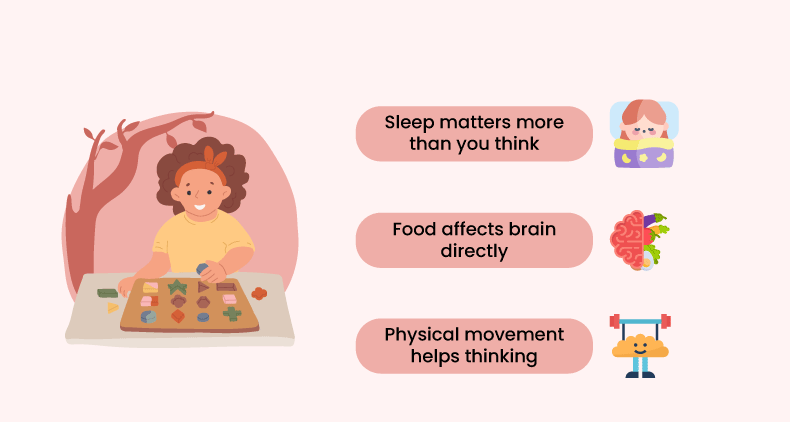
One of the most ignored parts in memory improvement is the student’s daily routine. From waking up to bedtime, every activity plays a part. Memory is not about luck. It’s about discipline and balance.
Let’s break it down:
1. Sleep matters more than you think
Students need a minimum of 8 hours of sleep. The brain stores new information during deep sleep. Late-night studies and early classes affect this badly. Even short power naps after school can help build stronger memory.
2. Food affects brain directly
Include walnuts, almonds, berries, bananas, eggs and curd in daily meals. Hydration is also key. A dehydrated brain is slower. Avoid too much sugar or junk. Try coconut water or homemade lemon water for better focus.
3. Physical movement helps thinking
Any form of regular exercise increases oxygen to the brain. It keeps the student alert. Try walking, cycling, skipping, or playing outdoor games. Yoga also improves concentration.
Start with these simple changes. They don’t cost much but they do a lot.
Simple Techniques That Actually Improve Memory Power
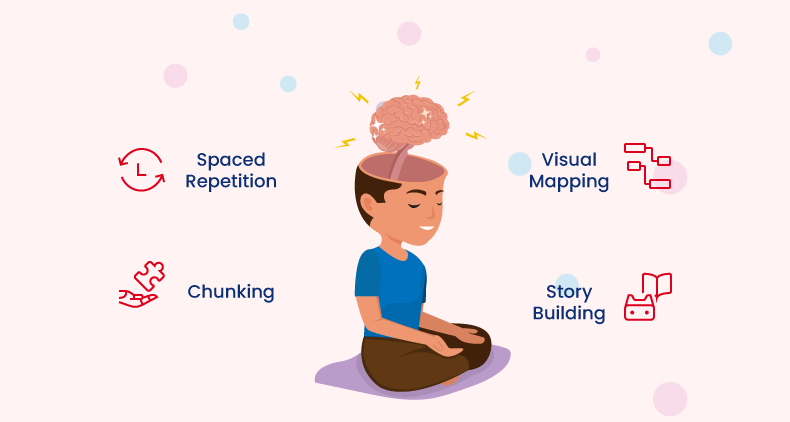
Every student is different. What works for one might not work for another. But some techniques are known to improve memory power in most children, if done daily.
Try these trusted techniques:
1. Spaced Repetition
It’s a method where topics are revised in a specific gap. Example: Day 1 study, Day 2 quick revise, Day 4 deeper revise, Day 7 test. It tells the brain this is important.
2. Chunking
Break big topics into small parts. Like chapters into 4–5 mini sections. Smaller bits are easier to remember.
3. Visual Mapping
Use mind maps, drawings, charts. Our brain remembers shapes and colours faster than plain text.
4. Story Building
Turn facts into stories. For example, science theories or history events can be put into story format to recall easily.
Here’s a small table that shows technique and what it helps with:
| Technique | What It Helps Improve | How to Use It |
| Spaced Repetition | Long-term memory | Review topics in planned intervals |
| Mind Mapping | Fast recall, better connection | Draw diagrams after reading a topic |
| Chunking | Better focus | Break info into groups of 5–7 items max |
| Active Recall | Exam confidence, clarity | Quiz yourself or use flashcards |
| Story Method | Better subject interest | Convert lessons into funny stories |
Use one or two techniques at a time. Don’t try all at once. Try for two weeks, then switch or adjust.
Avoid These Common Mistakes That Harm Memory Power
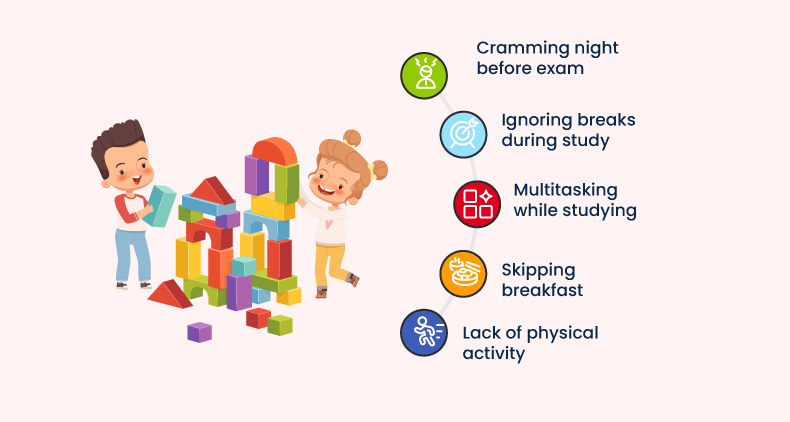
While everyone talks about what to do, it’s also important to know what not to do. Parents and teachers often push students too much or in the wrong way. That harms memory more than helping it.
1. Cramming night before exam
It only fills short-term memory. But nothing stays. The mind feels tired and forgets everything in stress.
2. Ignoring breaks during study
Studying for long hours without breaks overloads the brain. Use 45-minute study blocks with 5–10-minute breaks.
3. Multitasking while studying
Music, TV, chat – all these kill focus. The brain takes longer to switch back and remember properly.
4. Skipping breakfast
Morning meals wake up the brain. No breakfast means slower reaction and weaker memory for the day.
5. Lack of physical activity
Memory doesn’t grow only by books. Physical games support brain health too. A tired body tires the mind.
Even schools must notice these. Many CBSE Schools in Wakad Pune and other areas now include physical education, mental wellness sessions, and memory training as part of the timetable.
Parents can speak to teachers and share what works for their child at home. Building memory is a team task between school and home.
Schools like High Schools in Pune and some International CBSE Schools now offer digital detox days. Try it at home too. One day a week without screens. Instead, use that time for board games, books, or outdoor play.
Memory improves when the mind slows down.
Conclusion: How to Increase Memory Power in Students Needs Daily Care
If you are serious about how to increase memory power in students, don’t wait for exam time. Begin with a daily routine, better sleep, clean food, and correct study techniques. Encourage children to revise, move, rest, and explain what they learn.
And if you’re searching for a school that supports this kind of balanced growth, GIIS Pune gives students strong academic training along with modern brain-boosting activities. Contact us to know more. Also share this blog with friends and family – they may need it too.