In the competitive educational landscape of Singapore, literacy serves as the bedrock of all academic achievement. Whether a child is solving a word problem in Mathematics or exploring a concept in Science, their ability to process information hinges on their reading proficiency. However, many parents find themselves asking: how can we foster a genuine love for books in an age of digital distractions?
This guide explores practical, evidence-based strategies on how to improve reading skills in primary students. We will delve into why early literacy is a predictor of future success, address common challenges faced by young learners, and provide actionable tips for both parents and educators to create a reading-rich environment at home and in school.
The Importance of Early Literacy in the Singapore Context
小学校での読書は、さまざまな学習機会への扉を開き、知識を高め、必要不可欠な生活能力を養う。読書の利点には、脳の活性化、記憶力の強化、理解力の向上、語彙の充実、作文能力の強化、集中力の向上、分析的思考、ストレスの軽減などがある。
In Singapore, the Ministry of Education (MOE) emphasizes the STELLAR (Strategies for English Language Learning and Reading) program, which moves away from rote learning toward interaction and engagement with books. Your child’s ability to read and comprehend is critical to their future learning. According to the World Bank, all children should be able to read by the time they reach 10 years of age, or latest by the time they end primary school.
読書には、子どもとの絆を深める機会など、さまざまな利点がある。子供と一緒に読書をすることは楽しいことであり、子供が間違いをしたときに訂正することもできます。感想を言うことは大切ですが、子どもの自尊心や自信を傷つけないようにしましょう。また、子どもが好きな本の登場人物や場面を聞きながら、もう少し長く読み続けるように優しく促すこともできます。
While the early years of your child are of great importance for their overall development, the primary years are crucial for setting the right foundation for higher grades. Mastering how to develop reading skills in primary students is not just about phonics; it is about building a lifelong habit of inquiry and imagination.
7 Effective Strategies: How to Improve Reading Skills in Primary Students
Developing a child’s reading ability requires a blend of patience, variety, and consistency. Here are seven easy and interesting ways to improve reading skills for primary students and help your child become a fluent, confident reader.
1. Read in Portions: Breaking Down the Cognitive Load
While you may buy the best books for your child, they may see finishing a complete book as a daunting task. For some children, particularly those transitioning from kindergarten to Primary 1, this could also develop an aversion to reading.
To avoid this, you should encourage them to read in portions. Dividing the reading of the book into chapters, pages, or paragraphs is a good way to manage cognitive load and make your child develop an interest in reading. By focusing on “bite-sized” achievements, you’ll see a steady improvement in their reading comprehension, vocabulary, and overall reading fluency.
2. Read Together: The Power of the Shared Book Approach
There are multiple benefits of reading, including the opportunity to bond with your child. Shared reading, a technique where parents and children read a text together, is a cornerstone of how to develop reading skills in primary students. Reading together with your child can be fun, also allowing you to correct them when they make mistakes. Providing your child with feedback is important, but ensure you do it in a way that won’t crush their self-esteem and confidence. Try the “Pause, Prompt, and Praise” method: pause when they hit a difficult word, prompt them to look for clues, and praise their effort regardless of the outcome.
3. Personalise the Reading: Aligning with Interests
Asking your child about their topics of interest, favourite characters, and encouraging them to read books that interest them is a great way to personalise their learning. Whether it is a graphic novel about space or a mystery series set in Singapore, what matters is your child’s involvement with those stories.
Research suggests that “interest-based reading” significantly improves retention and engagement. As long as they enjoy the stories, they will continue to develop their literacy skills naturally without it feeling like a chore.
4. Act the Stories Out: Catering to Multimodal Learners
If your child is an auditory or kinesthetic learner, silent reading may not be the best choice. Such children follow spoken directions and often thrive when learning is physical and interactive.
To improve reading skills in primary students who struggle to sit still, try “story-acting.” Act out the stories to your child, use different voices for characters, or use puppets. You may see a keen interest in topics or books that they would have otherwise left untouched. This helps bridge the gap between decoding words and understanding the emotional context of a story.
5. Explore Beyond Traditional Books
Many times, parents expect reading to only happen with book reading. However, early literacy shouldn’t be limited to books. In a bustling city like Singapore, reading opportunities are everywhere. Your child may not yet be ready to pick up a thick novel, but if they show interest in reading a restaurant menu, a newspaper clipping, a comic strip, or even the MRT station signs, encourage them to do so. Environmental print – the print found in everyday life – is an excellent way to show children that reading is a functional and necessary life skill.
6. Establish a Consistent Reading Routine
Even if your schedule is demanding, you’ll need to set aside time to develop a daily reading routine for your child. Consistency is the key to how to improve reading skills in primary students. Children imitate their parents and follow what they see. If you set aside “Digital-Free Time” where the whole family reads together, chances are they will pick up their books voluntarily. A 15-minute bedtime story can increase a child’s exposure to words by millions over the course of their primary education.
7. Frequent Visits to the National Library Board (NLB)
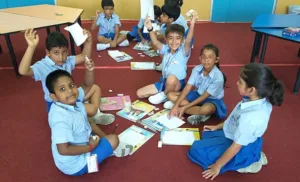
Singapore is home to world-class public libraries. Make regular visits to the neighbourhood library a family ritual. Allow your child to select books according to their interest to foster a sense of autonomy. Try to select the books together be it fiction or non-fiction, a sci-fi, or a fairytale. Libraries also offer “Early Literacy” programs and storytelling sessions that can supplement what they learn in the classroom. Moreover, library visits introduce students to a range of reading materials, over and beyond books, such as educational magazines and audiobooks.
Overcoming Common Reading Challenges
While some children pick up reading quickly, others may face hurdles. It is important to approach these challenges with a neutral and balanced perspective. Common issues include:
- Decoding Difficulties: When a child struggles to sound out words. This is often solved with targeted phonics support.
- Lack of Motivation: Often caused by reading material that is too difficult. Ensure the book follows the “Five Finger Rule” (if they miss more than five words on a page, the book is too hard).
- Comprehension Gaps: A child might read fluently but not understand the plot. Ask open-ended questions like “What do you think will happen next?” to build critical thinking.
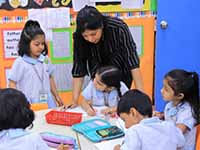
At GIIS Singapore, our Primary School Programme (IB PYP) is designed to identify these gaps early, ensuring that every student receives the personalized support they need to thrive.
The GIIS Approach: Building Better Readers

読書専用時間は、あなたのワードバンクを何倍にも増やす
At GIIS, we place a strong emphasis on enhancing our students’ reading abilities through a holistic curriculum. In addition to traditional books, our students have the opportunity to engage with curated online apps like Epic!, which offer a wide range of free online books spanning various genres.
Furthermore, we organise interactive book reading sessions, such as those in the IB PYP programme involving parents to foster a communal love for reading among our students. Our English Language Support (ELS) program specifically helps non-native speakers bridge the literacy gap, ensuring no child is left behind.
「彼女のクラスでは定期的に読書会があり、それがきっかけで読書の習慣がついた。カニカ先生が "I Love Books "のメダルをくれたことで、ますます読書が好きになったようです。読書はすべての教科の基本ですから、カニカ先生の励ましには本当に感謝しています」と、GIISのPYPの生徒である風子ちゃんの母、渡辺由紀さんは語った。
Frequently Asked Questions (FAQs)
1. How can I help my child if they find reading boring?
Try to diversify the reading material. Not every child enjoys fiction. Some primary students prefer “fact books” about animals, history, or sports. Graphic novels and “Choose Your Own Adventure” books are also excellent for engaging reluctant readers.
2. How many minutes a day should a primary student read?
For primary students in Singapore, 15 to 30 minutes of daily reading is recommended. The focus should be on consistency rather than duration. Quality engagement with a text is more beneficial than rushing through pages.
3. Does listening to audiobooks count as reading?
Yes! Audiobooks are a fantastic tool for developing reading comprehension and vocabulary. They allow children to hear the proper pronunciation and expression of words, which aids in their eventual independent reading fluency.
4. How does the school support students who are non-native English speakers?
At GIIS, we offer a dedicated English Language Support (ELS) program. This program focuses on building the foundational literacy skills- phonics, grammar, and vocabulary, needed for students to catch up with their peers and succeed in the mainstream curriculum.
Developing strong literacy is a journey, not a destination. By implementing these strategies, you can transform reading from a school requirement into a source of joy for your child.
Are you interested in learning more about how our curriculum supports literacy? Book a campus tour today or contact our admissions team to explore our primary school offerings.

シュブダルシャニ・ミトラ
コンテンツ制作、キュレーション、編集の分野で10年以上の経験を持つ。インドの新聞社、学校雑誌、国際的なニュースサイトで、コンテンツ戦略の実行とコミュニケーションについて、リーダーと緊密に協力してきた。仕事以外では、情熱的なモノクロ写真家であり、ストーリーテラーでもある。