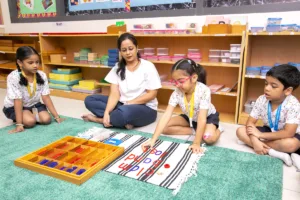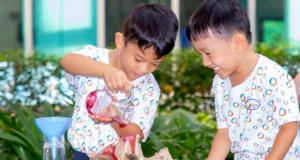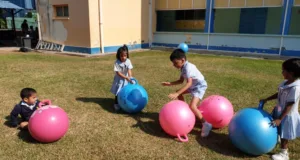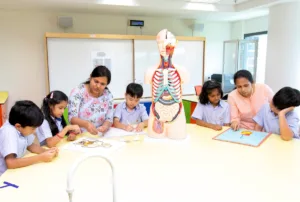
The thematic approach in early childhood education is redefining education as it allows learners to learn interrelated lessons from different subjects through engaging and unified themes. This approach not only makes learning more interesting but also helps students understand the relevance of their studies to the real world.
What is thematic learning?
Thematic learning ties different subject areas together under one broad theme, making education a cohesive experience. This method goes beyond traditional learning by making connections that are meaningful and easy for kids to understand.
In the IB PYP, thematic learning happens through six transdisciplinary themes that connect subjects like language, math, science, social studies, arts, and physical education. A single theme can include elements of maths, science, language, and social studies, giving children a rounded view of how different subjects intersect. Thematic learning helps children connect with what they are supposed to know, making it seem more relevant. This makes them inquisitive, encouraging a child to ask and explore to a great depth, resulting in a deeper understanding and curiosity about the world.
Thematic learning enhances memory retention as it activates more than one sense and links new information to familiar concepts.. It promotes collaborative learning, whereby children participate in many group activities that are essential to the development of their communication and teamwork.
Introducing thematic learning in kindergarten brings a host of benefits that enhance both academic and personal growth.
- Keeps children engaged: Children love learning more when it involves topics they find interesting and relatable.
- Boosts understanding and memory: Relating new knowledge to familiar concepts helps them understand better and remember more.
- Builds key skills: This approach promotes critical thinking, problem-solving, and the ability to link different ideas, which are crucial skills for lifelong learning.
At Global Indian International School, thematic learning is at the heart of our teaching strategy within the IBPYP curriculum for ages 3-11 years.
Whether it’s a unit about space, oceans, or community helpers, the activities designed cover all key learning areas, ensuring comprehensive knowledge coverage.
Key components of thematic learning in early years
Thematic learning is characterised by several core components that make it highly effective in early childhood education:
Deeper understanding
Thematic learning facilitates a deeper grasp of subjects by relating lessons to a central theme. This approach helps children see the relevance of their studies to their world, enhancing comprehension and interest.
Theme selection
Choosing the right themes is crucial. Themes must be engaging, age-appropriate, and broad to allow for exploration across various subjects. At GIIS, themes could range from global cultures to environmental awareness, tailored to spark curiosity and foster inclusivity.
Here are some examples of thematic approaches:
- Children exploring what makes a community tick, learning about everything from jobs to public services.
- Journey through the science of weather and the changes across seasons.
- Children learn about different animals, their habitats, and why some species are endangered.
- Students explore the lifecycle of plants and learn how photosynthesis plays a crucial role in the growth of plants and the ecosystem.
- Introducing children to the wonders of the solar system and beyond, teaching them about planets, stars, and the technology used in space exploration.
An integrative thematic approach in the curriculum ensures that children connect different subject matter through a single lens. For instance, a theme on ‘Water’ could include lessons on its biological importance, cultural significance, and physical properties woven through science, social studies, and physical education.
Collaboration and interaction
Thematic learning often involves group activities that encourage collaboration among students. This not only enhances social skills but also allows children to learn from each other’s insights and experiences, fostering a community learning environment.
Hands-on activities
Hands-on activities are integral to thematic learning, allowing children to experiment, explore, and practically apply their knowledge. Whether it’s crafting, experiments, or role-playing, these activities make learning tangible and memorable.
What are the characteristics of the thematic curriculum for early years kids?
The thematic curriculum is designed to be dynamic and engaging, with several characteristics that make it particularly suited for young learners:
Interdisciplinary learning
A thematic approach breaks down the walls between subjects, allowing students to learn in a more natural and engaging way. This interdisciplinary method helps students make connections across different areas, enhancing their overall understanding and application of knowledge.
Knowledge retention
Thematic learning aids knowledge retention by connecting new concepts to familiar themes. When children can relate what they learn to something they already understand, they are more likely to remember and recall information later.
Cultural inclusivity
Thematic learning promotes cultural inclusivity by incorporating diverse themes. This exposure helps children appreciate different cultures and perspectives, enhancing their global awareness and empathy.
Engagement and motivation
Thematic learning inherently makes education more engaging and motivating. By focusing on themes that are interesting and relevant to students, this approach keeps learning exciting and dynamic, motivating students to participate and learn more actively.
Flexibility and adaptability
In a thematic approach, the curriculum is not rigid but flexible, allowing educators to adapt lessons to meet the evolving interests and needs of their students. This adaptability is crucial in maintaining relevance and engagement in a rapidly changing world.
結論
At Global Indian International School, the thematic learning approach is more than just a pedagogical choice – it is a commitment to developing well-rounded, inquisitive, and compassionate learners. By integrating this approach within the IB PYP curriculum, we provide children with the tools to explore, discover, and make meaningful connections.
Transform Your Child’s Learning Journey with GIIS
Explore how transdisciplinary learning builds holistic understanding in early education.

チームGIIS
Team GIIS is a group of enthusiastic writers who bring the vibrant world of GIIS in Singapore to life through engaging blog posts. Dedicated to highlighting the school’s teaching methodology, innovative learning environment, and diverse curriculum options like IB, Cambridge and CBSE, they aim to connect with parents, educators and students, sharing insights and stories that inspire and inform the school community.