グローバル
All Cities
Where would you like to study? Select cities to refine your search.
Any Curriculum
Find a campus based on the curriculum offered.
グローバル
グローバル
All Cities
Where would you like to study? Select cities to refine your search.
Any Curriculum
Find a campus based on the curriculum offered.
検索
What Is Middle School in Singapore? Age Groups, Curriculum and Learning Pathways

What Is Middle School in Singapore? Age Groups, Curriculum and Learning Pathways

地理情報システム

Moving from primary school into the next stage of education brings new subjects, greater independence and decisions about future learning. For families comparing schools in Singapore, it can also bring confusion: does “middle school” mean the same thing as “lower secondary”, and which grades does it cover?

The answer depends on the school and curriculum. Singapore’s national school system progresses from primary to secondary education, while international schools may use terms such as middle school, lower secondary or secondary school differently.

At Global Indian International School (GIIS) Singapore, families exploring Grades 6–8 can consider the Cambridge Lower Secondary Programme (CLSP) and CBSE. Understanding these options helps parents plan for their child’s current learning needs and the qualifications that follow.

What Does “Middle School” Mean in Singapore?

Middle school generally describes the years between primary education and the later secondary years. However, it is not a single, standardised school stage across Singapore.

In the national system, students complete six years of primary education before progressing to secondary school. The first two secondary years, Secondary 1 and Secondary 2, form the lower secondary stage. International schools organise their programmes according to their curriculum and grade structure.

This distinction matters when transferring schools. Grade 6, Year 6 and Primary 6 should not be assumed to represent the same curriculum stage. Parents should compare their child’s age, completed schooling and subjects studied rather than relying on the class name alone.

What Age Are Middle School Students?

Cambridge Lower Secondary is typically designed for learners aged 11–14. GIIS offers its CLSP across Grades 6–8.

The Cambridge age range is a general guide, rather than a fixed GIIS admission requirement. Families should confirm the appropriate grade placement with admissions based on their child’s date of birth, previous schooling and the school’s entry requirements.

School context Stage or programme What parents should know
Singapore national schools Lower secondary: Secondary 1–2 Follows six years of primary education
Cambridge international pathway ケンブリッジ・ロウアー・セカンダリー Typically intended for learners aged 11–14
GIIS in Singapore CLSP or CBSE in Grades 6–8 Two curriculum options for this stage; confirm individual placement with admissions

These stages overlap in purpose, but they are not exact grade-for-grade equivalents.

Which Middle School Curricula Does GIIS in Singapore Offer?

ケンブリッジ中等教育プログラム

GIIS offers CLSP in Grades 6–8 as preparation for the next stage of international education.

Its published subject offering includes English, Mathematics, Science, Global Perspectives, ICT, Digital Literacy and second-language options. Parents should confirm the current subject combination and language availability for their child’s grade.

CLSP provides a foundation for Cambridge IGCSE in Grades 9–10. Students can use these years to strengthen subject knowledge, practise explaining their ideas and develop the study habits needed for later learning.

CBSE

GIIS also offers the Central Board of Secondary Education (CBSE) curriculum through the middle school years.

Its published Grades 6–8 curriculum includes English, Mathematics, Science, Social Science, languages and ICT, alongside visual arts, performing arts, and physical and health education. Families should confirm the current subject and language options with the school.

For children already following CBSE, this route can provide continuity in curriculum structure. Parents anticipating a future move should compare subject coverage and language requirements with those of the receiving school.

How Do the Learning Pathways Progress?

Middle school is a useful time to understand the next stages without expecting children to decide on a university course or career.

GIIS’s published curriculum structure includes the following options:

Stage Cambridge followed by IB Diploma CBSE pathway
Grades 6–8 ケンブリッジ中等教育プログラム CBSE
Grades 9–10 ケンブリッジIGCSE CBSE
Grades 11–12 IBディプロマ・プログラム CBSE

These are possible progression routes. Entry into the next programme is subject to the school’s requirements.

Any change of curriculum should be discussed with the school, including academic readiness, language requirements and subject suitability. The table shows how programmes can connect; it does not mean that students must remain on one route throughout their schooling.

For example, a student interested in science may benefit from strengthening mathematical reasoning, scientific writing and practical investigation during Grades 6–8. A student who enjoys languages and humanities can use these years to develop reading, research and communication skills.

These foundations support later subject choices while leaving room for interests to change.

What Changes When Children Enter Middle School?

The transition involves more than harder textbooks. Students gradually need to manage their work, explain their thinking and take greater responsibility for learning.

Parents can help children develop four practical habits:

  • Organisation: Record assignments, prepare materials and break larger tasks into manageable steps.
  • Independent thinking: Explain how an answer was reached and consider different approaches.
  • Communication: Ask questions, contribute to group work and seek help when something is unclear.
  • Reflection: Use feedback to identify what to practise next.

A supportive transition gives children opportunities to develop these habits gradually. During school visits, ask how teachers help students adjust to changing expectations and how parents are informed about progress.

Learning Beyond Academics at GIIS

GIIS’s approach to student development includes its 9GEMS framework, which brings academics together with sports, arts, skills development, entrepreneurship and leadership, innovation and creativity, personality development, community care and universal values.

For middle school students, exploring interests beyond academic lessons can be a useful part of discovering their strengths. Activities involving teamwork, creative expression or responsibility also provide opportunities to practise skills in different settings.

Parents can ask which activities are available for their child’s grade, how students participate and how these opportunities fit around schoolwork. Consider how the school helps children balance learning, interests, friendships and rest throughout the week.

How Should Parents Choose a Middle School Pathway?

Start with your child’s current learning experience and your family’s likely next steps. Consider curriculum continuity, language learning and future qualification options alongside the support your child needs now.

Useful questions include:

  • Which curriculum has my child studied so far?
  • How closely does the new programme match their subject and language background?
  • What support is available when moving between curricula?
  • Which qualifications follow in Grades 9–12?
  • How are learning progress and wellbeing communicated to parents?
  • What are the full fees, including additional activities and other charges?

Ask admissions to explain the proposed grade placement and curriculum route together. This is particularly helpful when moving from a school that uses a different academic calendar or year-numbering system.

Exploring Middle School at GIIS in Singapore

Choosing a middle school programme means considering both the next school year and the learning opportunities ahead.

At GIIS in Singapore, CLSP and CBSE give families different routes through Grades 6–8. A discussion with the admissions team can help clarify placement, subject options and the requirements for progression into later grades.

Book a campus tour at GIIS in Singapore to explore its curriculum options and discuss the next stage of your child’s education.

GIIS Singapore Logo
チームGIIS

Team GIIS is a group of enthusiastic writers who bring the vibrant world of GIIS in Singapore to life through engaging blog posts. Dedicated to highlighting the school’s teaching methodology, innovative learning environment, and diverse curriculum options like IB, Cambridge and CBSE, they aim to connect with parents, educators and students, sharing insights and stories that inspire and inform the school community.
よくある質問

Is middle school the same as secondary school in Singapore?

Not exactly. Middle school is a term used by some international schools for an intermediate stage. Singapore’s national system uses secondary school, with Secondary 1–2 forming lower secondary. The grades covered by each term depend on the school.

Which grades cover middle school at GIIS in Singapore?

For families exploring the middle school stage, GIIS offers CLSP and CBSE in Grades 6–8.

What is the typical age range for Cambridge Lower Secondary?

Cambridge Lower Secondary is typically designed for learners aged 11–14. This is a general programme age range. Confirm your child’s appropriate grade placement and eligibility with GIIS admissions.

Is Cambridge Lower Secondary the same as IGCSE?

No. Cambridge Lower Secondary builds foundations for later study. At GIIS, CLSP covers Grades 6–8, while IGCSE is offered in Grades 9–10.

Does studying Cambridge Lower Secondary mean a child must take A-Levels later?

No. Cambridge Lower Secondary does not commit a student to A-Levels. GIIS offers the IB Diploma Programme in Grades 11–12. Families should discuss programme entry requirements and subject choices with the school.

Can my child change curriculum during the middle school years?

A change may be possible, subject to the school’s admission and placement requirements. Ask admissions to review previous reports, subject coverage and language learning so that the appropriate placement and any support needs can be considered.

注目のブログ

地理情報システム

How Much Does International Schooling Cost in Singapore? A Complete Fee Guide

International schooling is a significant commitment for families in Singapore. Before choosing a school, parents need to understand both the advertised tuition and the total amount they will pay throughout the year. Published fees vary considerably. For example, an international school may list annual primary tuition of SGD 16,000 before GST,while another school may have SGD 50,800 including GST for Years 12–13 in 2026–27. These illustrate the spread of published prices, rather than a national average or a like-for-like comparison: the grades, programmes and inclusions differ.

地理情報システム

What Is Middle School in Singapore? Age Groups, Curriculum and Learning Pathways

Moving from primary school into the next stage of education brings new subjects, greater independence and decisions about future learning. For families comparing schools in Singapore, it can also bring confusion: does “middle school” mean the same thing as “lower secondary”, and which grades does it cover? The answer depends on the school and curriculum. Singapore’s national school system progresses from primary to secondary education, while international schools may use terms such as middle school, lower secondary or secondary school differently.

地理情報システム

Choosing an International School for a Child Interested in STEM: What Facilities and Programmes Matter?

Global Indian International School (GIIS) Singapore SMART Campus in Punggol offers STEM-focused learning through science laboratories, robotics and coding labs, SMART classrooms and STEM clubs. Its curriculum options include Cambridge IGCSE, the IB Diploma Programme and CBSE. For students pursuing STEM degrees, the IBDP offers relevant mathematics and science subjects, while internal assessments and the Extended Essay provide opportunities to develop research and analytical skills. Parents should evaluate laboratory access, practical project opportunities and university subject prerequisites when selecting a STEM-focused international school.

地理情報システム

How Do International Schools in Singapore Prepare Students with Future-Ready Skills?

At international schools in Singapore, future-ready skills are built into everyday lessons rather than added later. Children learn to think critically because classes ask them to investigate, not just recall. They learn to lead because they're given real responsibility, whether in a club, an event or a community project. Emotional intelligence develops the same way. It grows when a school pays attention to how students feel and acts on what it finds.

トップ奨学金

APJアブドゥル・カラム博士グローバル技能奨学金

参加資格

タレントベース - テクノロジー

ブック・ア・ツアー
今すぐ問い合わせる
同じ著者による他の作品
トレンドブログ

地理情報システム

How Much Does International Schooling Cost in Singapore? A Complete Fee Guide

International schooling is a significant commitment for families in Singapore. Before choosing a school, parents need to understand both the advertised tuition and the total amount they will pay throughout the year. Published fees vary considerably. For example, an international school may list annual primary tuition of SGD 16,000 before GST,while another school may have SGD 50,800 including GST for Years 12–13 in 2026–27. These illustrate the spread of published prices, rather than a national average or a like-for-like comparison: the grades, programmes and inclusions differ.

地理情報システム

What Is Middle School in Singapore? Age Groups, Curriculum and Learning Pathways

Moving from primary school into the next stage of education brings new subjects, greater independence and decisions about future learning. For families comparing schools in Singapore, it can also bring confusion: does “middle school” mean the same thing as “lower secondary”, and which grades does it cover? The answer depends on the school and curriculum. Singapore’s national school system progresses from primary to secondary education, while international schools may use terms such as middle school, lower secondary or secondary school differently.

地理情報システム

Choosing an International School for a Child Interested in STEM: What Facilities and Programmes Matter?

Global Indian International School (GIIS) Singapore SMART Campus in Punggol offers STEM-focused learning through science laboratories, robotics and coding labs, SMART classrooms and STEM clubs. Its curriculum options include Cambridge IGCSE, the IB Diploma Programme and CBSE. For students pursuing STEM degrees, the IBDP offers relevant mathematics and science subjects, while internal assessments and the Extended Essay provide opportunities to develop research and analytical skills. Parents should evaluate laboratory access, practical project opportunities and university subject prerequisites when selecting a STEM-focused international school.

地理情報システム

How Do International Schools in Singapore Prepare Students with Future-Ready Skills?

At international schools in Singapore, future-ready skills are built into everyday lessons rather than added later. Children learn to think critically because classes ask them to investigate, not just recall. They learn to lead because they're given real responsibility, whether in a club, an event or a community project. Emotional intelligence develops the same way. It grows when a school pays attention to how students feel and acts on what it finds.

検索
History Menu Icon

私たちのビジョンは、教育と学習の世界的なロールモデルになることです。

History Menu Icon Secondary

Since its inception in 2002, GIIS has spread quality education through 17 campuses across the globe.

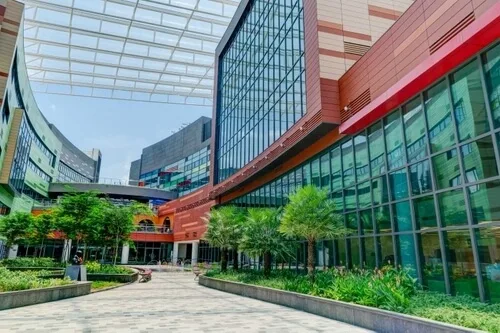
Global Indian International School Singapore smart campus learning environment

SMARTキャンパス

全人的な教育を可能にする、充実したスポーツ施設を備えた緑豊かなハイテク対応キャンパス

  • Kindergarten program at GIIS Singapore smart campus

    Montessori education with a modern touch.

  • Primary school curriculum at GIIS Singapore

    International primary programmes with best holistic learning.

  • Secondary school students learning at GIIS Singapore

    International middle school programmes with best foundation for high school.

  • High school education and curriculum at GIIS Singapore

    International high school programmes with beat launchpads for university.

21st century learning campus at GIIS Singapore

協力的で、創造的で、個々のニーズに適応できる施設。

Holistic education approach with 9 Gems at GIIS Singapore

総合的な生徒育成のための受賞歴のあるフレームワーク

Co-curricular activities at GIIS Singapore

課外活動とは、GIISの教室の外で行われる活動で、多くの場合、スポーツをベースとしたものである。

Extra curricular activities at GIIS Singapore

タレントショー、パフォーマンス、コンテスト、クラブ活動、追加の授業など。

Admission Process Icon

入試プロセスの概要を知る

Campus Tour Icon

キャンパスツアーに申し込み、学校について直接学ぶ

Book Meeting Icon

ご都合に合わせて、オンラインまたは面談で入学カウンセラーにご相談ください。

Admissions Form Icon

入学手続きに関するすべての書式はこちら

Fees Icon

学年別の料金体系について

Scholarship Icon

お子様の入学候補校としてGIISをご検討いただきありがとうございます。私たちの目標は、入学を許可することです。