By Anita Singh
Principal
As Nelson Mandela famously said, “Education is the most powerful weapon which you can use to change the world.” Today, with the CBSE Global Curriculum, that change begins right in the classroom. Leading international schools and the best CBSE schools in Dubai like Global Indian International School Dubai are already embracing this revolutionary framework to prepare students for the challenges of the 21st century.
What is the CBSE Global curriculum?
Education in the 21st century has evolved far beyond textbooks and examinations. The modern learner must navigate a VUCA world—volatile, uncertain, complex, and ambiguous—where adaptability, creativity, and global awareness are essential. Responding to this paradigm shift, the Central Board of Secondary Education (CBSE) is introducing the forward-thinking CBSE Global Curriculum, a framework designed to elevate Indian education to international standards through a blend of global competencies, values, and skill-based learning.
How is the CBSE Global curriculum different from the traditional CBSE curriculum?
CBSE schools outside India, cater to a diaspora from different countries and it is incumbent on the education system to ensure students are equipped with the knowledge and skills requisite to develop students as global citizens ensuring equal opportunities for everyone. The proposed curriculum will bring in the International perspectives of SDGs, Digital citizenship, Financial and Media literacy along with mainstream subjects to the fore.
Future skills development remains at the core to develop 21st century competences alongside Social and Emotional learning aligning with the student competence framework. These skills are not taught as standalone subjects but integrated through subjects and projects, to ensure they develop the skills to apply their learning meaningfully.
Why is there an emphasis on interdisciplinary learning?
NEP 2020 has provided students to choose subjects across streams and with the proposed CBSE Global curriculum it has taken a big leap emphasizing on interdisciplinary learning; connecting science with art, mathematics with design, or literature with history. The CBSE Global Curriculum promotes interdisciplinary connections that break traditional subject syllabi. This will provide opportunities for students to engage, explore real world problems and find solutions through research, critical thinking and collaboration. This approach encourages learners to ask questions, think independently, and gain confidence as self-directed learners.
Is there any change of assessments in the CBSE Global curriculum?
A key innovation in CBSE Global is the focus on competency-based assessments rather than traditional end-of-term exams. These assessments measure:
- How students apply knowledge
- Teamwork and collaboration skills
- Critical thinking and problem-solving abilities
- Reflective learning and self-improvement
This approach enables teachers to personalise learning, identify individual strengths, and guide students toward continuous growth—offering a more authentic measure of learning outcomes.
One key aspect to expect will be the importance of service learning, projects with global collaboration, and opportunities for students to self-reflect , introspect to develop resilience, agility, empathy, leadership, and tolerance; the skills that define global citizenship.
Data Literacy, Coding and AI will play a key role in enhancing student learning not just in learning but also how to use it responsibly and creatively in resolving real world problems. This will serve as a platform for careers in emerging fields while nurturing ethical and informed digital citizens.
In Conclusion:
The proposed CBSE Global Curriculum is not a replacement for the existing CBSE framework but an evolution of it that combines the academic depth of CBSE with a global outlook, preparing students to be curious ,empathetic humans, and competent professionals in an ever-changing world. The paradigm shift marks a significant step toward aligning Indian education with international benchmarks while preserving the cultural and ethical essence of CBSE’s academic philosophy. As education systems worldwide seek to balance national identity with global competence, the CBSE Global Curriculum will stand as a model of how systemic transition can bridge the learning to create a generation of learners who act locally, think globally to be future ready global citizens. To learn more, book a school tour here.
 About the author.Ms Anita is an accomplished educationalist whose vision and experience promise to enrich our school community in meaningful and inspiring ways.
A certified Happiness Coach, she places the emotional and mental well-being of students and staff at the heart of her leadership. Her global contributions—as a UNESCO Greening Education Working Group member, HP IDEA Fellow, and T4 Lead Country Ambassador—reflect her deep commitment to sustainability, equity, and holistic education.
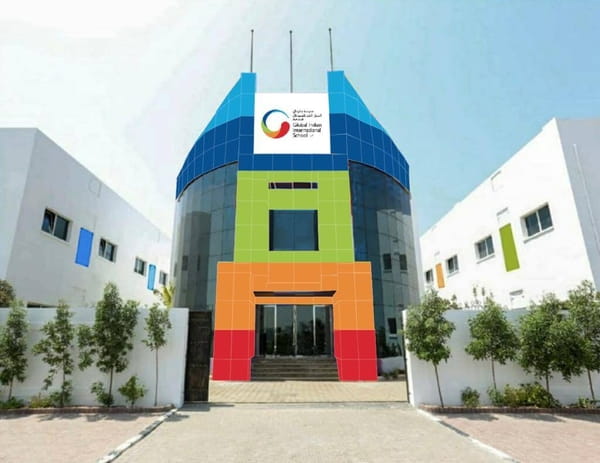 Dubai Campus