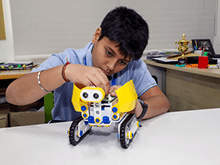
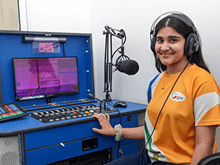
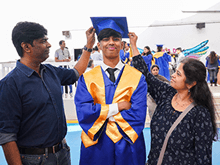
Why do Indian international schools in Dubai focus so strongly on extra-curricular activities? The answer lies in a simple truth: education is not only about what students learn in a classroom, but also about who they become through the learning process.
In a city as dynamic and multicultural as Dubai, parents increasingly look for schools that combine academic excellence with opportunities for children to explore their interests, develop essential life skills and build confidence. This is where extra-curricular activities play a vital role in holistic education.
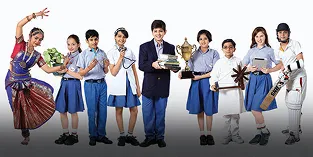
At Global Indian International School (GIIS) Dubai, this philosophy is reflected through its holistic approach to learning and its 9GEMS framework, which goes beyond academics to nurture sports, creativity and innovation, leadership, personality development, skills, values, community engagement, and visual and performing arts.
A key part of this approach is ProEdge—GIIS Dubai’s extracurricular programme that brings enrichment activities within the school curriculum and regular school experience.
So, what are the seven key reasons Indian international schools in Dubai place such importance on extra-curricular activities?
1. How do extra-curricular activities support the overall development of children?
Extra-curricular activities support children’s intellectual, physical, social, emotional and creative development, making education more holistic.
Academic subjects are essential for building knowledge and intellectual skills. However, children also need opportunities to express themselves, collaborate, compete, create, lead and discover their individual strengths.
A child participating in sports may develop discipline and resilience. Another exploring music or dance may discover confidence and self-expression. A student involved in a club or project may learn how to collaborate, communicate and solve problems.
This is the first reason schools focus on extra-curricular activities: they help develop the whole child rather than focusing exclusively on academic performance.
At GIIS Dubai, this approach is reflected in the school’s 9GEMS framework, which recognises multiple dimensions of student development alongside academic excellence.
2. Why do schools use extra-curricular activities to develop 21st-century skills?
Extra-curricular activities give students practical opportunities to develop communication, collaboration, creativity, critical thinking and problem-solving skills.
The world students are preparing for is constantly changing. Future academic and professional environments will require young people to work in teams, communicate ideas, think independently and adapt to unfamiliar situations.
These skills are difficult to develop through textbooks alone.
Consider a student participating in a debate. They must research information, form an argument, listen to opposing views and present their ideas confidently. A student working on an innovation project may have to identify a problem, brainstorm solutions and learn from mistakes.
Sports, performing arts, clubs, competitions and leadership activities create similar opportunities.
This is the second reason: extra-curricular activities turn important life skills into experiences that students can practise in real situations.
3. How do extra-curricular activities build confidence and leadership?
Extra-curricular activities help students build confidence by giving them opportunities to perform, participate, take responsibility and lead.
Confidence does not develop overnight. It grows through repeated experiences where children are encouraged to try, make mistakes, learn and try again.
A student stepping onto a stage for the first time may initially feel nervous. With practice, that same student may become a confident performer. A child who joins a sports team may gradually learn to communicate with teammates and take responsibility for their role.
Leadership develops in much the same way.
Whether students captain a team, organise an event, participate in a student council, present a project or collaborate on a competition, they learn that leadership involves responsibility, decision-making, empathy and teamwork.
GIIS Dubai’s 9GEMS framework includes leadership and entrepreneurship and personality development, reinforcing the importance of these qualities in a child’s education.
This is the third reason: extracurricular experiences allow children to practise confidence and leadership rather than simply learning about them.
4. Why are sports and physical activities important in holistic education?
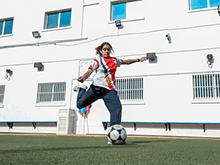
Sports and physical activities contribute to holistic education by developing fitness, discipline, teamwork, perseverance and resilience.
A child’s education should nurture both the mind and the body.
Sports provide much more than physical exercise. Students learn how to follow rules, work towards goals, manage pressure, cooperate with teammates and respond positively to both victories and setbacks.
Activities such as cricket, basketball, swimming, badminton, karate and other physical pursuits can also help children develop healthy habits and an appreciation for an active lifestyle.
For students growing up in a fast-paced urban environment like Dubai, opportunities for structured physical activity within school can be particularly valuable.
This is the fourth reason: sports help students develop physical well-being alongside the personal qualities needed to handle challenges with resilience and discipline.
5. How do creative activities help children discover their talents?
Creative activities give students opportunities to express themselves, experiment with ideas and discover talents that may not emerge through academic subjects.
Every child has unique strengths.
Some children may excel in mathematics or science. Others may shine when they are performing, designing, writing, painting, dancing, making music or creating something new.
Arts and creative activities provide a different kind of learning environment—one where imagination, experimentation and individual expression are encouraged.
At GIIS Dubai, visual and performing arts form an important part of its holistic educational philosophy, with students able to explore areas such as music, dance and photography alongside other enrichment opportunities.
This is the fifth reason: extra-curricular activities help children discover interests and abilities that traditional academic learning may not always reveal.
6. How do extra-curricular activities prepare students for life beyond school?
Extra-curricular activities prepare students for life beyond school by developing transferable skills, independence, adaptability and social awareness.
School is ultimately preparation for life—not simply preparation for examinations.
Students will eventually enter universities, workplaces and communities where they will need to communicate with different people, manage responsibilities, solve problems and adapt to new situations.
Extra-curricular activities offer a safe environment in which children can begin developing these abilities.
A team project teaches collaboration. A competition teaches preparation and resilience. A leadership opportunity teaches responsibility. A performance teaches communication and confidence. Community activities can develop empathy and social responsibility.
This is the sixth reason: extra-curricular learning helps bridge the gap between academic knowledge and the skills students need in real-world situations.
7. Why does GIIS Dubai integrate extra-curricular activities through ProEdge?
GIIS Dubai’s ProEdge programme integrates extra-curricular activities within the school curriculum, making skill development an important part of the regular educational experience.
This is where GIIS Dubai’s approach to extracurricular education stands out.
Rather than viewing extra-curricular activities simply as something students do after academic lessons, ProEdge brings a range of enrichment opportunities into the school experience.
The programme enables students to explore their interests, develop skills and discover talents while being part of their regular school schedule.
Depending on the programme and grade level, students can participate in activities such as cricket, karate, chess, swimming, basketball, badminton, dance and photography, among others.
This integrated approach reflects a broader educational belief: children learn in different ways, and their development cannot be measured solely through examinations.
ProEdge complements GIIS Dubai’s 9GEMS framework, which focuses on multiple dimensions of student development, including:
- Academic excellence
- Sports excellence
- Creativity and innovation
- Entrepreneurship and leadership
- Personality development
- Skills development
- Universal values and ethics
- Community engagement
- Visual and performing arts
This is the seventh reason: integrating extra-curricular activities into the curriculum makes holistic development a consistent part of a student’s educational journey rather than an occasional addition.
Why is holistic education important for students in Dubai?
Holistic education is important in Dubai because students are growing up in a multicultural, globally connected environment that values adaptability, communication and diverse perspectives.
Dubai brings together families and communities from around the world. Students therefore have opportunities to learn not only from their teachers and textbooks but also from their peers and the wider community.
For an Indian international school, this creates an opportunity to combine a strong academic foundation with global exposure and a broad range of experiences.
Extra-curricular activities naturally support this environment. Students collaborate with others, participate in competitions, explore different interests and develop confidence in expressing their ideas.
The result is an educational experience that aims to prepare students not only for their next examination, but for the world beyond school.
How does ProEdge make extracurricular learning different at GIIS Dubai?
ProEdge makes extracurricular learning different by integrating enrichment activities into the regular school experience instead of treating them simply as optional activities outside academics.
This integration gives students structured opportunities to explore their interests while continuing their academic learning.
The programme also reflects an important principle of holistic education: every child should have opportunities to discover and develop different dimensions of their potential.
A student may find their passion on a sports field, discover confidence on a stage, develop curiosity through a club or learn leadership through a team activity.
These experiences can become just as meaningful to a child’s development as what happens inside the classroom.
What should parents look for in an Indian international school in Dubai?
Parents looking for an Indian international school in Dubai should consider whether the school provides meaningful opportunities for academics, sports, creativity, leadership, skills development and personal growth.
When comparing schools, parents can ask:
- Does the school offer a broad range of extracurricular activities?
- Are sports and creative pursuits given meaningful importance?
- Can students explore different interests as they grow?
- Are leadership and communication skills developed alongside academics?
- Are extracurricular activities integrated into the wider curriculum?
- Does the school have a clear philosophy for holistic education?
- Are students encouraged to participate, experiment and discover their strengths?
A long list of activities is not enough. What matters is how those activities contribute to the student’s overall educational journey.
What makes holistic education more than academics?
Holistic education recognises that a child’s success cannot be defined by academic results alone.
It is also about developing the confidence to speak up, the resilience to recover from setbacks, the creativity to explore possibilities, the discipline to work towards a goal, the empathy to understand others and the courage to try something new.
That is why extra-curricular activities have become such an important part of education at Indian international schools in Dubai.
At GIIS Dubai, ProEdge brings this philosophy into practice by integrating extracurricular opportunities into the curriculum and giving students avenues to explore their interests and develop skills.
Because the goal of education is not simply to create students who know more.
It is to nurture young people who can think, create, communicate, collaborate, lead and contribute.
And that is the essence of holistic education.
Frequently Asked Questions About Extra-Curricular Activities and Holistic Education
1. What are extra-curricular activities in schools?
Extra-curricular activities are structured activities that complement academic learning. They can include sports, music, dance, arts, clubs, leadership activities, public speaking, technology, innovation and other skill-based programmes.
2. Why are extra-curricular activities important for students?
Extra-curricular activities help students develop skills and qualities beyond academics, including teamwork, communication, confidence, creativity, leadership, discipline, resilience and problem-solving.
3. What is ProEdge at GIIS Dubai?
ProEdge is GIIS Dubai’s extracurricular programme that integrates enrichment activities within the school curriculum and regular school experience. It gives students opportunities to explore interests, develop skills and discover their talents.
4. Are extracurricular activities part of the curriculum at GIIS Dubai?
GIIS Dubai incorporates extracurricular and co-curricular opportunities into its broader holistic education approach. Through ProEdge, students can participate in a range of activities within the regular school experience.
5. What activities are offered through ProEdge at GIIS Dubai?
ProEdge includes a variety of activities across sports, creative pursuits and skill development. Activities highlighted by GIIS Dubai include cricket, karate, chess, swimming, basketball, badminton, dance and photography, among others.
6. How do extracurricular activities support holistic education?
They support holistic education by developing multiple dimensions of a child’s growth—including physical fitness, creativity, communication, social skills, confidence, leadership, resilience and problem-solving—alongside academic learning.
7. How do extracurricular activities help children develop leadership skills?
Students can develop leadership by taking responsibility, making decisions, collaborating with peers, leading teams, presenting ideas and learning how to manage challenges in practical situations.
8. Why should parents choose a school with a strong extracurricular programme?
A strong extracurricular programme gives children opportunities to explore their interests, discover talents and develop transferable skills that can support their academic, professional and personal journeys.
9. What is the 9GEMS framework at GIIS Dubai?
The 9GEMS framework is GIIS’s holistic education framework covering academic excellence, sports excellence, creativity and innovation, entrepreneurship and leadership, personality development, skills development, universal values and ethics, community engagement, and visual and performing arts.
10. How do extracurricular activities prepare students for the future?
They help students practise skills such as communication, teamwork, creativity, adaptability, leadership, resilience and problem-solving—qualities that are valuable in higher education, careers and everyday life.
11. What should parents consider when choosing an Indian international school in Dubai?
Parents should consider the school’s academic curriculum, teaching approach, extracurricular opportunities, sports and arts programmes, leadership opportunities, student wellbeing, facilities, values and overall approach to holistic development.
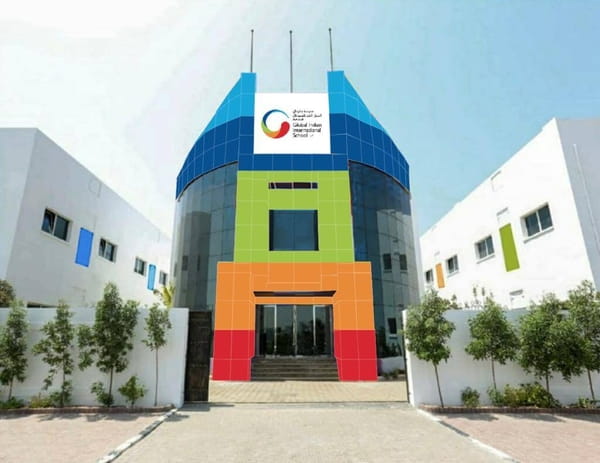 Dubai Campus