Key Takeaways
- The move to Grade 1 changes routines, expectations and friendships.
- At GIIS Abu Dhabi, the primary programme bridges play-based KG learning with more formal academics.
- Academic tracking, wellbeing support, child-friendly spaces and parent updates all help.
- A confident start supports long-term learning.
- Small steps at home make a big difference.
Why Does a Smooth Transition Matter?
Transitioning from kindergarten to the primary grade can be beautiful and unnerving at the same time. It can shift how your child learns, connects, and expresses themselves. One month they are playing pretend. Next, they are settling into more structured lessons.
Strong early childhood education gives children a head start. The move to primary school needs its own care. The UAE government portal u.ae/en explains that kindergarten is voluntary, runs for two levels over two years and prepares children for primary level. In government schools, that primary level covers Grades 1 to 4.
So how do schools help? Mostly through gentle academics, caring teachers, thoughtful spaces and open communication with parents. Families comparing top CBSE schools in Abu Dhabi can ask each school how it handles this phase.
What Changes When Children Move to Primary Grades?
Moving on from kindergarten brings a few clear shifts. Here is how the two stages look at GIIS Abu Dhabi.
| Feature | KG (Pre-KG to KG2) | Primary (Grades 1 to 4) |
| Approach | Global Montessori Plus, with free and structured play | CBSE, bridging play-based learning with more formal academics |
| Subjects | English, Hindi, STEM, Mathematics, EVA, Dance and Music, Montessori | English, Science, Social Science, Mathematics and a second language (French, Hindi or Arabic) |
| Tracking | Baseline, formative and summative assessments | 7S Analytics and a personalised Individual Development Programme |
Common challenges children may face include:
- Adjusting to new routines and classroom expectations.
- Meeting more formal academics after play-based days.
- Making friends and finding their voice in a new class.
- Feeling unsure when everything seems bigger and busier.
How Do Schools Support the Transition?
1. Preparing children academically
This is where good early childhood education pays off. GIIS builds literacy, numeracy, creativity, global awareness and emotional growth through its Global Montessori Plus programme. Grades 1 and 2 then focus on core literacy and numeracy. By Grades 3 and 4, children begin building critical thinking and collaboration.
7S Analytics tracks each child’s progress and shapes a personalised plan, so support meets each child where they are.
2. Supporting social and emotional development
Emotional comfort comes first. GIIS has a dedicated Happiness and Well-being Department. Its 9GEMS framework weaves leadership, community care and universal values into daily learning. Music, dance, drama and art give children more ways to express themselves.
3. Creating a child-friendly learning environment
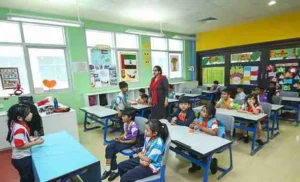
- KG spaces include an indoor gym, a pretend-play marketplace and a garden.
- Primary spaces include a dance room, a choir room and an art and crafts lab.
- GIIS describes secure campuses, monitored classrooms and trained staff.
Families searching for the best kindergarten schools in Abu Dhabi can see how GIIS structures its early years on its kindergarten page.
4. Strengthening parent-school collaboration
In KG, GIIS shares emails, GMP report cards, monthly newsletters, weekly reports and class WhatsApp groups.
- Teachers make ‘Sunshine Calls’ to share positive updates.
- Primary families benefit from regular parent connect sessions.
What Are the Benefits of a Successful Transition?
- Improved confidence and classroom participation. Children who feel safe are more willing to ask questions and join in.
- Better academic readiness and learning outcomes. A steady start in primary school gives literacy and numeracy time to grow.
Who Makes the Transition Work?
Schools and parents work together to make it work. Schools plan the programme, track progress and offer comfort. Parents bring warmth, routine and encouragement at home. Early support matters because a confident start in kindergarten and Grade 1 helps children carry that confidence forward.
If you are exploring admission open in Abu Dhabi schools for your child’s next step, the GIIS admission page lists every stage. The 2027-2028 form opens on 2 November 2026.
Frequently Asked Questions
1.Why is the transition from kindergarten to primary school important?
It sets the tone for how children feel about learning. A comfortable start builds confidence, routines and social skills. According to u.ae, kindergarten prepares children for primary school. Good early childhood education strengthens that link.
2.How can parents help children prepare for primary school?
Talk about primary school in positive terms. Build routines for sleep, mornings and packing a bag. Read together and encourage small tasks. Book a campus tour so the school feels familiar.
3.What skills should children develop before entering primary grades?
GIIS names communication, creativity, social confidence, numeracy, literacy and independent thinking as skills KG builds. Simple self-care, such as opening a lunchbox, helps too.
4.How do schools support children emotionally during the transition?
Through teacher support, well-being teams and parent connect sessions. At GIIS, a dedicated Happiness and Well-being Department supports students, and KG teachers share positive news through ‘Sunshine Calls’.
5.What are the signs that a child has adjusted well to primary school?
- They talk about school with a smile.
- They follow morning and bedtime routines.
- They mention new friends by name.
- They are inquisitive and participative in class.
An important thing to remember is that every child settles at their own pace.