How to Build a Future-Ready Skill Set Through the CBSE Curriculum
Ask a group of parents in Abu Dhabi what worries them most about school, and the answer is rarely marks alone. It is whether their child is prepared for a world that changes faster than any textbook. That is the question behind this blog: how does a CBSE education build the skills your child will need years from now?
Why does a future-ready skill set matter more than good grades?
Grades open doors, but they rarely decide what happens once your child walks through them. Employers now look for people who think on their feet, work in teams, and pick up new tools quickly. The UAE takes this seriously at a national level too, climbing to 17th place globally and staying the region’s highest-ranked in the QS World Future Skills Index 2027, which measures how well education systems prepare graduates for future jobs. Schools need to treat skill building as seriously as academics.
What makes the CBSE curriculum a strong base for future skills?
The CBSE curriculum was never meant to be about memorising facts alone. In recent years, the board has leaned into competency-based learning and newer subjects such as AI and Design Thinking from the middle years onward, giving students a well-tested framework to build on. If you are weighing up your options, our earlier post on CBSE vs IB Curriculum: Key Differences Every Parent Should Know Before Admissions breaks this down in more detail.
Which skills does CBSE help students build for the future?
A CBSE programme, taught well, quietly builds a wide range of abilities alongside the syllabus:
- Critical thinking, through case studies and open-ended questions
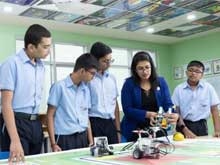
- Digital and AI literacy, built into subjects from Grade 6 onward
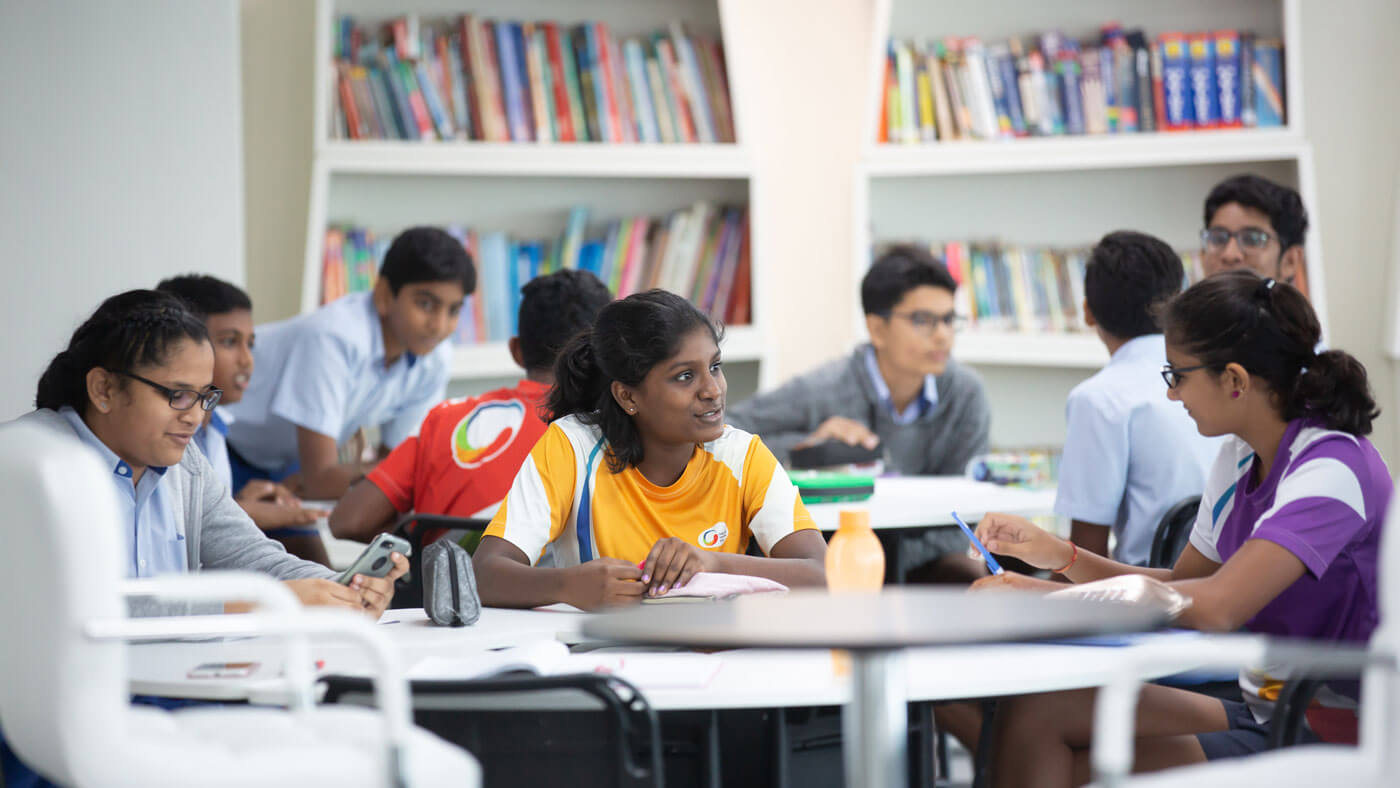
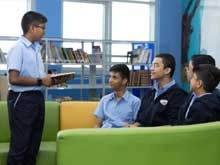
- Communication and collaboration, through group projects and debates
- Adaptability, as the syllabus is regularly updated to match industry shifts
This is really what skill development for students should look like: not a separate class bolted onto the timetable, but something woven into everyday learning.
How does GIIS Abu Dhabi bring these skills to life?
At GIIS Abu Dhabi, the CBSE syllabus is only the starting point:
| Programme | What it builds |
| Global Centre for Innovation and Entrepreneurship (GCIE) | Problem-solving and entrepreneurial thinking |
| Qutuhal | Research and project management skills |
| Leadership Lecture Series | Exposure to industry experts and real-world leadership |
| 9GEMS Framework | All-round growth across academics, sports, arts and ethics |
This combination is one reason families consistently rank us among the best Indian schools in Abu Dhabi, something we would encourage you to see for yourself on a campus tour.
Why is leadership a non-negotiable skill for the future?
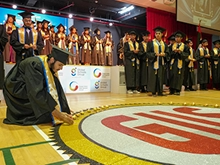
Technical skills matter, but leading a team or deciding under pressure often separates a good employee from a great one. At GIIS Abu Dhabi, this is built into daily school life through:
- Student council and house captaincy roles from primary school onward
- Peer mentoring, where senior students guide juniors
- Leadership Lecture Series interactions with entrepreneurs and professionals
We build in these opportunities because leadership skills for students are not something you teach from a textbook in a term. They need practice and time. Curious how this shapes university outcomes? Our post on From Classroom to Career: How Our University Guidance Programme Prepares Students for Global Universities shows how this experience strengthens applications too.
Where can parents track this progress across the UAE?
You do not have to take our word for it. The Ministry of Human Resources and Emiratisation has launched the UAE Skills Platform, already serving more than 200,000 students and around 200 institutions, with plans to develop over 1,700 future-focused skills by linking education data with labour market needs. For parents comparing CBSE curriculum schools in Abu Dhabi, this national infrastructure is worth asking any shortlisted school about.
Who is CBSE right for, and how do you get started?
CBSE suits families who want a structured, widely recognised curriculum with a clear pathway to universities in India, the UAE and beyond. It works well if:
- You want a curriculum with strong university recognition worldwide
- Your child benefits from a structured, exam-ready system with steady skill inputs
- You want a school that treats leadership and digital skills as core, not optional
Admission is open in Abu Dhabi schools right now for the upcoming year, so it is a good time to book a campus tour and see the classrooms and labs in person.
Frequently asked questions
1. Is the CBSE curriculum good for building skills beyond academics?
Yes. Recent updates have added competency-based assessments and subjects like AI and Design Thinking to build practical skills.
2. What age should my child start developing leadership skills?
Early. GIIS Abu Dhabi introduces leadership roles from primary school onward, such as class monitor or house captain.
3. How is GIIS Abu Dhabi different from other CBSE schools in the city?
GIIS pairs the CBSE syllabus with the 9GEMS framework, GCIE and leadership programmes, so skills sit alongside academics.
4. When does admission open for the next academic year?
Admissions are open now. Book a campus tour or start your application through our admissions team.