In today’s rapidly evolving educational landscape, technology is reshaping the way students learn and teachers teach. One of the most significant innovations driving this change is adaptive learning — a personalised approach that uses technology and data analytics to tailor learning experiences to each student’s unique needs. Rather than applying a one-size-fits-all model, adaptive learning adjusts the pace, difficulty, and content of lessons in real time, ensuring that every learner progresses at their optimal level. Understanding ‘what is adaptive learning’ is essential for educators, policymakers, and learners who wish to embrace the future of education.
This A–Z glossary explores the key ideas behind experiential learning, the foundations of experiential learning theory, and the many ways experiential learning examples enrich teaching and learning at GIIS KL and beyond.

For parents evaluating Kuala Lumpur schools, adaptive learning has become a key factor in understanding how modern classrooms support individual progress. Many of the best international schools in KL now blend adaptive learning approaches with structured academic frameworks such as the IGCSE curriculum, helping students learn at a pace that suits their abilities while meeting global standards.
What is Adaptive Learning
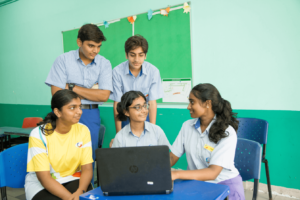
Adaptive learning refers to a technology-based educational method that personalises learning pathways for individual students. It relies on artificial intelligence (AI), algorithms, and data analytics to assess how each learner interacts with content and to make real-time adjustments accordingly.
In simpler terms, adaptive learning is a form of instruction that “adapts” to the learner. When a student excels in a topic, the system may introduce more complex material. Conversely, if a student struggles, it provides additional resources, explanations or practice activities.
The central goal of adaptive learning is to ensure that every learner receives a customised experience that maximises engagement, efficiency, and retention. It mirrors the attentiveness of a one-on-one tutor but at scale, made possible by digital technology.
In leading Kuala Lumpur schools, adaptive learning tools are increasingly used to support differentiated instruction, particularly in international classrooms where learners follow the IGCSE curriculum and require personalised academic pathways.

A – Active Engagement
A central feature of experiential learning, active engagement involves learners participating directly in tasks rather than observing passively. It encourages deeper understanding through doing, reflecting, and applying.
B – Behavioural Development
Experiential learning supports behavioural growth by encouraging responsibility, problem-solving, and decision-making in authentic contexts. It enables learners to adapt their behaviour based on real outcomes.
C – Concrete Experience
A key stage in experiential learning theory, concrete experience refers to direct involvement in an activity. This stage allows students to encounter real or simulated situations that spark further learning.
D – Dewey, John
An influential philosopher whose work forms the foundation of experiential approaches. Dewey emphasised learning through experience and reflection.
E – Experiential Learning
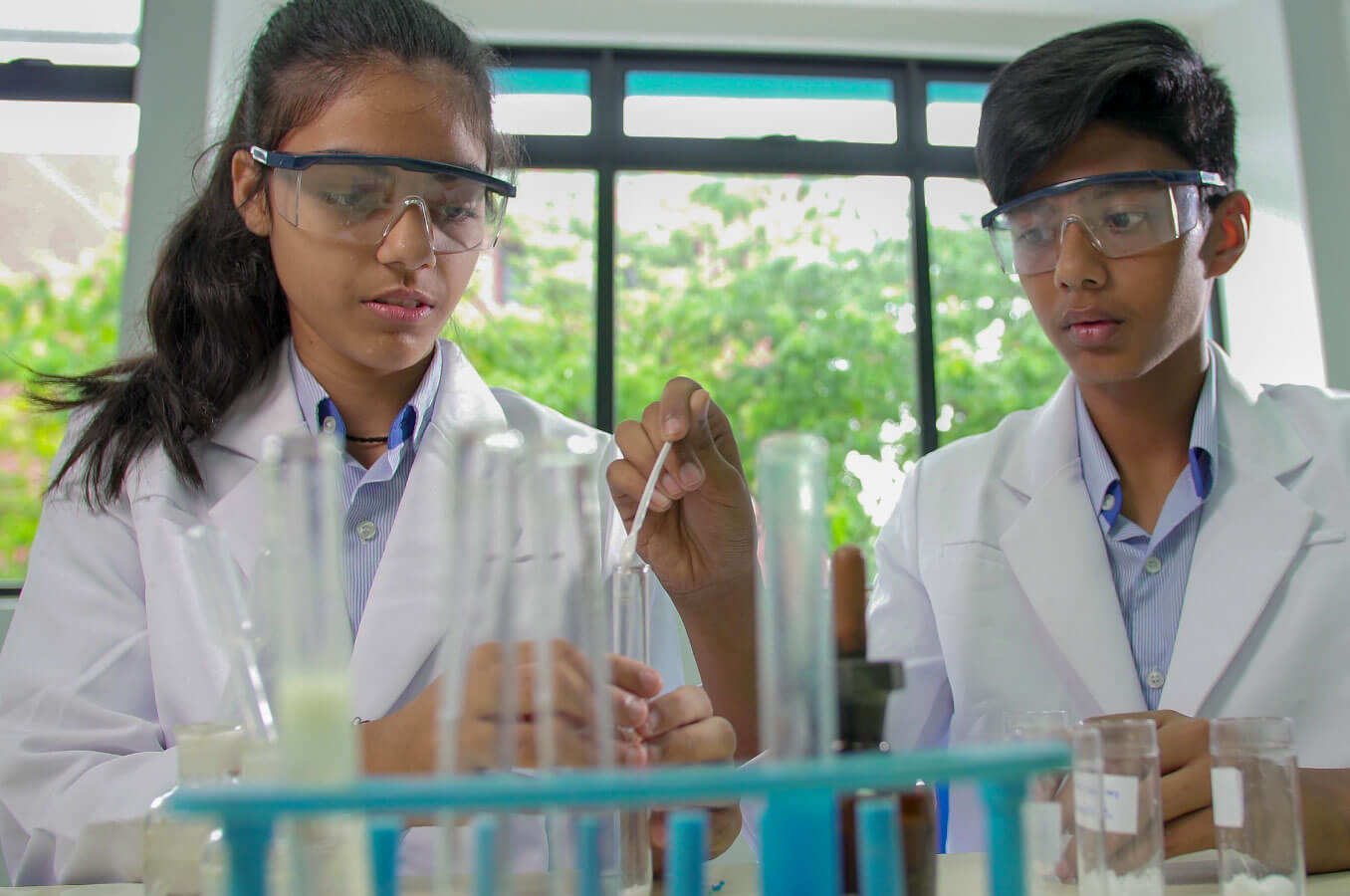
A process where students learn through hands-on experience, reflection, and application. It bridges theory and action by placing learners at the heart of real-world tasks.
F – Fieldwork
One of the most recognised experiential learning examples, fieldwork enables learners to investigate environments, communities, or workplaces, gaining first-hand understanding.
G – Growth Mindset
Experiential learning fosters a growth mindset, as students learn to view challenges as opportunities for improvement through practice and reflection.
H – Holistic Development
This approach nurtures intellectual, emotional, and social skills. Experiential learning is particularly valued for supporting whole-person development.
I – Internships
Practical placements that allow students to apply academic knowledge in a professional setting. Internships are powerful experiential learning examples, linking study with real workplace demands.
J – Journalling
A reflective tool used widely in experiential learning. Journals help learners think critically about their actions, successes, and challenges.
K – Kolb’s Learning Cycle
The most widely referenced model in experiential learning theory. Kolb’s cycle includes four stages: concrete experience, reflective observation, abstract conceptualisation, and active experimentation.
This balance between experience, reflection, and application reflects practices commonly observed across the best international schools in KL, where experiential learning supports both academic depth and skill development.
L – Learning by Doing
A simple description of experiential learning. Rather than merely hearing or reading, learners acquire knowledge through direct activity.
M – Metacognition
The ability to think about one’s own thinking. Experiential learning strengthens metacognitive awareness through structured reflection.
N – Non-Formal Learning
Experiential learning often happens outside formal classrooms, such as in community projects, volunteer work, travel experiences, or youth programmes.
O – Observation (Reflective)
The second stage in Kolb’s model. After a concrete experience, learners examine what occurred, identifying patterns, emotions, and outcomes to inform future learning.
P – Problem-Solving
A major outcome of experiential learning. Real-world tasks challenge learners to analyse situations, try solutions, and evaluate results.
Q – Qualitative Feedback
Meaningful feedback that focuses on insight rather than grades. Experiential learning emphasises constructive, personalised commentary to support growth.
R – Role-Play
A popular teaching method and one of the most flexible experiential learning examples. Role-play simulations allow learners to practise communication, empathy, and decision-making in safe environments.
S – Service Learning
A structured form of experiential learning that combines community service with academic study. It reinforces civic responsibility while deepening subject knowledge.
T – Transferable Skills
Skills such as teamwork, leadership, adaptability, and communication. Experiential learning develops these through authentic tasks that mirror real-life contexts.
U – Understanding (Deep)
Experiential learning promotes deep understanding by encouraging students to connect theory to lived experience rather than memorising isolated facts.
V – Vocational Learning
Skills-based education that prepares learners for specific careers. Much vocational learning is inherently experiential, providing hands-on training and industry-linked assessments.
W – Work-Based Learning
Learning that takes place within a workplace setting. It is one of the strongest experiential learning examples, enabling students to observe professional practice and develop job-ready skills.
X – eXperimentation (Active)
The final stage in experiential learning theory. After forming concepts, learners test them through experimentation, refining their understanding through action.
Y – Youth Programmes
Outdoor expeditions, leadership camps, and creative workshops often use experiential learning methods to build confidence, resilience, and collaboration among young people.
Z – Zone of Proximal Development (ZPD)
Although associated with Vygotsky, ZPD aligns with experiential learning by emphasising that learners thrive when tasks are challenging but achievable with support.
Also Read: Virtual International School is the Future of Education
Final Words
Experiential learning plays a vital role in preparing young people for the challenges of the modern world. At GIIS KL, this approach is woven into daily learning through practical activities, reflective tasks, community engagement and hands-on projects that bring subjects to life. Grounded in experiential learning theory, and demonstrated through numerous experiential learning examples, GIIS KL ensures that students become confident, curious, and capable learners. By linking theory with authentic experience, we, at GIIS KL, empower students to develop essential life skills, take ownership of their learning and thrive in real-world environments. Within the broader landscape of Kuala Lumpur schools, experiential and adaptive learning models continue to shape how students engage with globally recognised programmes such as the IGCSE curriculum, preparing them for academic success beyond the classroom.
Contact us if you want to know how you can make the best out of our industry-leading practices to help your child thrive in a dynamic learning environment.