When Ms. Wang saw her students confidently navigate online research for their IGCSE project, she realised that digital literacy was empowering them to think critically and thrive in a connected world.
In today’s dynamically evolving world, as technology continues to influence every aspect of our lives, education means more than just textbooks, rote learning and traditional teaching methods. Today’s learners are expected to have digital literacy as a vital skill set. Notably, within the IGCSE primary curriculum framework, digital competencies are viewed as mandatory capabilities. By integrating digital literacy in the curriculum, schools can ensure that learners are not only equipped with foundational academic knowledge, but are also prepared to navigate a digitally interconnected world. At GIIS KL, we spread this awareness through our progressive curriculum, based on the principles of the International Primary Curriculum and IGCSE standards.
Understanding Digital Literacy
Digital literacy refers to the ability to access, evaluate, create and share information with others using digital technologies. The subject includes a set of skills ranging from basic keyboard use to complex problem-solving activities in online environments. For primary school students, this means learning the use of digital tools to carry out day-to-day tasks, collaborating on projects and developing critical thinking ability.
In the context of the IGCSE primary curriculum, digital literacy is not considered a separate subject. Rather, it is applied across diverse subjects, for example, in enhancing research in science, facilitating creative projects in the arts and supporting communication in languages. As part of a global educational framework, the International Primary curriculum ensures that these skills are nurtured as part of the daily routine.

Why Digital Literacy is Essential in Today’s Classrooms
-
Keeping Pace with a Digital World
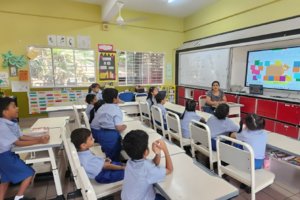
The 21st century classroom is vastly different from the traditional classrooms used by previous generations. Interactive whiteboards, educational apps, online resources and systems for virtual collaboration are key characteristics of modern classrooms. As digital literacy continues to undergo transformation, IGCSE education becomes even more relevant as it offers a flexible framework that evolves with technological progress.
Digital literacy in primary school lays the foundation for young learners to confidently explore digital tools, which becomes essential as they head towards secondary schools admission and beyond.
-
Future-Ready Skills for Tomorrow’s Professionals
The World Economic Forum views digital skills as an essential contributor of future employment. When schools organise digital literacy classes in the IGCSE primary curriculum, younger children get opportunities to develop better problem-solving skills, adaptability and analytical thinking ability from an early stage. Noteworthily, these are the competencies that employers look for in their prospective employees in the 21st century digital economy.
At GIIS KL, digital readiness is viewed as a core element in preparing students for the future, in the classroom and beyond.
-
Improving Academic Engagement and Outcomes
Using interactive technologies, schools can personalise learning experiences. Students can access lessons customised to their pace, strengths and interests by using digital tools. Studies have shown that technology-integrated classrooms facilitate better engagement, which results in better academic outcomes.
In IGCSE schools in Malaysia, including GIIS KL, tech-enabled learning platforms support diverse functions such as formative assessments, real-time feedback and differentiated instructions, making learning more dynamic and engaging.
-
Developing Critical and Independent Thinkers
Digital literacy enables learners to critically assess information sources, distinguish between facts and misleading information, and draw the right conclusions. This is especially relevant in a world where children get access to loads of digital content. This approach aligns with the inquiry-based learning framework of the IGCSE, which encourages students to asl questions, investigate and analyse right from a young age.
-
Encouraging Global Awareness
Digital platforms bring communities across the globe together. These connections help build cultural awareness, empathy and a sense of global citizenship. Schools offering the International Primary curriculum often organise collaborative projects that link classrooms across countries, thereby promoting meaningful cross-cultural communications. Students equipped with digital literacy are able to participate in these interactions confidently, responsibly and ethically, and this is a key achievement celebrated at GIIS KL.
-
Safe and Responsible Online Behavior
Greater digital access leads to an increased risk of misuse. Teachers should therefore put sincere efforts towards teaching students about online safety, digital etiquette and responsible content sharing practices. This requires students to have an understanding of data privacy, cyberbullying and keeping a track of screen time. In top schools, such as GIIS KL, primary students are introduced to these principles at an early age, which help them evolve as responsible digital citizens with time.

Challenges in Integrating Digital Literacy
While the benefits of digital literacy are clear, integrating digital literacy into primary education involves a number of challenges including:
- Availability of devices and internet connectivity especially in Malaysia’s rural areas
- Teachers’ ability to use digital tools effectively
- The ways in which digital literacy can be incorporated in the curriculum
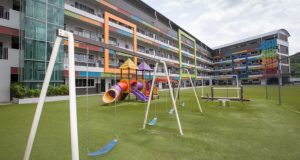
Fortunately, in spite of these challenges, many Malaysian schools are investing in digital infrastructure and professional development programmes.
How Schools Can Promote Digital Literacy
- Professional development for educators to help them stay updated on the latest digital tools and teaching strategies
- Curriculum that embeds technology into daily learning activities
- Regularly updating digital learning programmes to ensure relevance
- Collaborative projects and coding clubs to facilitate practical learning sessions
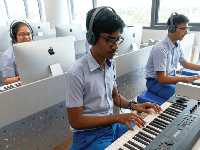
We, at GIIS KL, have tech-enabled classrooms, and we emphasise innovation and alignment with the IGCSE framework for best-in-class 21st-century learning.
The Role of Parents and the Community
Parents should play their part in reinforcing digital skills at home. This includes monitoring screen time, encouraging the view of educational content and engaging in digital activities together.
Final Words
The digital age is here to change our approach to education. The IGCSE primary curriculum, with its global perspective and forward-thinking structure, provides the perfect environment to embed digital literacy early in a child’s educational journey. From improving academic engagement to fostering critical thinking ability and the idea of global responsibility, the importance of digital literacy cannot be overstated.
If you’re evaluating schools in Malaysia or preparing for secondary schools admission, shortlisting institutions that have championed digital learning is crucial. GIIS KL, with its commitment to holistic, 21st century education, emphasises how digital literacy can empower learners to thrive in a constantly changing world.
Also Read: Why should you select Cambridge IGCSE for your child?