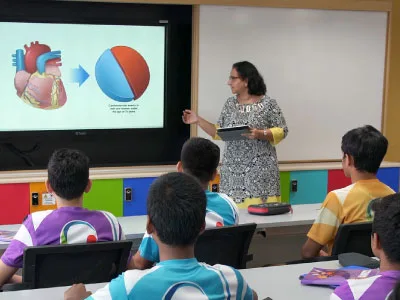
Good note-taking skills are essential for students as they facilitate active engagement with course material, enhancing comprehension and retention. By capturing key points during lectures or discussions, students create a personalised resource for review and study, aiding in knowledge consolidation.
Effective note-taking fosters critical thinking and analytical skills by encouraging students to synthesise information in real-time, leading to deeper understanding. Moreover, well-organised notes serve as a valuable reference for assignments, projects, and exams, enabling students to effectively demonstrate their understanding of the subject matter. Overall, mastering note-taking skills equips students with a powerful tool for academic success and lifelong learning.
Top 11 techniques to take notes to improve academic performance
Here are the top 11 note-taking techniques aimed at enhancing academic performance. These strategies encompass various methods to optimise note-taking efficiency and effectiveness, offering valuable insights for students seeking to excel in their studies.
1. Stay organised
Maintaining organisation in note-taking is pivotal for comprehension and retention. By structuring notes logically, students can easily locate information during revision. Utilise bullet points, numbering, or dedicated sections for different topics to streamline content. Keeping notes neat and legible enhances clarity, minimising confusion during study sessions. Organisational tools like colour-coding or digital note-taking apps further facilitate organisation, ensuring that key concepts are readily accessible.
2. Review and revise regularly
Regular review and revision are essential for reinforcing learning and committing information to memory. Set aside dedicated study sessions to revisit notes, focusing on understanding complex concepts and identifying areas of weakness. Active engagement during review, such as summarising content in your own words or creating flashcards, enhances retention. Consistent revision intervals, spaced over time, optimise long-term retention. Additionally, revisiting notes shortly after class can help solidify understanding and clarify unclear points while the material is still fresh in memory.
3. Use headers and subheadings
Employing headers and subheadings structures notes hierarchically, facilitating organisation and comprehension. Delineating topics and subtopics enhances readability and aids in quick location of relevant information during revision. Headers act as signposts – guiding students through their notes, highlighting key concepts. Subheadings provide additional context and break down complex topics into digestible chunks. When coupled with concise and descriptive titles, headers and subheadings serve as effective visual cues, enabling students to navigate through their notes with ease and efficiency.
4. Stay engaged during lectures
Active engagement during lectures is crucial for effective note-taking. Maintain focus by participating in class discussions, asking questions, and mentally summarising key points. Actively listen to the instructor’s explanations and jot down relevant information promptly. Avoid distractions such as excessive doodling or browsing unrelated materials. Engage with the material by paraphrasing complex concepts in your own words and connecting new information with prior knowledge. Staying engaged promotes deeper understanding and facilitates the retention of information, resulting in more comprehensive and meaningful notes.
5. Use abbreviations and symbols
Employing abbreviations and symbols streamlines note-taking, enabling students to capture information efficiently. Develop a personalised system of abbreviations for commonly used words or phrases to expedite writing. Symbols can represent recurring concepts, actions, or relationships, reducing the need for lengthy explanations. Maintain consistency in abbreviation usage to ensure clarity and prevent confusion during revision. When coupled with context-specific symbols, abbreviations enhance note-taking speed without sacrificing content accuracy.
6. Create visual aids
Integrating visual aids into note-taking enhances comprehension and retention by appealing to visual learners. Sketch diagrams, flowcharts, or graphs to illustrate complex concepts or relationships between ideas. Visual aids provide a visual representation of abstract concepts, making them easier to understand and remember. Incorporate icons, symbols, or illustrations alongside textual content to reinforce key points. Utilise mind maps or concept maps to organise information spatially, fostering connections and facilitating holistic understanding. Visual aids complement textual information, creating a multifaceted learning experience that caters to diverse learning styles.
7. Use colour coding
Colour coding notes is a powerful strategy for enhancing organisation, comprehension, and retention. Assign specific colours to different categories, topics, or themes within your notes. This visual differentiation makes it easier to identify and prioritise information during review sessions. Colourful highlights draw attention to important concepts or keywords, aiding in quick retrieval of relevant information. Additionally, colour-coded notes stimulate visual memory, making it easier to recall details during exams or assignments.
8. Include personal insights
Infusing personal insights into note-taking encourages critical thinking and deeper engagement with the material. Share your perspectives, examples, or real-life applications to enrich your understanding and personalise the learning experience. Incorporating personal insights fosters ownership of the content and promotes active learning. When reviewing notes, revisit your insights to deepen comprehension and spark further inquiry. This reflective practice enhances analytical skills and cultivates a deeper connection with the subject matter, leading to more meaningful learning outcomes.

9. Mapping method
The mapping method of note-taking involves visually representing relationships between main ideas and supporting details. Start with a central concept or topic and branch out to related subtopics, connecting them with lines or arrows. Visualising information in this way enhances comprehension and promotes memory retention. Mapping is particularly effective for visual learners who benefit from spatial organisation and graphical representation of information. By capturing the big picture while retaining flexibility, the mapping method facilitates active engagement and deeper learning.
10. Leverage technology
Leveraging technology in note-taking offers numerous benefits, including increased accessibility, organisation, and efficiency. Digital note-taking tools and apps provide flexibility to capture, store, and retrieve notes across devices. Features like searchable text, voice-to-text transcription, and cloud synchronisation enhance usability and convenience. Digital platforms offer multimedia capabilities, allowing integration of images, audio recordings, and hyperlinks for enriched note-taking experiences.
11. Short-hand practice
Practising shorthand techniques accelerates note-taking speed and efficiency while capturing essential information. Develop a personalised shorthand system consisting of abbreviations, symbols, and shortcuts for commonly used words or phrases. Streamline note-taking by omitting unnecessary words and focusing on key concepts and ideas. Consistent shorthand practice enhances fluency and accuracy, enabling rapid transcription of lecture content.
Also Read: Types of Different Learning Styles
Conclusion
Mastering effective note-taking techniques is paramount for enhancing academic performance and fostering lifelong learning skills. By implementing strategies such as organisation, regular review, engagement, and leveraging technology, students can optimise their note-taking process. Incorporating personal insights, visual aids, and shorthand practices further enriches the learning experience. Ultimately, the ability to capture, organise, and synthesise information efficiently empowers students to comprehend complex concepts, retain knowledge effectively, and succeed in their academic endeavours.
At Global Indian International School (GIIS), promotes effective note-taking techniques to enhance students’ learning experiences. The methods used include Cornell notes, mind mapping, etc. By incorporating strategies like organisation, engagement, and leveraging technology, we empower our students to comprehend complex concepts, retain knowledge effectively, and succeed in their academic endeavours.

Team GIIS
Team GIIS is a group of enthusiastic writers who bring the vibrant world of GIIS in Singapore to life through engaging blog posts. Dedicated to highlighting the school’s teaching methodology, innovative learning environment, and diverse curriculum options like IB, Cambridge and CBSE, they aim to connect with parents, educators and students, sharing insights and stories that inspire and inform the school community.