Global
All Cities
Where would you like to study? Select cities to refine your search.
Any Curriculum
Find a campus based on the curriculum offered.
Global
Global
All Cities
Where would you like to study? Select cities to refine your search.
Any Curriculum
Find a campus based on the curriculum offered.
Search

10 Awesome Tips To Help Ease Your Child Back Into School Mode

Parenting Tips

Your children are getting ready to go back to school. But with a global pandemic, the situation you and your little ones face is far from routine. All across the country, parents are trying to figure out several things, foremost of which is how you’ll get your children back into school. With academic calendars upended everywhere, who knows what’s going to happen next?

If your children are going to start classes soon at a school in Singapore, then you’ll all need to get ready. Here are a few ways to help your preschoolers ease back into school mode.

Get Back to School Mode with These Ways:


● Know Your Options

Most of the schools offer parents several choices. They can send their children to school, keep their children at home, resort to virtual school, or go for the third arrangement, combining the two. What option will you go for? Which one feels right for you?

● Send Your Child to School?

Scrutinise the choices. Consider the pros and cons. Go over the advantages of sending your children back to school. The best one is that classroom learning is still better than having the children learn from home. Also, your children benefit from socialising with peers and other adults at school. The school facilities are also much better for many activities. After that, consider the cons: is the level of community spread relatively high in your area? If your children have an underlying condition—or someone in your family does—then that increases the risk from COVID-19.

● Keep Your Child at Home?

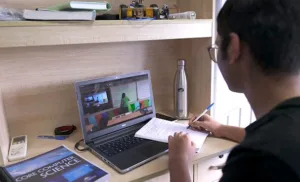
If you think sending your children back to school is risky, then discuss virtual classrooms from home. As long as your little ones have someone to supervise them at home—you, perhaps, or someone else in your family?—and that you have reliable access to the internet to ensure that they get to log in to their online classes, then that’s a sound option for you. Also, is your child’s learning style and maturity a good match for virtual learning? That’s a factor as well.

● Talk to Your Children

It’s going to be a tough one this year. There are so many changes; it might often feel like you’re drowning under so many things to adjust to or remember. Even when it feels overwhelming, though, make an effort to talk to your children. You’re not the only one living through the pandemic. Children pick up a lot from their environment. They might not know the full extent of what a global pandemic means, but if you’re worried and stressed over it, chances are they’ll pick up on that, and they’ll reflect those emotions too. Explain what’s happening!

You don’t need to make it into a doom’s day announcement but be honest about it. Don’t try to downplay the impact and possible risks of the virus because your children might not take it seriously, and that could put them in grave danger. Make sure they understand the risks.

● Encourage Friendships

Whether you’re sending your children to school or you’re opting for virtual classes, it would be best if you encourage your children to stay connected with their friends and classmates. Connections help at this time. The virus has made it necessary for us to follow social distancing rules. While that translates to physical barriers, the goal is not to let those barriers get in the way of emotional connections. Even at school, your children will probably feel sad that they can’t sit with their friends or that they can’t come closer than what social distancing rules allow.

If they’re taking classes at home, it’s even more important to stay connected with their friends. Virtual classes have made it easier for schools in Singapore to resume classes, but it’s had an isolating result on many of the students. Talking to their friends and just basking in that connection will help your children get through the next few months as well.

● Bring It Up

Mention the fact that school is coming up. Do this a few weeks in advance. The sooner you get the idea into their heads, the sooner they’ll be mentally ready. Talk about the academic year, the events that your children can look forward to. It will also help if you’ve talked to their teachers by this time and mention projects that they could get excited about.
‍‍

● Get Back into the Routine

If your children sleep later than usual, then you’ll need to get them used to sleeping early and waking up early for school. Start getting them to bed earlier. That way, by the time classes start, their biological clocks would have already adjusted. This is especially useful for children who got into the habit of going to bed past midnight. That said, you can say something like: “Okay, with the pandemic, you’ve had a lot of screen time. But now that school is starting, we’ll need to get you back to the same…”


● Normalise Wearing a Mask

Some children have no trouble wearing a mask. But do your children find masks troublesome? However, just forcing your children to wear masks isn’t going to do it. Any parent who’s been that drill knows how stubborn children can get. What you can do, though, is to strategize how you’ll get your children to wear a mask. You could give them masks with child-friendly designs or masks that have their favourite cartoon characters. Peppa Pig masks, anyone? That will be an instant hit. You might even need to stop them from wearing the mask around the house.


● Create Your Own

The masks can be itchy and annoying. If your children are going back to school, though, you want to make sure they always remember to keep the mask on. One way to help that is to create a mask in the material that they like. Pick something friendly for their skin. It’s easy enough to make a DIY mask. With plenty of online tutorials and how-to vids, you’ll have those masks ready in no time.

● Help Your Children Cope

Are your children afraid? One way to help them cope is to make sure you are also showing them healthy coping behaviour. Try not to be stressed around them. Learn healthy ways to cope with the pandemic, and they’ll follow your lead. Also, it would help if you attach a positive meaning to the pandemic. For instance, you can say: “This time hasn’t been easy. But it’s given us lots of time to have fun together!” And that will help lift your child’s spirits.

 You can help your child by first asking about their fears. Don’t dismiss their concerns or jokingly make fun of them in an attempt to downplay the seriousness of the situation. Instead, try to reassure them. Ask them to tell you more about what they might be worried about. If your children are afraid, validate those feelings.

Tell them: “I can understand why you feel this way…” and that sets the right tone for that conservation. You could also let your child bring an item that comforts them. It could be a stuffed toy or photograph or a piece of jewellery. That might help them cope when they start going back to school.

GIIS Singapore Logo
Team GIIS

Team GIIS is a group of enthusiastic writers who bring the vibrant world of GIIS Singapore to life through engaging blog posts. Dedicated to highlighting the school’s teaching methodology, innovative learning environment, and diverse curriculum options like IB, Cambridge and CBSE, they aim to connect with parents, educators and students, sharing insights and stories that inspire and inform the school community.

Featured Blogs

GIIS

Choosing Subjects for IGCSE: A Parent’s Guide to Streams, Options & Future Careers

By age 14, most children have never had to make a decision that shapes their next ten years. Choosing IGCSE subjects is exactly that decision and for parents, it often arrives with more questions than answers. Which subjects matter for university? Does dropping a science close doors? Is a 'safe' combination actually the right one?

GIIS

Your Child’s Journey to IBDP Success Starts Before Grade 11: A Parent’s Guide

While evaluating the IB Diploma programme in Singapore for their children, parents center the conversation around Grade 11 and 12. It is during these final two high school years that students write their Extended Essays, dive deep into Theory of Knowledge (TOK) and prepare for final examinations.

CBSE Results

IBDP Results 2026: What Parents Should Consider Before Choosing an IB School in Singapore

Choosing the right international school for your child is one of the most critical academic decisions a parent can make. With the release of the May 2026 International Baccalaureate Diploma Programme (IBDP) results, parents across Singapore are evaluating school performance metrics to determine where their child will thrive best.

GIIS

How GIIS Students Achieved Outstanding IBDP Results in 2026: A Look at the Learning Approach

Choosing the right senior secondary curriculum requires more than academic rigour. Students also need an environment that nurtures critical thinking, global perspectives, personal growth, and university readiness. For families evaluating the IB diploma programme in Singapore, the May 2026 International Baccalaureate Diploma Programme (IBDP) examination results offer clear evidence of how structured academic mentoring and personalised pedagogy lead to top-tier university readiness.

Top Scholarships

Dr APJ Abdul Kalam Global Skills Scholarship

Eligibility:

Talent Based - Technology

More from same author
Trending Blogs

GIIS

Choosing Subjects for IGCSE: A Parent’s Guide to Streams, Options & Future Careers

By age 14, most children have never had to make a decision that shapes their next ten years. Choosing IGCSE subjects is exactly that decision and for parents, it often arrives with more questions than answers. Which subjects matter for university? Does dropping a science close doors? Is a 'safe' combination actually the right one?

GIIS

Your Child’s Journey to IBDP Success Starts Before Grade 11: A Parent’s Guide

While evaluating the IB Diploma programme in Singapore for their children, parents center the conversation around Grade 11 and 12. It is during these final two high school years that students write their Extended Essays, dive deep into Theory of Knowledge (TOK) and prepare for final examinations.

CBSE Results

IBDP Results 2026: What Parents Should Consider Before Choosing an IB School in Singapore

Choosing the right international school for your child is one of the most critical academic decisions a parent can make. With the release of the May 2026 International Baccalaureate Diploma Programme (IBDP) results, parents across Singapore are evaluating school performance metrics to determine where their child will thrive best.

GIIS

How GIIS Students Achieved Outstanding IBDP Results in 2026: A Look at the Learning Approach

Choosing the right senior secondary curriculum requires more than academic rigour. Students also need an environment that nurtures critical thinking, global perspectives, personal growth, and university readiness. For families evaluating the IB diploma programme in Singapore, the May 2026 International Baccalaureate Diploma Programme (IBDP) examination results offer clear evidence of how structured academic mentoring and personalised pedagogy lead to top-tier university readiness.

GIIS

Moving to Singapore with Children: A Complete School Guide for Expat Families (2026)

Relocating to Singapore is an exciting milestone for any family. Alongside finding a new home, settling into a different culture, and adapting to a new lifestyle, one of the biggest decisions parents face is choosing the right school for their children.

GIIS

Why GIIS SMART Campus Singapore Stands Out as a Future-Ready School

As technology and global careers continue to evolve, parents are looking for future-ready schools that offer more than academics. GIIS SMART Campus Singapore combines academic excellence, global curricula, innovative learning, and holistic development to prepare students for lifelong success.

GIIS

GIIS SMART Campus Singapore: Programmes & Admissions Guide for Punggol Families (2026)

As more families move into Punggol, Sengkang, and the North-East region of Singapore, the demand for high-quality international education continues to grow. Parents today are looking for schools that combine academic excellence, future-ready learning, global curricula, and holistic development.

GIIS

How to Choose the Best Primary School in Singapore: A Parent’s Complete Guide (2026)

The primary school years lay the foundation for a child's future success, shaping not only academic achievement but also confidence, character, curiosity, and a lifelong love of learning. Choosing a school that combines strong academics with holistic development helps children build the knowledge, skills, and values they need to thrive in an ever-changing world.

Search
History Menu Icon

Our vision is to become a global role model for teaching and learning.

History Menu Icon Secondary

Since its inception in 2002, GIIS has spread quality education through 17 campuses across the globe.

Global Indian International School Singapore smart campus learning environment

SMART Campus

A green, tech-enabled campus with extensive sports facilities that enables a holistic education

  • Kindergarten program at GIIS Singapore smart campus

    Montessori education with a modern touch.

  • Primary school curriculum at GIIS Singapore

    International primary programmes with best holistic learning.

  • Secondary school students learning at GIIS Singapore

    International middle school programmes with best foundation for high school.

  • High school education and curriculum at GIIS Singapore

    International high school programmes with beat launchpads for university.

21st century learning campus at GIIS Singapore

Facilities which are collaborative, creative and adaptable to individual needs.

Holistic education approach with 9 Gems at GIIS Singapore

Award-winning framework for all-round student development

Co-curricular activities at GIIS Singapore

Extra-curricular activities are those activities, often sports-based, that take place outside of the GIIS classroom

Extra curricular activities at GIIS Singapore

Talent shows, performances, competitions, clubs and additional classroom work.

Admission Process Icon

Get an overview of the admissions process

Campus Tour Icon

Register for a tour of the campus to learn more about the school first hand

Book Meeting Icon

You can talk to our Admissions Counsellor online or in-person, as per your convenience.

Admissions Form Icon

Find all forms related to admissions procedure here

Fees Icon

Get information on our fee structure for different grades

Scholarship Icon

Thank you for considering GIIS as a prospective school for your child. Our goal is to make the admissions.