Global
All Cities
Where would you like to study? Select cities to refine your search.
Any Curriculum
Find a campus based on the curriculum offered.
Global
Global
All Cities
Where would you like to study? Select cities to refine your search.
Any Curriculum
Find a campus based on the curriculum offered.
Search

Fostering critical thinking skills: The Cambridge Lower Secondary approach

Learning

Typically for ages 11-14, the Cambridge Lower Secondary Programme (CLSP) is a stimulating international curriculum that helps enhance critical thinking skills, power of questioning, problem solving and collaboration amongst students as they learn, engage with concepts, question and investigate.

Critical thinking fosters intellectual independence in students – the ability to meander through complex situations, navigate through the sea of information available in today’s digitally-enhanced world, and make informed decisions. It empowers learners to question assumptions, think for themselves, and develop their own perspectives, building Cambridge’s critical thinking skills along the way.

The Cambridge curriculum emphasises active learning and fosters essential 21st-century competencies. The teaching and learning approaches aim to develop learners who are ready for this dynamic world.

Advantages of Cambridge Lower Secondary Curriculum

Some of the key advantages of Cambridge Lower Secondary Curriculum are:‍

● Broad and flexible curriculum: The programme encompasses a wide array of subjects, fostering critical thinking skills, creativity and expression for a well-rounded education.

● Clear progression: With a structured curriculum framework, students smoothly advance through the Cambridge pathway, ensuring readiness for the next educational stage.

● International approach: Emphasising cultural awareness, the programme is culturally sensitive yet has a global outlook towards learning and student growth.

Cultivating critical thinking through Global Perspectives

In this blog, we will focus on how through Global Perspectives – taught as part of Cambridge Lower Secondary programme – the Cambridge curriculum aims at developing critical thinking skills through research, analysis, reflection, collaboration, and communication.

It encourages deeper understanding of global issues that hold relevance for the learners. By engaging with diverse perspectives, students develop the ability to think critically about global challenges, consider different viewpoints, and understand the interconnectedness of the world.

The range of themes include, Education for all, Health and well-being, Employment, Migration and urbanisation, Sport and recreation, Digital World, Poverty and inequality, and more. Throughout this exploration, students have the opportunity to:

● Cultivate skills essential for further education

● Make well-informed decisions regarding the information they encounter

● Engage in independent research on global issues

● Learn to collaborate with peers

● Develop the power of analysis while analysing research findings and reaching the clear unknown, and sometimes unpredicted outcomes with tangible results

Also read: ‘Cambridge Lower Secondary provides a strong pathway to IGCSE’

By the culmination of the lower secondary years, students learn to adeptly discern information from varied sources. They engage in meaningful scrutinisation of information and evidence supporting them. Moreover, logical & balanced reasoning skills also develop along with positive argumentative skills. All these skills prepare students for life, and make them ready for the world.

Benefits of the Cambridge Critical Thinking Approach

The Cambridge critical thinking approach equips students with essential skills to thrive in a complex world. It enhances their ability to evaluate information objectively, identify biases, and make sound decisions. Students learn to think independently, question assumptions, and solve problems creatively. This approach encourages them to engage in thoughtful analysis, develop logical reasoning, and express their ideas confidently. By fostering curiosity and open-mindedness, the Cambridge framework helps students navigate academic challenges and real-life situations with clarity and confidence, preparing them for future success in higher education and beyond.

Cambridge Lower Secondary programme at GIIS

CLSP at GIIS is offered to middle school students in Grades 6-8 as part of the Cambridge international curriculum. After completion, students move on to Cambridge IGCSE offered in Grades 9-10.

Throughout middle school and high school years, students develop the ability to analyse information, break down complex problems, and devise effective solutions. This skill is invaluable across academic subjects and real-life situations.

As students progress to higher levels of education, critical thinking becomes increasingly crucial. It empowers them to engage with more advanced and abstract concepts, fostering independent learning and research skills necessary for success in college and beyond.

At GIIS, as part of the international curricula offerings, the natural progression for CLSP is Cambridge IGCSE, followed by the IB Diploma Programme (IBDP) offered in Grades 11-12,  where the critical thinking skills aid in IBDP core components, such as the Theory of Knowledge and Extended Essay, which is a 4,000 word-independent research paper. By reflecting on the knowledge acquired, the students develop greater awareness of their surroundings, and appreciation for the diversity.

Moreover, beyond academics, critical thinking is a life skill that enhances problem-solving in everyday situations, promotes sound decision-making, and empowers students to approach challenges with confidence.

If you are keen to know more about the Cambridge curriculum offered at GIIS, please feel free to contact our admissions counsellors.

Deepika
Deepika Sodhi

Ms. Deepika Sodhi, Principal, GIIS East Coast Campus is a seasoned education leader with over 25 years of teaching experience, including 15+ years in Cambridge and IB programmes, and 10 years in CBSE.

She holds a Master's degree in Physics with a specialisation in Electronics, a Bachelor’s in Education, and an Honours Diploma in Software Management. Her teaching career spans India and Singapore.

Ms. Sodhi's achievements include being GATE (Graduate Aptitude Test in Engineering) qualified and a Gold Medalist in Physics, Lead ISO Auditor, a member of both the International Schools Network and the International Baccalaureate Educator’s Network.

In her past roles at GIIS, she served as Head of Science and Physics, Cambridge IGCSE Coordinator, Cambridge Exam Officer, and IB Examiner.

Ms. Sodhi is passionate about innovation, inclusivity, and student success. In her free time, she enjoys reading and volunteering with the Singapore Red Cross.
Featured Blogs

GIIS

Extra-Curricular Activities (ECA) at GIIS Singapore: Sports, Arts & Clubs Guide

A child’s growth extends far beyond academics. At Global Indian International School (GIIS) Singapore, Extra-Curricular Activities (ECAs) and Co-Curricular Activities (CCAs) are thoughtfully designed to nurture leadership, creativity, teamwork, confidence, and physical wellbeing alongside academic excellence.

IB Curriculum

IB Schools in Singapore: Top Schools, Fees & How to Choose (2026)

Choosing the right IB school in Singapore is one of the most important decisions for families seeking an internationally recognised education. With Singapore being home to some of Asia’s leading International Baccalaureate (IB) schools, parents today have access to a wide range of institutions offering strong academics, global exposure, and holistic learning environments.

Singapore Education System

PSLE vs International School Singapore: Which Path is Right for Your Child?

Every parent wants to choose the educational pathway that will best support their child’s confidence, happiness, academic growth, and future opportunities.

CBSE

Secondary School Fees in Singapore: CBSE, IGCSE & IB Compared (2026-27)

Choosing the right secondary school in Singapore involves balancing academic quality, curriculum options, future opportunities, and affordability. With multiple international curricula available, including CBSE, IGCSE, and IB, parents often compare tuition fees alongside campus facilities, learning approaches, and long-term value.

Top Scholarships

Dr APJ Abdul Kalam Global Skills Scholarship

Eligibility:

Talent Based - Technology

More from same author
Trending Blogs

GIIS

Extra-Curricular Activities (ECA) at GIIS Singapore: Sports, Arts & Clubs Guide

A child’s growth extends far beyond academics. At Global Indian International School (GIIS) Singapore, Extra-Curricular Activities (ECAs) and Co-Curricular Activities (CCAs) are thoughtfully designed to nurture leadership, creativity, teamwork, confidence, and physical wellbeing alongside academic excellence.

IB Curriculum

IB Schools in Singapore: Top Schools, Fees & How to Choose (2026)

Choosing the right IB school in Singapore is one of the most important decisions for families seeking an internationally recognised education. With Singapore being home to some of Asia’s leading International Baccalaureate (IB) schools, parents today have access to a wide range of institutions offering strong academics, global exposure, and holistic learning environments.

Singapore Education System

PSLE vs International School Singapore: Which Path is Right for Your Child?

Every parent wants to choose the educational pathway that will best support their child’s confidence, happiness, academic growth, and future opportunities.

CBSE

Secondary School Fees in Singapore: CBSE, IGCSE & IB Compared (2026-27)

Choosing the right secondary school in Singapore involves balancing academic quality, curriculum options, future opportunities, and affordability. With multiple international curricula available, including CBSE, IGCSE, and IB, parents often compare tuition fees alongside campus facilities, learning approaches, and long-term value.

IB Curriculum

What is the IB Curriculum? A Parent’s Simple Guide to PYP, MYP & Diploma (2026)

Choosing the right curriculum is one of the biggest decisions parents make for their child’s future. With more families in Singapore exploring international education pathways, the International Baccalaureate (IB) curriculum has become one of the most respected and future-focused learning frameworks globally.

CBSE

What is CBSE? A Complete Guide for Parents in Singapore

For Indian families relocating to Singapore, choosing the right curriculum is one of the most important educational decisions. Many parents prefer the CBSE curriculum because it offers academic continuity, strong conceptual learning, and preparation for competitive examinations such as JEE and NEET.

Admission Tips

How to Apply to an International School in Singapore: Step-by-Step Guide (2026)

Navigating the landscape of international education in the Lion City requires careful planning. Whether you are looking for how to apply for international school in Singapore or managing your budget around international school fees in Singapore, this guide provides a clear, validated roadmap for your family’s transition.

Search
History Menu Icon

Our vision is to become a global role model for teaching and learning.

History Menu Icon Secondary

Since its inception in 2002, GIIS has spread quality education through 17 campuses across the globe.

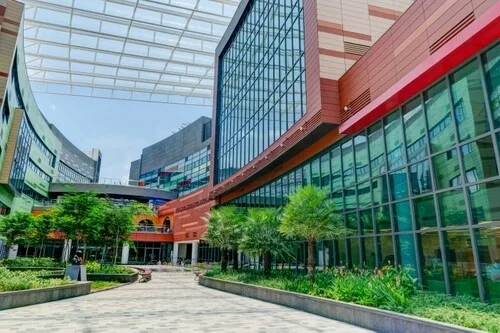
Global Indian International School Singapore smart campus learning environment

SMART Campus

A green, tech-enabled campus with extensive sports facilities that enables a holistic education

  • Kindergarten Menu Image

    Montessori education with a modern touch.

  • Primary School Menu Image

    International primary programmes with best holistic learning.

  • Secondary School Menu Image

    International middle school programmes with best foundation for high school.

  • High School Menu Image

    International high school programmes with beat launchpads for university.

21st Century Learning Campus

Facilities which are collaborative, creative and adaptable to individual needs.

Holistic Education Menu

Award-winning framework for all-round student development

CCA Menu Image

Extra-curricular activities are those activities, often sports-based, that take place outside of the GIIS classroom

ECA Menu Image

Talent shows, performances, competitions, clubs and additional classroom work.

Admission Process Icon

Get an overview of the admissions process

Campus Tour Icon

Register for a tour of the campus to learn more about the school first hand

Book Meeting Icon

You can talk to our Admissions Counsellor online or in-person, as per your convenience.

Admissions Form Icon

Find all forms related to admissions procedure here

Fees Icon

Get information on our fee structure for different grades

Scholarship Icon

Thank you for considering GIIS as a prospective school for your child. Our goal is to make the admissions.