Relocating to Singapore rarely happens on a school’s neat academic calendar. A posting can start in June, a lease can begin in September, a visa can clear in November—and somewhere in between, a child still needs a classroom, a timetable and a group of friends. This is the reality behind expat school admissions mid year in Singapore and it’s a far more common situation than most parents expect.
However, the good news is that mid-year and transfer admissions are a normal, well-established part of how international schools in Singapore operate. Singapore’s expat population turns over constantly, and schools built for that mobility, including Global Indian International School (GIIS) Singapore – run admissions processes designed to absorb new students at almost any point in the year, not just in August or September.
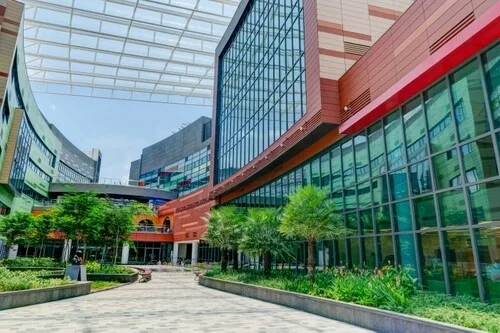
This guide explains how mid-year and transfer admissions actually work in Singapore, what documents and approvals you’ll need, how to evaluate whether a school is genuinely “rolling admissions” or just says it is, and what to expect once your child arrives at GIIS Singapore’s SMART Campus.
Key Takeaways
- Singapore’s international schools generally accept students throughout the academic year, subject to seat availability – this is standard practice, not an exception.
- GIIS Singapore’s academic year begins in April, but the school accepts new students year-round from Kindergarten through Grade 12.
- Singapore Citizens and Permanent Residents need Ministry of Education (MOE) approval before enrolling in an international school; GIIS’s admissions office manages this application on the family’s behalf.
- A Transfer Certificate or School Leaving Certificate from the previous school is one of the core documents required – plan for this early, as some schools take time to issue it.
- The admissions journey follows five clear steps: registration, registration fee, document submission, e-Contract generation, and term fee payment.
Why Mid-Year Admissions Are the Norm, Not the Exception, in Singapore
Singapore hosts one of the world’s most transient expatriate communities. Corporate relocations, diplomatic postings and academic assignments bring families in and out of the country on schedules set by employers, not school calendars. Recognising this, most established international schools, like GIIS Singapore, structure their admissions to accept students at any point in the year, not only at the start of a new academic session.
At GIIS Singapore, the academic year runs from April through March, but admissions remain open year-round, provided seats are available at the requested grade level. This matters for two practical reasons:
- You are not penalised for arriving “off-cycle.” A child who joins in October or January follows the same admissions process as one who joins in April.
- Seat availability, not the calendar, is the real constraint. Because places are allocated as they become available rather than reserved solely for a single intake, families who enquire early and move through the process promptly are in a stronger position, regardless of the month.
How the Admissions Process Works at GIIS Singapore
GIIS Singapore follows a five-step admission process designed to be transparent and predictable, whether your child is joining in the traditional April intake or transferring mid-term.
Step 1: Submit the Registration Form
After an initial conversation with the admissions team (in person, by phone, or online) families complete the registration form.
Step 2: Pay the Registration Fee
Once the registration form is submitted, a one-time, non-refundable registration fee secures the seat and triggers a provisional admission confirmation. This step matters most for mid-year applicants: because seats are allocated on a rolling basis, paying the registration fee promptly is what actually reserves the place, not merely expressing interest.
Step 3: Submit Required Documents
To generate the enrolment e-Contract, the school requires:
- Birth certificate
- Recent passport-size photo of the child
- Immunisation record (for Global Montessori Plus and Primary grades)
- Copy of passport (both parents and child)
- Identification cards (both parents and child)
- Transfer Certificate or School Leaving Certificate from the previous school
- Any relevant medical documents
What is a School Transfer Certificate?
A School Transfer Certificate (TC) is an official educational document issued by a school when a student permanently leaves the institution. Its primary purpose is to certify that the student was enrolled at the school and has been formally released to continue education elsewhere. A typical School Transfer Certificate contains the student’s full name, date of birth, admission number, class last attended, period of enrollment, date of leaving, reason for leaving (if applicable), conduct record and the signature and official seal of the school authority. Educational institutions commonly require a Transfer Certificate during the admission process to verify a student’s previous enrollment and academic history.
For families moving mid-year, the Transfer Certificate is often the item most likely to cause delay, some schools only issue it once fees are settled or notice periods are served. Requesting it as early as possible in the relocation timeline is one of the most useful things a parent can do to avoid a gap in schooling.
Step 4: Generate the e-Contract
With the registration fee paid and documents uploaded, GIIS generates the e-Contract. Parents are asked to review all shared information and fee details carefully before confirming.
Step 5: Pay the Term Fee
The final step is payment of the term fee, which completes enrolment.
Do Singapore Citizens and Permanent Residents Need MOE Approval?
This is a detail that catches some parents off guard, particularly returning Singaporean families or PR holders considering an international school for the first time.
Under Singapore law, Singapore Citizens require Ministry of Education (MOE) approval to enrol in an international school rather than a mainstream local school. At GIIS Singapore, the admissions office submits this approval request to MOE on the family’s behalf, and parents are typically asked to write a letter explaining their reason for choosing an international pathway. This step is processed before the application can move forward for further review.
If this applies to your family, factor in the additional processing time when planning a mid-year move. It’s a government approval, not a school decision, so timelines aren’t fully within the school’s control.
What Should You Include in a Mid-Year School Relocation Checklist?
For families managing expat school admissions mid year Singapore alongside the rest of a relocation, housing, visas, shipping and work permits—a simple sequencing plan helps:
- Enquire as early as the move is confirmed, even before your arrival date is fixed. Seat availability is the binding constraint on mid-year entry, and early enquiry gives the admissions team the longest possible runway.
- Request the Transfer/Leaving Certificate from the current school immediately. This document often has the longest lead time of anything on the checklist.
- Gather identification and immunisation records in parallel, not sequentially — most of these documents can be assembled simultaneously rather than waiting on one another.
- Confirm the MOE approval requirement early if your child is a Singapore Citizen or PR, since this step sits outside the school’s direct control.
- Ask about the placement assessment format so your child knows what to expect and isn’t walking into an unfamiliar test cold.
- Book a campus tour before finalising a decision. GIIS Singapore offers both in-person tours (45–60 minutes, including sports facilities, labs, and collaborative spaces) and virtual tours for families who haven’t relocated yet.
Choosing Among International Schools in Singapore: What Actually Matters for a Mid-Year Move?
Singapore has a dense, competitive market of international schools, and the right choice depends on more than reputation alone. For a family moving mid-year specifically, a few factors deserve more weight than they might in a standard, calendar-aligned enrolment:
- Genuine rolling admissions: Ask directly how many mid-year transfers the school processed in the last 12 months.
- Curriculum breadth: A child arriving partway through a Cambridge, IB, or CBSE pathway abroad has a realistic equivalent to step into.
- Clarity on documentation and MOE processes
- Transparent fee structure
Start the Conversation Early
Mid-year moves are stressful by nature, but the school admissions piece doesn’t have to be the hardest part of the relocation. GIIS Singapore’s admissions counsellors work with expat families on this timeline regularly and can advise on document sequencing, MOE approval, and grade placement before you’ve even landed.
Next steps:
- Book a campus tour — in-person or virtual
- Speak with an admissions counsellor
- Submit an enquiry
- Call the admissions team directly: +65 6914 7001
GIIS Singapore SMART Campus, 27 Punggol Field Walk, Singapore 828649.
Frequently Asked Questions
Do international schools in Singapore accept admissions mid-year?
Yes. Most established international schools, including GIIS Singapore, accept new students throughout the academic year, subject to seat availability at the relevant grade level. Mid-year entry is a standard, well-supported pathway rather than an exception requiring special approval from the school.
What documents are needed for a mid-year or transfer admission?
In addition to the standard documents (birth certificate, passport copies, identification cards, photos, and immunisation records where applicable), transfer students need a Transfer Certificate or School Leaving Certificate, an attendance record from the previous school, and the most recent report card.
Do Singapore Citizens need special approval to join an international school?
Yes. Singapore Citizens require Ministry of Education (MOE) approval to study at an international school. GIIS Singapore’s admissions office submits this request on the family’s behalf as part of the application process.
How long does the admissions process take?
Timelines vary based on document readiness and, where applicable, MOE approval processing. Families who submit documents promptly and pay the registration fee early typically move through the five-step process without unnecessary delay.
Is a seat guaranteed once I express interest?
No. A seat is confirmed only after the registration fee is paid in full, at which point a provisional admission confirmation is issued.
This article reflects GIIS Singapore’s published admissions process as of 2026. For the most current fee schedules, intake dates, and document requirements, refer to the official GIIS Singapore Admissions page or speak directly w

Team GIIS
Team GIIS is a group of enthusiastic writers who bring the vibrant world of GIIS in Singapore to life through engaging blog posts. Dedicated to highlighting the school’s teaching methodology, innovative learning environment, and diverse curriculum options like IB, Cambridge and CBSE, they aim to connect with parents, educators and students, sharing insights and stories that inspire and inform the school community.