Global
All Cities
Where would you like to study? Select cities to refine your search.
Any Curriculum
Find a campus based on the curriculum offered.
Global
Global
All Cities
Where would you like to study? Select cities to refine your search.
Any Curriculum
Find a campus based on the curriculum offered.
Search

Success beyond grades: Why holistic development of your child matters

Holistic Education

Traditionally, grades have been the primary measurement of success within the educational system. As parents and educators, we’ve gone through the system which lays a strong emphasis on scores achieved in school as a measure to gauge future success. While grades are an important way to track a student’s progress, it’s time to take another look at these success criteria for 21st-century students because high scores or achievements inside the classroom do not necessarily guarantee success or happiness in the long term.

In a rapidly changing world, it’s important for educators and parents to focus on holistic development in addition to academic success. Your child may demonstrate excellence in visual arts or sports while their friends may excel in Mathematics or Science. The key is to allow them to thrive in their area of interest to maximise their strengths. This will help them be driven by their passion, and not just qualification.

While selecting their secondary school subjects, students should pick subjects that align with their interests. But they shouldn’t limit themselves to studying only those subject areas as in today’s world, it’s best if students have skills in different areas. With a holistic approach to education, your child will develop 21st-century competencies that they can use to drive their success and discover career possibilities that align with their passions.

In addition, they will learn that they are more than just the scores they earn — they will begin to recognise that their grades do not represent their total knowledge, and they will know that their personal happiness will not be directly tied to their results. Adolescents and adults alike are quickly learning that success in the modern world is an individual, subjective goal — and true success is often defined by their happiness that may not be directly linked to their achievements and academic scores.
‍

‍

Understanding the Pressure to Perform

It is not surprising that students, especially secondary students, feel pressured to perform well in school and get good grades. However, the need for results is driven by forces much bigger than them. Not only do parents expect good grades from them in the hopes that they will earn the credentials needed for future employment, but often student results are seen as benchmarks of progress by schools and educators. Beyond that, governments also want their youngest citizens to do well in school as an effort to produce a highly skilled workforce.

Your child likely feels that they need to score high on tests and exams to embark on a lucrative career path, and they may be under the impression that their career is necessary to find happiness or fulfillment. However, your child needs to understand early on that happiness is a journey and not a destination. They can only understand that if they receive a holistic education that emphasises the importance of happiness.

At GIIS, under the expert guidance of our coaches, our students get opportunities to excel in sports

‍

Why Grades Should Not Be the Only Measure of Success

To some degree, grades are important, and as a parent, you should be monitoring your child’s test scores during their schooling. However, keep in mind that their results represent their efforts, not the knowledge acquired. These marks should be seen as yardsticks that showcase growth, but happiness has to be factored in as well. Happiness should never be underrated. After all, it is happiness that will fuel the critical thinking skills and creativity that are required for in-depth, long-term learning.

If you find yourself feeling too caught up with the grades that your child is receiving, remember that there are many incredibly successful people who did not excel in the classroom. Steve Jobs, Sachin Tendulkar and Mark Zuckerberg are a few modern-day inspirations who realised their success because of their passion — not because of their grades.

‍

Measuring the Success of a Modern Student

For so long, success has been measured by the power a person holds or the amount of money that a person makes. Materialism and consumerism have led people to believe that large houses, luxury cars and designer products signal true success.

But, the modern world is evolving quickly. Success is no longer measured solely by salaries, titles, awards and accolades. Instead, success is defined on a personal level. People feel most successful when they are fulfilled by their work and when they are able to build a balanced life where their passions are a priority.

A holistic approach to education helps students decide what success means to them and how they will measure it. They learn that success is not just measured by grades or the potential to earn; instead, success at school involves lifelong love for learning that can bring happiness.

‍

How You Can Nurture Your Child’s Overall Growth

As a parent, you are a key player in your child’s holistic development. One of the most important ways to nurture their overall growth is to treat your child as an individual. Resist the urge to compare your child because no two children are alike.

In addition, you need to prioritise your relationship with your child and show them that success extends beyond status and scores. You can do this by taking an interest in their favourite subjects, sharing your passions and making time to enjoy experiences together.

For example, when you take your child for a hike and commit to learning how to use a map together, you are not only bonding with your child but also teaching them the essential 21st-century skills of communication and resilience.

While you will want to send your child to a school that will provide a solid academic foundation for your child, you will also want to make sure that the educators at the school will be evaluating your child against their individual strengths. Your child’s educational journey should be a personal experience — one that combines their personal strengths with their passions and leads them toward a lifetime of happiness.

With so many options for schooling in Singapore, it’s essential that you find a school that is anchored by a rigorous academic curriculum and prioritises holistic development. Your child should enjoy a well-rounded educational experience and finish school with a sense of well-being and confidence in who they are.

‍

Also read: Your child’s development in these 9 areas holds the key to future success

‍

At GIIS, while we offer multiple international curricula and an Indian curriculum (IB curriculum, CBSE, IGCSE curriculum) to suit your child’s learning style, we use the innovative 9Gems holistic educational framework to encourage our students to become well-rounded young people. Over 40 skills-based studios allow our students to explore their interest areas like radio jockeying, culinary skills, ceramics etc. Your child’s success in academics is rewarded and celebrated as much as their excellence in sports, music, visual arts, entrepreneurship, leadership skills and so on.

Schedule a campus tour today to see our holistic approach to education in action.

This blog is a summarised version of GSF SMART Webinar Series – SMART Ways to Student Development

‍

Shubhdarshani Mitra

Shubhdarshani has over 10 years of experience in content creation, curation and editing. She has worked for Indian newspapers, school magazines and international news websites where she worked closely with the leadership on the execution and communication of the content strategy. Aside from work, she’s a passionate B&W photographer and storyteller.

Featured Blogs

Cambridge IGCSE

What Is the Cambridge IGCSE? A Guide for Parents and Students

A secondary school curriculum plays an important role in shaping a child's academic journey. It influences how a teenager learns, thinks and is assessed, while also affecting the pathways available for senior high school and university. For parents in Singapore exploring different curriculum options, the Cambridge IGCSE is often part of the conversation. As one of the world's most widely recognised secondary qualifications, it offers an internationally oriented approach to education.

Cambridge IGCSE

Cambridge IGCSE Results 2026: Everything Students and Parents Need to Know

If your child is preparing to enter Grade 9 or Grade 10, you have likely already encountered the term ‘IGCSE results’ in parent meetings, school communications, and open days. For those currently comparing IGCSE schools in Singapore, one practical question often stands out: how can a school's results be verified as genuinely reliable, rather than simply a marketing claim

IGCSE

Where Can You Study Cambridge IGCSE in Singapore? Best Schools, Fees & Admissions

Cambridge IGCSE is offered in Singapore mainly through private international schools, since local MOE schools follow the Singapore-Cambridge GCE syllabus instead. Among the IGCSE schools in Singapore, Global Indian International School (GIIS) Singapore is one of the most established options, offering the Cambridge IGCSE programme for Grades 9 and 10 (ages 14–16) at its SMART Campus in Punggol, with a consistent track record of A* and distinction results.

IGCSE Results

Understanding Your Cambridge IGCSE Results: A Complete Guide to Grades, Grading Scales and What Your Results Mean

Cambridge IGCSE results are graded on a scale from A* (highest) to G (lowest), based on a student's Uniform Mark achieved in each subject. An A* reflects a mark of 90–100%, while a G reflects 20–29%. Grades are issued per subject, not as an overall aggregate and are recognised by universities and employers in more than 160 countries.

Top Scholarships

Dr APJ Abdul Kalam Global Skills Scholarship

Eligibility:

Talent Based - Technology

More from same author
Trending Blogs

Cambridge IGCSE

What Is the Cambridge IGCSE? A Guide for Parents and Students

A secondary school curriculum plays an important role in shaping a child's academic journey. It influences how a teenager learns, thinks and is assessed, while also affecting the pathways available for senior high school and university. For parents in Singapore exploring different curriculum options, the Cambridge IGCSE is often part of the conversation. As one of the world's most widely recognised secondary qualifications, it offers an internationally oriented approach to education.

Cambridge IGCSE

Cambridge IGCSE Results 2026: Everything Students and Parents Need to Know

If your child is preparing to enter Grade 9 or Grade 10, you have likely already encountered the term ‘IGCSE results’ in parent meetings, school communications, and open days. For those currently comparing IGCSE schools in Singapore, one practical question often stands out: how can a school's results be verified as genuinely reliable, rather than simply a marketing claim

IGCSE

Where Can You Study Cambridge IGCSE in Singapore? Best Schools, Fees & Admissions

Cambridge IGCSE is offered in Singapore mainly through private international schools, since local MOE schools follow the Singapore-Cambridge GCE syllabus instead. Among the IGCSE schools in Singapore, Global Indian International School (GIIS) Singapore is one of the most established options, offering the Cambridge IGCSE programme for Grades 9 and 10 (ages 14–16) at its SMART Campus in Punggol, with a consistent track record of A* and distinction results.

IGCSE Results

Understanding Your Cambridge IGCSE Results: A Complete Guide to Grades, Grading Scales and What Your Results Mean

Cambridge IGCSE results are graded on a scale from A* (highest) to G (lowest), based on a student's Uniform Mark achieved in each subject. An A* reflects a mark of 90–100%, while a G reflects 20–29%. Grades are issued per subject, not as an overall aggregate and are recognised by universities and employers in more than 160 countries.

GIIS

Mid-Year & Transfer Admissions: Moving Your Child to a Singapore International School (2026)

Relocating to Singapore rarely happens on a school's neat academic calendar. A posting can start in June, a lease can begin in September, a visa can clear in November—and somewhere in between, a child still needs a classroom, a timetable and a group of friends. This is the reality behind expat school admissions mid year in Singapore and it's a far more common situation than most parents expect.

GIIS

Choosing Subjects for IGCSE: A Parent’s Guide to Streams, Options & Future Careers

By age 14, most children have never had to make a decision that shapes their next ten years. Choosing IGCSE subjects is exactly that decision and for parents, it often arrives with more questions than answers. Which subjects matter for university? Does dropping a science close doors? Is a 'safe' combination actually the right one?

GIIS

Your Child’s Journey to IBDP Success Starts Before Grade 11: A Parent’s Guide

While evaluating the IB Diploma programme in Singapore for their children, parents center the conversation around Grade 11 and 12. It is during these final two high school years that students write their Extended Essays, dive deep into Theory of Knowledge (TOK) and prepare for final examinations.

Search
History Menu Icon

Our vision is to become a global role model for teaching and learning.

History Menu Icon Secondary

Since its inception in 2002, GIIS has spread quality education through 17 campuses across the globe.

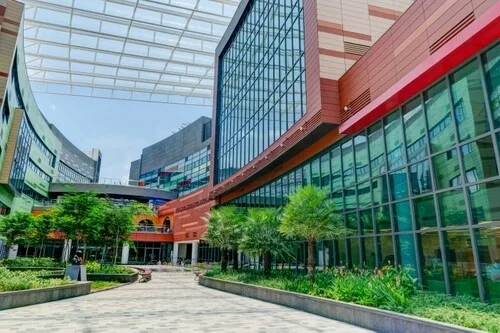
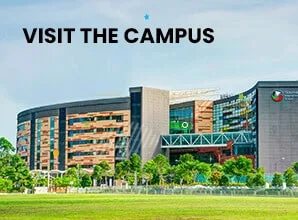
Global Indian International School Singapore smart campus learning environment

SMART Campus

A green, tech-enabled campus with extensive sports facilities that enables a holistic education

  • Kindergarten program at GIIS Singapore smart campus

    Montessori education with a modern touch.

  • Primary school curriculum at GIIS Singapore

    International primary programmes with best holistic learning.

  • Secondary school students learning at GIIS Singapore

    International middle school programmes with best foundation for high school.

  • High school education and curriculum at GIIS Singapore

    International high school programmes with beat launchpads for university.

21st century learning campus at GIIS Singapore

Facilities which are collaborative, creative and adaptable to individual needs.

Holistic education approach with 9 Gems at GIIS Singapore

Award-winning framework for all-round student development

Co-curricular activities at GIIS Singapore

Extra-curricular activities are those activities, often sports-based, that take place outside of the GIIS classroom

Extra curricular activities at GIIS Singapore

Talent shows, performances, competitions, clubs and additional classroom work.

Admission Process Icon

Get an overview of the admissions process

Campus Tour Icon

Register for a tour of the campus to learn more about the school first hand

Book Meeting Icon

You can talk to our Admissions Counsellor online or in-person, as per your convenience.

Admissions Form Icon

Find all forms related to admissions procedure here

Fees Icon

Get information on our fee structure for different grades

Scholarship Icon

Thank you for considering GIIS as a prospective school for your child. Our goal is to make the admissions.