Article Summary
- As artificial intelligence transforms industries and career pathways, international schools are increasingly focusing on future-ready skills that go beyond traditional academic achievement.
- Key educational priorities include STEAM learning, enquiry-led education, interdisciplinary thinking, leadership development and ethical decision-making.
- GIIS Tokyo prepares students for the AI era through globally recognised curricula, innovation-focused learning experiences and a strong emphasis on global citizenship and holistic development.
How International Schools in Tokyo Are Preparing Students for AI-Era Careers
Artificial intelligence (AI) is no longer a concept reserved for technology companies and research laboratories. It is already transforming the way we work, communicate and solve problems across industries ranging from healthcare and finance to education and engineering.
As a result, many parents are asking an important question: how can schools prepare children for careers that may not even exist yet?
This concern has become particularly relevant in a global city like Tokyo, where innovation and technology continue to shape the future of work. While parents researching a Tokyo international school, comparing Tokyo international school tuition fees, or exploring options for an international school Tokyo often focus on academic performance, many are increasingly looking for schools that equip students with the skills needed to thrive in an AI-driven world.
The challenge is no longer simply teaching students what to know. It is helping them learn how to think, adapt and lead in an environment of constant technological change.
The Shift from Knowledge to Future Skills
In the past, educational success was often measured by how effectively students acquired knowledge and performed in examinations. While academic achievement remains important, AI is rapidly changing the value of routine knowledge-based tasks.
Information is now more accessible than ever. What distinguishes future professionals is their ability to analyse information, think critically, collaborate with others and apply knowledge creatively.
Forward-thinking international schools recognise that future careers will require skills such as:
- Critical thinking
- Problem-solving
- Adaptability
- Creativity
- Collaboration
- Leadership
- Digital literacy
- Ethical decision-making
Developing these competencies requires a broader educational approach that combines academic excellence with real-world learning experiences.
STEAM Education for an Innovation-Driven Future
One of the most effective ways schools are preparing students for AI-era careers is through STEAM education, which integrates Science, Technology, Engineering, Arts and Mathematics.
Rather than teaching subjects in isolation, STEAM encourages students to explore how different disciplines connect to solve real-world challenges. This interdisciplinary approach reflects the nature of modern workplaces, where innovation often emerges from collaboration across multiple fields.
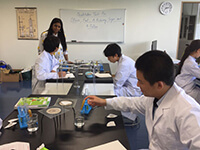
At GIIS Tokyo, students benefit from learning experiences that encourage innovation, experimentation and creative problem-solving. By combining scientific enquiry with creative thinking, learners develop the adaptability needed to succeed in rapidly evolving industries.
Importantly, the inclusion of the arts ensures that students develop uniquely human capabilities such as imagination, empathy and creativity—qualities that remain difficult for artificial intelligence to replicate.
The Power of Enquiry-Led Learning
AI can provide answers in seconds. However, the ability to ask meaningful questions remains a distinctly human skill.
This is why enquiry-led learning has become increasingly important in international education.
Rather than simply memorising facts, students are encouraged to investigate issues, conduct research, analyse evidence and develop independent conclusions. Through this process, they learn to think critically and approach challenges from multiple perspectives.
GIIS Tokyo incorporates enquiry-based learning across its educational programmes, helping students become active participants in their own learning journey. This approach fosters curiosity, resilience and intellectual independence—qualities that will be highly valuable in future workplaces shaped by technological change.
Developing Interdisciplinary Thinkers
Many of the world’s most significant challenges do not fit neatly within a single academic subject.
Climate change, public health, cybersecurity and ethical AI development all require expertise drawn from multiple disciplines.
As a result, international schools are increasingly encouraging interdisciplinary thinking. Students learn to connect ideas across subjects and apply knowledge in new contexts.
For example, understanding artificial intelligence may involve computer science, ethics, mathematics, psychology and public policy. By exploring these connections, students develop a more comprehensive understanding of complex issues.
At GIIS Tokyo, interdisciplinary learning experiences help students see relationships between different fields of knowledge and develop the flexibility required to navigate future career opportunities.
Leadership in the Age of Artificial Intelligence
While technology continues to evolve, human leadership remains essential.
Future leaders will need to guide teams through uncertainty, make informed decisions and balance technological innovation with human needs.
Recognising this, many international schools are investing heavily in leadership development programmes that build confidence, communication skills and social responsibility.
Students are encouraged to participate in leadership initiatives, collaborative projects, public speaking opportunities and community engagement activities.
GIIS Tokyo places significant emphasis on nurturing leadership qualities alongside academic achievement. Through a variety of student-centred opportunities, learners develop the confidence and interpersonal skills needed to lead effectively in a changing world.
Ethics and Global Citizenship Matter More Than Ever
As AI becomes increasingly integrated into society, ethical questions are becoming more complex.
How should artificial intelligence be used responsibly? How can technology support human wellbeing? What role should ethics play in innovation?
These questions highlight the growing importance of global citizenship education.
Students must not only understand how technology works but also recognise its broader impact on individuals, communities and societies.
GIIS Tokyo integrates values-based education with academic learning, helping students develop a strong sense of responsibility, cultural awareness and ethical decision-making. By encouraging empathy, respect and global awareness, schools can prepare students to use technology thoughtfully and responsibly.
Preparing Learners from the Earliest Years
Future-ready learning begins long before secondary school.
Many parents searching for an international preschool Tokyo option or a Tokyo international school kindergarten are increasingly interested in programmes that foster creativity, curiosity and confidence from an early age.
The foundations of innovation are often developed during the early years through exploration, collaboration, communication and problem-solving. Schools that encourage enquiry and independent thinking from a young age help children build the mindset needed for lifelong learning.
This continuity of learning is particularly valuable in international schools that support students from early childhood through to university preparation.
Why Future-Ready Education Matters
As artificial intelligence continues to reshape the global economy, schools have an important responsibility to prepare students for a future that remains uncertain but full of opportunity.
Success will depend not only on technological literacy but also on creativity, adaptability, ethical reasoning and leadership.
This is why many parents comparing a Tokyo International School, evaluating Tokyo international school tuition fees, or searching for the most suitable International School Tokyo option are looking beyond academic rankings alone. They are seeking schools that develop the whole child and prepare students for meaningful success in a rapidly changing world.
GIIS Tokyo exemplifies this future-focused approach by combining strong academics with STEAM learning, enquiry-led education, leadership development and global citizenship initiatives that equip students for the opportunities and challenges of the AI era.
Final Words
Preparing children for AI-era careers requires more than simply teaching technology. It demands an educational experience that develops curiosity, creativity, ethical awareness, leadership and the ability to adapt to change.
At GIIS Tokyo, students benefit from such a holistic and future-ready learning environment that combines academic excellence with innovation, interdisciplinary thinking and global perspectives. Whether your child is beginning their educational journey or preparing for higher education, the right school can play a vital role in helping them thrive in tomorrow’s world.
Explore how GIIS Tokyo’s forward-thinking programmes can help your child build the skills, confidence and mindset needed to succeed in an increasingly AI-driven future. Contact us to learn more.
FAQs
1. How are international schools preparing students for careers influenced by artificial intelligence?
International schools are focusing on future-ready competencies such as critical thinking, STEAM education, creativity, collaboration, leadership and ethical decision-making. These skills help students adapt to rapidly changing career landscapes shaped by AI and emerging technologies.
2. Why is STEAM education important for future careers?
STEAM education combines science, technology, engineering, arts and mathematics to develop problem-solving, innovation and interdisciplinary thinking. These capabilities are increasingly valued by universities and employers in an AI-driven economy.
3. What should parents look for when choosing an international school in Tokyo for future-ready learning?
Parents should evaluate curriculum quality, enquiry-led learning opportunities, leadership programmes, technology integration, global citizenship initiatives and holistic development. Schools that balance academic excellence with future-focused skill development are often best positioned to prepare students for long-term success.