Whether you are a newly arrived expat in Tokyo or have been calling this dynamic city home for years, exploring the educational landscape for your child is undoubtedly one of your top priorities. Tokyo, with its magnetic charm and cosmopolitan ambiance, has earned a reputation for offering an exceptional and diverse educational experience. In this comprehensive guide, we will take you on a journey through the city’s renowned education system, providing invaluable insights to help you find the Best Primary School in Tokyo that aligns perfectly with your child’s needs and aspirations.
From traditional Japanese schooling to Internationally acclaimed institutions, Tokyo boasts a wealth of educational opportunities that promise to shape your child’s future in the most extraordinary way. Let’s embark on this exciting exploration together, unlocking the doors to a world-class education.
Guide to the International Primary Japanese School System
An International school following the Japanese education system is a unique blend of global perspectives and Japanese cultural values. The school typically starts its academic year in April, in line with the Japanese school calendar. With a strong emphasis on bilingual education, students learn both Japanese and another designated language, often English. These schools focus on providing a well-rounded education, nurturing students’ academic abilities, character development, and social-emotional skills. The curriculum integrates elements from both Japanese and international educational standards, offering a holistic learning experience that prepares students to thrive in a diverse and interconnected world.
The Japanese education system is highly regarded for its academic rigour. However, the language barrier can make it difficult for foreign students to succeed in the public school system. This is where International primary schools come in. International primary schools in Japan offer a high-quality education that is taught in English. This allows foreign students to learn the Japanese language at their own pace, while still receiving a rigourous academic education.
Curriculum
The curriculum is typically based on the British or American curriculum. This means that students will learn the same subjects as they would in their home countries, such as math, science, English, history, and geography.
Some schools also offer specialized programmes, such as international baccalaureate (IB) programmes or dual-language programmes. IB programmes are designed to prepare students for university study, while dual-language programmes offer students the opportunity to learn two languages simultaneously.
In addition to the core subjects, it also offers a variety of extracurricular activities, such as sports, arts, and music. This allows students to develop their interests and talents outside of the classroom.
Teaching
The teaching staff at Best Primary Schools in Japan is typically made up of native English speakers. This ensures that students receive the best possible instruction in the English language.
The teachers are also experienced in teaching to a diverse student population. This means that they are well-equipped to help students from different cultures and backgrounds succeed in the classroom.
Admissions
Admissions to International primary schools can be competitive. This is because there are a limited number of spots available and many families are interested in sending their children to these schools.
The admissions process typically involves an application, an interview, and a placement test. The application will ask for information about the student’s academic record, extracurricular activities, and interests. The interview will allow the school to get to know the student and their family. The placement test will assess the student’s academic abilities.
Cost
The cost of attending Top Primary Schools can vary depending. However, it is typically significantly more expensive than attending a public school.
The cost of tuition typically includes the cost of textbooks, school uniforms, and extracurricular activities. Some schools also charge additional fees for things like transportation and programmes
If you are considering sending your child to an international primary school in Japan, be sure to do your research and compare different schools. This will help you find the best school for your child’s individual needs.
Tips
● Some schools are located in major cities, while others are located in more rural areas. Consider the location of the school when deciding which one is right for your family.
● Different schools have different philosophies. Some schools focus on academic excellence, while others focus on developing the whole child. Consider the school’s philosophy when deciding which one is right for your child.
Number of school hours spent on each subject in a Japanese Elementary School
The number of school hours spent on each subject in a Japanese elementary school is as follows:
● Japanese language: 306 hours in grade 1, 315 hours in grade 2, 245 hours in grade 3, 245 hours in grade 4, 175 hours in grade 5, and 175 hours in grade 6.
● Social studies: 70 hours in grade 3, 90 hours in grade 4, 100 hours in grade 5, and 105 hours in grade 6.
● Elementary mathematics: 136 hours in grade 1, 175 hours in grade 2, 175 hours in grade 3, 175 hours in grade 4, 175 hours in grade 5, and 175 hours in grade 6.
● Science: 90 hours in grade 4, 105 hours in grade 5, and 105 hours in grade 6.
● Living environment studies: 102 hours in grade 1, 105 hours in grade 2, and – in grades 3-6.
● Music: 68 hours in grade 1, 70 hours in grade 2, 60 hours in grades 3-5, and 50 hours in grade 6.
● Art and handcraft: 68 hours in grade 1, 70 hours in grade 2, 60 hours in grades 3-5, and 50 hours in grade 6.
● Home economics: – in grades 1-4, 60 hours in grade 5, and 55 hours in grade 6.
● Health and physical education: 102 hours in grade 1, 105 hours in grade 2, 105 hours in grade 3, 105 hours in grade 4, 90 hours in grade 5, and 90 hours in grade 6.
● Ethics (moral education): 34 hours in grades 1-6.
● Special activities: 34 hours in grades 1-6.
● Integrated studies: 70 hours in grade 5, and 70 hours in grade 6.
● Foreign language activities: 35 hours in grade 5, and – in grade 6.
It is important to note that these are just the minimum number of hours that must be dedicated to each subject. Schools may choose to allocate more time to certain subjects, depending on their priorities.
The Subjects taught at a Japanese Elementary Schools
Subjects taught at a Japanese elementary school are:
● Japanese language: This is the most important subject in Japanese elementary schools. Students learn to read, write, and speak Japanese. They also learn about Japanese grammar, vocabulary, and literature.
● Mathematics: Mathematics is another important subject. Students learn basic math concepts such as addition, subtraction, multiplication, and division. They also learn about geometry, measurement, and statistics.
● Social studies: Social studies is a subject that teaches students about the world around them. They learn about history, geography, civics, and culture.
● Science: Science is a subject that teaches students about the natural world. They learn about biology, chemistry, physics, and the environment.
● Living environment studies: This subject teaches students about the natural world and how to live in harmony with it. They learn about plants, animals, the environment, and human health.
● Music: Music is a subject that teaches students about music and how to express themselves through music. Students learn about different types of music, how to read music, and how to play musical instruments.
● Art and handcraft: With art students learn how to express themselves through art. They learn about different types of art, how to draw, paint, and sculpt.
● Home economics: Through this subject students learn about homemaking skills such as cooking, sewing, and cleaning.
● Health and physical education: This subject teaches students about health and fitness. They learn about nutrition, exercise, and how to stay healthy.
● Ethics (moral education): This subject teaches students about ethics and morality. They learn about values such as honesty, respect, and responsibility.
● Special activities: Through extracurricular activities such as sports, clubs, and arts programmes students learn to balance their school life and passion towards certain activities..
How does International primary school work in Tokyo?
Top Primary Schools in Tokyo function as educational institutions that cater to a diverse community of expatriates and local families seeking an International-standard education for their children. Here’s how they typically work.
1. Multicultural Environment: The school embraces a multicultural setting, welcoming students from various nationalities and backgrounds. This environment fosters an appreciation for diversity and global perspectives among students.
2. Language of Instruction: These schools usually offer a bilingual or multilingual education, with English often being the primary language of instruction. Some schools may also incorporate Japanese language classes to help students adapt to the local culture and language.
3. Curriculum: The curriculum at International primary schools is designed to meet globally recognised standards, often based on International education frameworks like the International Baccalaureate (PYP curriculum, IB Diploma) or Cambridge Curriculum (CLSP, IGCSE). This ensures a well-rounded education with a focus on critical thinking, creativity, and intercultural understanding.
4. Student-Centered Approach: The school prioritizes individualized attention and personalized learning. Teachers aim to understand each student’s unique strengths and needs, tailoring their instruction accordingly.
5. Extracurricular Activities: These schools offer a wide range of extracurricular activities to enrich students’ learning experiences. These may include sports, arts, music, language clubs, and various cultural events.
6. Support for Non-Native English Speakers: Schools provide support for non-native English speakers to help them adjust to the language of instruction. This may include English as a Second Language (ESL) programmes.
7. Transition Support: Many students come from various countries, these schools offer transition support to ease the adaptation process. Orientation programmes and peer support help students feel welcomed and connected.
8. Parent Involvement: International schools encourage parent involvement and communication. Regular parent-teacher meetings, newsletters, and school events provide opportunities for parents to be actively engaged in their child’s education.
9. International Accreditation: Some primary schools in Tokyo seek International accreditation to maintain high-quality standards and ensure alignment with global educational norms.
Overall, International primary schools in Tokyo offer a well-rounded, inclusive, and globally focused education, providing students with the tools they need to succeed academically and thrive in an increasingly competitive world.
Factors to Consider When Choosing the best primary School in Tokyo
Best Elementary School
As an expat parent searching for the Best Elementary School for your child, the decision may seem both exciting and overwhelming. Tokyo’s vibrant and diverse educational landscape offers a plethora of options, making it essential to consider several key factors to ensure you make the best choice for your child’s academic journey.
1. Curriculum and Approach: Investigate the school’s curriculum and teaching approach. Determine if it aligns with your educational values and aspirations for your child. Look for schools offering internationally recognised programmes which can help them in future.
2. Language of Instruction: Consider the language of instruction at the school. If English is not your child’s native language, inquire about language support programmes to ensure a smooth transition and academic success.
3. Accreditation and Reputation: Research the school’s accreditation and reputation within the international community. Accredited schools meet rigourous educational standards, assuring a high-quality learning environment. Seek feedback from other expat parents or consult online forums to gain insights into their experiences.
4. Location and Commute: Assess the school’s location and proximity to your home or workplace. A manageable commute can significantly impact your child’s daily routine and overall well-being.
5. Class Size and Teacher-Student Ratio: Smaller class sizes and lower teacher-student ratios often lead to more personalized attention for each child. Inquire about class sizes to ensure your child receives the support they need to thrive academically and socially.
6. Facilities and Resources: Visit the school to assess its facilities, resources, and learning environment. A well-equipped school with modern facilities and ample learning resources can enrich your child’s educational experience.
7. Extracurricular Activities: Consider the school’s extracurricular offering as it can enhance your child’s overall development and interests.
8. School Fees and Financial Considerations: Understand the school’s fee structure and any additional costs associated with extracurricular activities or educational resources. Evaluate your budget and ensure the school’s fees align with your financial considerations.
Additional Tips
● Start your research early. The best schools in Tokyo are often in high demand, so it is important to start your research early.
● Talk to other parents. Ask other parents for recommendations of schools that they have heard good things about.
● Read online reviews. There are a number of websites that offer reviews of schools in Tokyo.
● Visit the school. Once you have narrowed down your options, it is important to visit the school and meet with the staff and students. This will give you a better sense of the school and whether it is a good fit for your child.
Overview of the Best Primary School of GIIS Tokyo
Campus
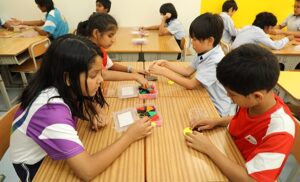
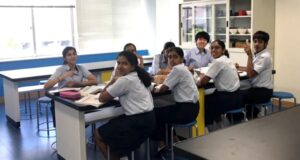
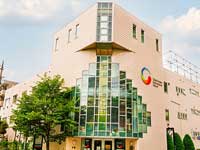
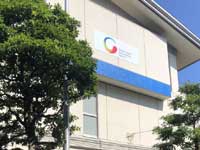
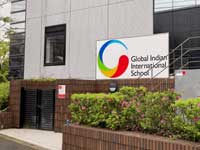
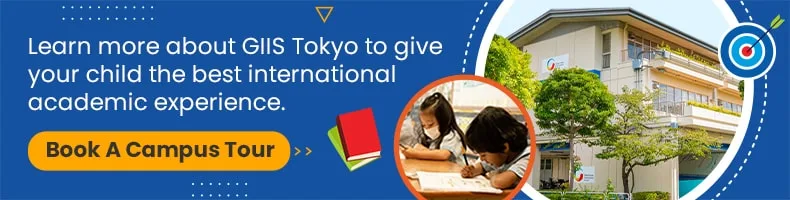
GIIS Tokyo Nishikasai Campus is one of three campuses of Global Indian International School in Tokyo. It is a part of the Global School Foundation (GSF) network, which has schools in over 15 countries. The campus is a well-equipped facility with state-of-the-art classrooms, libraries, science labs, computer labs, a playground, a gym, and a swimming pool. The school also has a rooftop garden that is used for outdoor learning.
The student body at GIIS Tokyo Nishikasai Campus is diverse. There are students from India, Japan, and other countries. This diversity helps students to learn about different cultures and perspectives. The school culture at GIIS Tokyo Nishikasai Campus is supportive and welcoming. The school is committed to providing a safe and nurturing environment for all students.
Curriculum
GIIS Tokyo Nishikasai Campus offers a bilingual education programme along with CBSE and the International Baccalaureate (IB) Primary Years Programme (PYP). CBSE curriculum is a rigourous curriculum that covers a wide range of subjects, including English, mathematics, science, social studies, Hindi, and Sanskrit. The IB PYP is an International curriculum that is designed to prepare students for the IB Middle Years Programme (MYP) and the IB Diploma Programme (DP)
Type of School: International
Admission Details:-
Admission details for GIIS Tokyo Nishikasai Campus are as follows:
1. Application Process: The admission process typically begins with the submission of an online application form available on the school’s website. Parents can also visit the school’s admission office to collect and submit the application form in person.
2. Documentation: Along with the application form, parents are required to provide necessary documents, such as the child’s birth certificate, previous academic records (if applicable), passport copies, and residence proof.
3. Assessment and Interaction: Depending on the grade level and availability of seats, students may be required to undergo an admission assessment or an interaction with the school’s faculty. The purpose of the assessment is to evaluate the child’s academic level and assess their suitability for the school.
4. Language Proficiency: As the school follows a bilingual curriculum (English and Japanese), language proficiency assessments may be conducted to gauge the child’s language skills.
5. Parent Interview: In some cases, the school may also conduct a parent interview to understand the family’s aspirations and commitment to their child’s education.
6. Seat Availability: Admission to GIIS Tokyo Nishikasai Campus is subject to the availability of seats in the respective grade level.
7. Notification of Admission: Once the assessment and interview process is complete, the school will notify parents of the admission decision, either through email or by contacting them directly.
8. Fee Structure: Accepted students will be provided with details of the school’s fee structure, including tuition fees, activity fees, and other relevant charges.
It is important to note that admission details may vary from year to year and are subject to the school’s policies and regulations. It is advisable for parents to check the school’s website or contact the admission office directly for the most up-to-date information on the admission process and requirements.
After-School Activities:
The school offers a diverse range of after-school activities to enrich students’ learning experiences and talents. These activities include sports, arts and crafts, music, dance, language clubs, and various cultural programmes. With a focus on holistic development, students have the opportunity to explore their interests, build skills, and foster friendships beyond the classroom. The after-school activities aim to promote creativity, teamwork, and a well-rounded educational journey for each student.
Location: 8-3-13, Nishikasai, Edogawa Ku, 1340088
Details:
Timings:- 9:00am to 3:30pm (Monday to Friday)
Contact:- (+81) 80 3609 1648 (+81) 35696 7141
Email id:- [email protected]
Read Also: Benefits of time management for students
Conclusion
The commitment of parents to provide their children with access to quality education, state-of-the-art facilities, and a nurturing learning environment lays the foundation for their academic and personal growth. Investing in a Top elementary school in Tokyo, Japan, is an invaluable decision that will shape your child’s educational journey and future to become confident, well-rounded individuals, poised to thrive in an increasingly globalized world.
Frequently Asked Questions
What Are Primary Schools Called in Japan?
In Japan, primary schools are called “shogakko” in Japanese. They cover the first six years of formal education and are an essential part of the Japanese education system.
How Long is a Primary School Day in Japan?
The length of a primary school day in Japan varies but generally starts around 8:30 AM and ends around 3:30 PM. It includes breaks for lunch and short recess periods.
Do Japanese Learn English in Elementary School?
Yes, English is introduced as a subject in Japanese elementary schools. However, the focus is often on basic vocabulary and grammar, and the amount of English instruction may vary depending on the school and grade level.
What Age Do Kids Start Elementary School in Tokyo?
In Tokyo, children typically start elementary school at the age of six. The cut-off date for school enrolment is April 1st, so children who turn six before that date will enter elementary school in the same year.