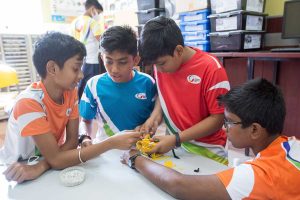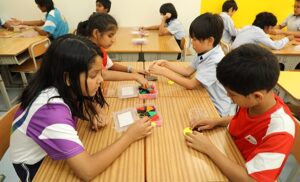
But the IMO isn’t just about winning a competition. It’s a magical journey that boosts students’ confidence in math.
If you are interested to know more about math Olympiad then think of a stage where brilliant young mathematicians come together to solve mind-bending math problems. Maths Olympiad is exactly that stage provided by good international schools in Tokyo. Here, students aren’t just competitors; they’re like adventure seekers in the world of math. They dive into challenging math puzzles, and in the process, they become more creative and resilient. The IMO makes them feel proud of what they can do with math, and it gives them the confidence to tackle even the toughest math challenges.
In this article, we’ll explore how the IMO is more than just a contest; it’s a journey that enriches students’ lives and makes them believe in their math abilities. We will also give you in depth knowledge on math Olympiad and its importance on building confidence in students at Tokyo schools.
The Significance of Math Confidence
A person’s confidence in their capacity to comprehend and resolve mathematical difficulties is known as their math confidence. It is an optimistic perspective and self assurance in one’s mathematical abilities and understanding. For a number of reasons, having math confidence is essential to academic achievement. Let’s find them out.
Motivation and Engagement: Students are more likely to be motivated to study and actively participate in IMO mathematics when they have faith in their mathematical ability. Greater effort and attention are produced by highly motivated students, which improve learning results.
Reduced Anxiety: Math anxiety can significantly impact a student’s performance. Having a positive feeling towards math helps to alleviate anxiety, enabling students to approach mathematical problems with a clear mind and focus on finding solutions. Reduced nervousness leads to improved performance and a more positive learning experience.
Problem-Solving Skills: Math confidence enhances problem-solving skills. Students who believe in their abilities are more willing to face challenging math problems, persevere through difficulties, and apply various strategies to find solutions. Confidence fosters a growth mindset, allowing students to see mistakes as opportunities for learning and improvement.
Reasoning and Logic: Math confidence promotes reasoning and analytical abilities. Students are more inclined to examine issues, think critically, and draw logical conclusions when they are confident in their arithmetic skills. They are able to approach mathematical ideas with inventiveness and interest, which helps them grasp the concepts more deeply.
Academic accomplishment: Successful academic performance is positively impacted by math confidence. It is often seen that Students who are extremely confident in their mathematical abilities are more likely to set higher goals for themselves. They are more careful when solving math problems, and show strength even during difficult times. In fact, there is a strong link between higher math confidence and better grades, test scores, and general academic a The International Mathematical Olympiad (IMO) is like a grand global party for math lovers. Young minds from all over the world gather to have a blast with math.chievement.
The International Maths Olympiad (IMO) in Tokyo: An Overview and Importance
The International Mathematical Olympiad is not a new educational concept. Actually, it started in the year 1959. It has since become a tradition that inspires and motivates young mathematicians to excel and continue their mathematical journey. The Olympiad brings together mathematical prodigies from various countries, creating a global community of young minds with a shared passion for mathematics. It’s a unique opportunity to meet and learn from peers worldwide. It is renowned for its challenging problems that test the participants’ mathematical knowledge, creativity, and analytical thinking. In fact, the Olympiad IMO is not just about solving equations but about pushing the boundaries of mathematical exploration.
Now let’s discuss the importance of the math Olympiad for students at IGCSE schools in Tokyo.
Promoting Mathematical Excellence: IMO mathematics is one of the most prestigious arithmetic competitions in the world. As a matter of fact, the mathematical Olympiad brings together top young mathematicians from around the globe. It provides a platform to showcase and encourage mathematical talent and excellence.
Fostering Collaboration and Exchange: IMO brings together students from different countries, promoting international collaboration and cultural exchange. Participants have the opportunity to interact with peers from diverse backgrounds, sharing ideas and learning from each other.
Stimulating Intellectual Growth: The challenging problems presented at math Olympiad exam require participants to think creatively, solve complex mathematical puzzles, and develop problem-solving skills. This stimulates intellectual growth and nurtures a deep understanding of mathematical concepts.
Recognizing students Achievement: IMO provides a platform for students to showcase their mathematical abilities on an international stage. Top performers receive medals, certificates, and recognition, which can open doors for further academic and career opportunities.
Inspiring Young Mathematicians: International math Olympiad serves as a source of inspiration for aspiring mathematicians worldwide. The competition demonstrates the beauty and elegance of mathematics, motivating young students to pursue their interest in the subject and potentially contribute to mathematical research in the future.
Advancing Mathematics Education: The challenges faced during IMO help identify areas where mathematics education can be improved. By analyzing the problem-solving approaches of participants, educators can gain insights into effective teaching methods and curriculum development.
Promoting Critical Thinking Skills: IMO problems often require participants to think outside the box, apply analytical reasoning, and devise creative strategies to solve them. Engaging in such problem-solving exercises enhances critical thinking skills, which are valuable in various academic and professional pursuits.
Global Platform for Collaboration and Research: IMO brings together mathematicians, educators, and experts from different countries. This platform facilitates discussions on mathematical research, exchange of teaching methodologies, and collaboration on international mathematical projects.
Building Mathematical Networks: Math Olympiad exams allow the development of networks among students, teachers, and professionals in the field of mathematics. These connections can lead to future bondings, opportunities in the research area, and the sharing of knowledge and resources.
Encouragement of professions in STEM disciplines: The Olympiad IMO inspires young children, particularly females, to pursue professions in STEM (science, technology, engineering, and mathematics) disciplines by stressing the value and potential of mathematics. Thus, this helps in the removal of gender discrimination and fosters the advancement of women in these fields.
How to Build Math Confidence Through IMO
The key to academic success and building a strong personality in students from a young age is confidence. Students should start gaining confidence early to learn effectively and excel in exams. One way to boost your child’s confidence is through participating in math Olympiad competitions. These competitions are designed to improve students’ abilities and make them mentally strong. They are open to students from standard 1 to 10 and are based on the school syllabus.
Mathematical Olympiads are not just about competition; they also boost students’ confidence, motivate them to work hard, and teach the importance of regular practice.
If your child is not doing well in school particularly math then Olympiads can help. Achieving good scores in IMO can be a proud moment and boost confidence.
Therefore, Olympiads are a great way to encourage confidence, help children explore their interests, and prepare them for future academic challenges.
Now let’s discuss how IMO can help students build confidence
1.Start with the basics: Strengthen your foundation in mathematics by mastering the fundamental concepts and skills. Focus on topics frequently covered in the IMO, such as number theory, algebra, geometry, and calculus
2.Practice solving math problems: Solve a wide variety of math problems to enhance your analytical skills. Work on problems from past IMOs and other math competitions. This will assist you in creating a methodical and analytical strategy for solving challenging arithmetic problems.
3.Become a member of a math team or club: You need to surround yourself with others who share your enthusiasm for mathematics. Enrolling in a math club or team will introduce you to many approaches to resolving problems, encourage constructive competition, and offer a network of support.
4.Attend math camps or workshops: Participate in math camps or workshops specifically designed to prepare students for competitions like the IMO. These events offer rigorous training, expert guidance, and exposure to advanced problem-solving techniques.
5.Seek mentorship: Connect with experienced mathematicians or former IMO participants who can mentor and guide you throughout your preparation. They can provide valuable insights, share their own experiences, and offer personalized advice to help you improve.
6. Analyze past question papers: Students must study and go through the past IMO mathematical problems. They should understand the underlying strategies and techniques used to solve them. This will enhance the problem-solving toolkit and aid in approaching new problems with confidence.
7.Develop a growth mindset: You need to accept challenges and setbacks as opportunities for growth. Also you should cultivate a positive attitude towards learning and believe in your ability to improve. Celebrate small victories and use failures as valuable learning experiences.
Remember, building math confidence takes time and effort. Practice regularly, persevere through difficulties, and stay motivated. With dedication and the right mindset, you can develop the math skills and confidence needed to excel in the IMO.

Reasons Why Every Child Should Participate In Olympiads For A Brighter Future
In order to pave the way for a brighter future, it’s essential for every child to consider taking part in IMO Olympiads.
Engaging in Olympiads can provide several advantages along with propelling youngsters toward a more promising future.
Here are some compelling reasons for children to get involved in the math Olympiads:
Scholastic Excellence: Olympiads serve as a platform for students to demonstrate their mastery and their knack for solving problems in subjects like mathematics and science.
Sharpened Problem-Solving Abilities: Olympiad challenges are known for their complexity, demanding creative thinking and adept problem-solving skills. This involvement can nurture critical reasoning and analytical aptitude, assets that prove valuable in various aspects of life.
Exposure to Advanced Concepts: Olympiads frequently delve into advanced subject matter that goes beyond what’s typically covered in regular school curricula. This exposure can ignite a child’s enthusiasm for subjects and inspire them to explore more intricate concepts.
Competitive Spirit: Olympiads foster a healthy sense of competition amongst students. This can encourage children to strive harder, set objectives, and work towards enhancing their performance. Mastering the art of competing respectfully and fairly is a valuable life skill.
Global Recognition for students: Achieving success or even participating in esteemed international Olympiads can bring worldwide acknowledgment and open doors to educational and career opportunities. Many universities and employers highly regard the achievements of Olympiad participants.
Scholarships and Rewards: Numerous organizers of Olympiads provide scholarships and incentives to winners. This can alleviate the financial burden of education and motivate children to excel academically.
Networking and Cooperation: This point can’t be emphasized enough that Olympiads often unite like-minded students from across the globe. This provides a chance for children to build connections, collaborate, and learn from their peers, which can be beneficial in the long run.
Enhanced Self-Assurance: Triumph in Olympiads can considerably boost a child’s self-esteem. Knowing that they can compete at an elevated level and attain success can have a positive impact on their overall self-assurance.
Preparation for Competitive Tests: The problem-solving and critical thinking abilities cultivated through Olympiad involvement can be exceedingly advantageous when preparing for competitive exams such as the SAT, ACT, or various college and university entrance exams.
Extracurricular Enrichment and Resume Strengthening: Participation in Olympiads can be a noteworthy addition to a child’s array of extracurricular endeavors and their curriculum vitae. It demonstrates commitment to academics and a readiness to go beyond the standard curriculum.
Exploration of Passions: Olympiads encompass a diverse range of subjects, allowing children to delve into various fields and unearth their interests and talents.
Lifelong Enthusiasm for Learning in students: The experience of participating in Olympiads can create an enduring love for learning in students. The students will also develop an interest in gaining more knowledge which is a precious asset throughout a child’s educational and professional journey.
While Olympiads can offer myriad benefits, it’s crucial for parents and educators to ensure that participation remains a positive and enriching experience, rather than subjecting children to undue pressure. The primary objective is to strike a balance and motivate children to partake in a nurturing and supportive environment.
Overcoming Common Concerns
Participating in the International Mathematical Olympiad (IMO) is a remarkable journey that can raise a few concerns, but it’s worth highlighting why you should not let these worries hold you back. One frequent worry is the fear of not succeeding. Remember, the IMO is not just about winning. It’s actually an opportunity for personal growth, learning, and forming connections with brilliant minds alike.
Another common concern relates to the difficulty level of the math problems. Yes, math Olympiad exams can be incredibly demanding, but that’s precisely what makes this experience so rewarding. The arithmetic problems are designed to stretch your abilities in the subject to their limits, encouraging creative thinking and exploration. The beauty of the IMO lies in your journey to tackle these problems.
In addition to solving problems using your prior knowledge, participating in Math Olympiads is an exciting opportunity to learn new skills, work with classmates, and take pleasure in the journey of mathematical discovery. Besides, if you participate in this event you’re going to be shocked at how far you are able to advance with commitment, practice, and a growth mentality. The abilities you gain will also be very useful in the future. Thus, rise to the occasion and don’t allow the Olympiad IMO’s difficulty to deter you from pursuing your love of mathematics.
How International schools in Tokyo helps to build Math Confidence in Students
International schools located in Tokyo excel at nurturing students’ math confidence through their unique educational approach. These schools are committed to creating a strong sense of self-assuredness when it comes to mathematical proficiency. This achievement is largely attributed to the exceptional teaching staff that not only possesses deep knowledge in the subject but also have a genuine passion for teaching. They go the extra mile to understand each student’s distinct learning style and tailor their teaching methods to cater to individual needs, ensuring that every student feels comfortable and competent in their mathematical journey.
Furthermore, international schools in Tokyo offer an inclusive and diverse student body, creating an atmosphere where students from varied backgrounds can collaborate and exchange their mathematical insights. This diverse environment enhances students’ problem-solving abilities by exposing them to various perspectives and methods for tackling mathematical challenges.
Additionally, extracurricular activities like math clubs, competitions, and interactive workshops offer students practical experiences to apply their mathematical knowledge, further bolstering their confidence in math.
With this comprehensive approach to math education, international schools in Tokyo effectively cultivate math confidence in their students, setting them on a path to develop lifelong skills and a genuine appreciation for the world of mathematics.
Also Read: importance of time management for students
Conclusion
In the end, the International Mathematical Olympiad greatly adds to students’ increased confidence in their mathematical abilities. This prestigious competition acts as a source of motivation for a great number of young math enthusiasts in addition to giving the best mathematical talent a platform to showcase their abilities. IMO participants gain a strong sense of self-belief and a thorough understanding of mathematics via focused training, figuring out math solutions, and teamwork.
The IMO not only nurtures mathematical excellence but also cultivates essential skills such as critical thinking, creativity, and resilience. It encourages students to tackle intricate problems and approach challenges with innovation, skills that hold significance across various academic and professional domains. The confidence gained from active participation in the IMO often has a ripple effect, positively impacting students’ academic achievements and self-esteem in broader contexts.
Furthermore, the Olympiad IMO fosters international collaboration and fosters friendships among students from diverse backgrounds. This global competition fosters a sense of unity and promotes cultural exchange, breaking down barriers and fostering understanding among young people worldwide.
Finally, The IMO serves as a potent catalyst for nurturing the mathematical potential of the next generation, equipping students with both the skills and the confidence to tackle intricate challenges and contribute to the progress of science, technology, and society.
Frequently Asked Questions
What is The Value Of The Olympiad Exams?
The value of the Olympiad exams is immense. These competitions promote a deep understanding of various subjects and develop analytical thinking, problem-solving skills, and teamwork in students. They also provide recognition and opportunities for talented students to excel in their chosen fields. Olympiads can open doors to scholarships, international exposure, and a strong foundation for future academic and professional success.
What is A Good Score in Math Olympiad?
The number of problems correctly solved determines the score in the Olympiad exams. In IMO partial solutions receive partial marks. Every year is different when it comes to the evaluation, but usually, each problem is worth a maximum of seven points.
An exact number cutoff for a “good” score is hard to determine because IMO challenges may vary in difficulty from year to year. But generally speaking, scores more than 20 out of 42 are regarded as excellent, and scores greater than 30 are regarded as remarkable. A perfect score of 42 is incredibly uncommon and a noteworthy achievement.
How Long Does It Take To Prepare For The International Math Olympiad?
The time needed to get ready for the International Math Olympiad (IMO) varies based on how dedicated you are. It’s not just about how many hours you put in, but the quality of your preparation. Some students may need less time, while others might start several years in advance. To do well at the IMO, it often takes a consistent and focused effort over a few years. Achieving success in the IMO involves regular practice, problem-solving skills, and a strong understanding of mathematical concepts.
What Role Do Educators Play in Supporting Students Preparing For IMO?
Educators play a crucial role in guiding and supporting students preparing for the IMO. They provide valuable resources, mentorship, and a structured curriculum to help students develop their mathematical skills. They can also offer advice on study strategies, problem-solving techniques, and provide practice materials. Teachers can inspire and motivate students, helping them reach their full potential in math competitions like the IMO.
How Can Parents Support Their Children In Preparing For IMO?
Parents can be a strong source of support for their children preparing for the IMO. They can encourage their child’s interest in mathematics, provide a conducive learning environment, and ensure they have access to study materials. Additionally, parents can motivate and help manage their child’s time effectively, ensuring a healthy work-life balance. Being emotionally supportive and understanding the pressures of competition can go a long way in helping a child excel in the IMO.
How Can Students Participate in the International Math Olympiad in Tokyo?
To participate in the International Mathematical Olympiad in Tokyo, students typically go through a multi-step selection process at the national level.
● Compete at the national level: Students first need to qualify for their country’s national mathematics competition or Olympiad.
● Perform well in national competitions: To increase their chances of being selected, students should aim to perform exceptionally well in their national competitions. These competitions often consist of challenging mathematical problems similar to those encountered in the IMO.
● National team selection: Based on the results of the national competitions, a national team is formed, consisting of a limited number of top-performing students. This team represents Tokyo at the IMO.
● Intensive training and preparation: Once selected for the national team, students undergo intensive training and preparation. The training basically consists of participating in special training camps, workshops, and mentorship programs. The training helps students refine their math skills, master advanced concepts, and gain exposure to the types of problems encountered at the IMO.
● International Mathematical Olympiad (IMO): Finally, the national team, along with a team leader and deputy leader, travels to the host country to participate in the IMO. The competition consists of two rigorous exam papers, each held on separate days. The students’ performance on these exams determines their individual and team scores.