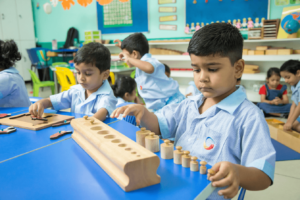
Modern education is no longer limited to textbooks, lectures and examinations. Parents and educators increasingly ask ‘what is experiential learning’, and why it has become such a powerful approach in schools around the world. Experiential learning focuses on learning through experience—where students actively engage, reflect, and apply knowledge in real-life contexts. This approach supports deeper understanding, stronger engagement, and better long-term retention.
Across many best international schools in Kuala Lumpur, experiential learning is used to prepare students for real-world challenges. At GIIS Kuala Lumpur (GIIS KL), experiential learning is integrated into classroom instruction, projects, and co-curricular activities, aligning academic excellence with practical skills. This article explores what is experiential learning, why experiential learning is important, and the key principles of experiential learning.

What Is Experiential Learning?
So, what is experiential learning? It is an educational approach where students learn by doing—through hands-on activities, problem-solving, projects, experiments and reflection. Instead of passively receiving information, learners actively participate in experiences that help them understand concepts more deeply.
Experiential learning typically involves:
- active participation
- real-world or simulated experiences
- reflection on what was learned
- application of knowledge to new situations
This approach bridges the gap between theory and practice, making learning more meaningful and relevant.
Why Experiential Learning?
Many parents ask why experiential learning is preferred over traditional methods. The answer lies in how students engage with learning. When students experience concepts first-hand, they:
- retain information longer
- understand concepts more clearly
- develop problem-solving skills
- build confidence and independence
Experiential learning also supports collaboration, creativity, and communication—skills essential for success beyond school.

Why Experiential Learning Is Important
Understanding why experiential learning is important helps parents appreciate its long-term value. This approach:
- encourages critical thinking and reflection
- connects learning to real-life situations
- improves motivation and engagement
- supports different learning styles
- prepares students for future careers
In today’s fast-changing world, students need adaptability and practical skills—not just academic knowledge.
Principles of Experiential Learning
The principles of experiential learning guide how this approach is implemented effectively. These experiential learning principles include:
-
Learning through experience
Students learn best when they actively engage in tasks, experiments, or projects.
-
Reflection
After an experience, learners reflect on what happened, what they learned, and how they can improve.
-
Application
Knowledge is applied to new situations, helping students transfer learning beyond the classroom.
-
Student-centred learning
Learners take ownership of their learning, making choices and decisions during the process.
-
Continuous feedback
Teachers guide learning through discussion, feedback, and support.
-
Real-world relevance
Activities are connected to practical, real-life scenarios.
These principles ensure learning is deep, meaningful, and lasting.
Experiential Learning in Practice at GIIS Kuala Lumpur
At GIIS KL, experiential learning is woven into daily teaching across subjects. Students participate in:
- project-based learning
- science experiments and investigations
- real-world problem-solving tasks
- leadership and community activities
- collaborative group projects
GIIS KL’s approach aligns with global best practices seen in the best international schools in Kuala Lumpur, helping students build both academic understanding and practical skills.
As an international school with Indian roots, GIIS KL is also recognised among leading Indian schools in Malaysia, offering globally benchmarked education while maintaining strong values and holistic development.
Experiential Learning and School Choice
When comparing schools, parents often consider international schools fees alongside educational quality. Experiential learning adds value by ensuring students gain skills that extend beyond exams—making education a meaningful investment.
Schools that prioritise experiential learning often demonstrate:
- innovative teaching methods
- student engagement and motivation
- strong academic outcomes
- preparation for global pathways
Benefits for Students
Experiential learning helps students:
- become confident problem-solvers
- work effectively in teams
- think critically and creatively
- adapt to new challenges
- apply knowledge practically
These skills support long-term academic and personal success.
Also Read: How to Develop Critical Thinking Skills: A Guide for Students and Parents
Final Words
Experiential learning transforms education from passive instruction into active discovery. Understanding ‘what is experiential learning’, why experiential learning is important, and the core principles of experiential learning highlights why this approach is central to modern education.
At GIIS Kuala Lumpur, experiential learning supports holistic student development, blending academic rigour with real-world application—one of the reasons GIIS KL is recognised among the best international schools in Kuala Lumpur.
If you are exploring Indian schools in Malaysia or comparing the best international schools in Kuala Lumpur that emphasise experiential learning and holistic development, GIIS Kuala Lumpur is worth considering.
Book a campus tour to learn how GIIS KL prepares students for future success through experiential learning.