Key Article Takeaways
- Montessori-inspired learning nurtures independence, curiosity, and confidence through child-led exploration, hands-on activities, and personalised guidance, creating a strong foundation for lifelong learning.
- A high-quality early years education supports children’s cognitive, social, emotional, and physical development, preparing them for a smooth transition into primary school and future academic success.
- We, at GIIS Kuala Lumpur, combine Montessori-inspired learning with a seamless pathway into the Cambridge Primary Programme, offering a nurturing international environment where every child can thrive academically, socially, and emotionally.
When Aisha and Daniel started their first day at GIIS Kuala Lumpur, their parents worried about how quickly they would settle into a new learning environment. Within weeks, they were confidently choosing activities independently, sharing stories about their classroom discoveries, and looking forward to school every morning—a testament to how a Montessori-inspired approach nurtures curiosity and confidence from the very beginning.
The early years of a child’s education shape how they think, learn, and interact with the world. As more families in Malaysia seek holistic and internationally recognised early education, choosing the right kindergarten has become one of the most important decisions parents make.
Today, many parents looking for an international kindergarten in Kuala Lumpur are drawn to Montessori-inspired learning because it nurtures curiosity, independence, and confidence from an early age. But what does a typical day in a Montessori classroom actually look like, and how is it different from a traditional preschool?
Let’s take a closer look.
Understanding the Montessori Approach
Developed by Dr Maria Montessori, the Montessori philosophy believes that children learn best when they are encouraged to explore at their own pace in a carefully prepared environment.
Rather than directing every activity, teachers act as facilitators, observing each child and guiding them according to their individual developmental needs.
The key principles include:
- Child-led learning
- Hands-on exploration
- Independence and responsibility
- Respect for every child’s pace of development
- Learning through real-life experiences
These principles make Montessori one of the most respected approaches to early childhood education worldwide.
What is the difference between a Montessori and a traditional preschool in Kuala Lumpur?
Traditional preschools generally follow a teacher-led timetable where all children complete the same activities simultaneously. In contrast, a Montessori classroom encourages children to choose from a range of purposeful learning activities, allowing them to develop confidence, concentration, and intrinsic motivation while receiving personalised guidance from educators.
A Typical Day in a Montessori Kindergarten
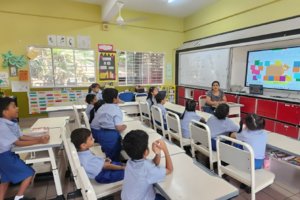
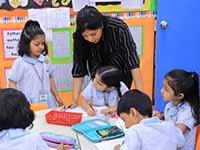
Every day in a Montessori-inspired classroom is thoughtfully designed to balance structure with freedom, encouraging children to become active participants in their own learning.
Morning Welcome and Independent Learning
The day begins with a calm arrival where children greet teachers and classmates before choosing activities that match their interests.
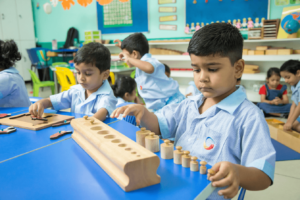
Some may work with puzzles, while others practise practical life skills such as pouring water, arranging objects, or caring for classroom plants. These seemingly simple tasks help develop independence, concentration, and fine motor skills.
Practical Life and Sensory Exploration
Practical life exercises are at the heart of Montessori preschool education.
Children engage in activities like:
- Buttoning and fastening
- Sorting objects
- Water transfer exercises
- Cleaning and organising materials
At the same time, sensory materials help children understand concepts such as size, shape, texture, colour, and sound through hands-on experiences rather than memorisation.
Language, Numeracy and Creative Expression
Children naturally transition into literacy and numeracy activities designed to make learning enjoyable.
They participate in:
- Storytelling
- Phonics activities
- Number recognition
- Counting games
- Art and craft
- Music and movement
Learning feels engaging because children discover concepts through exploration rather than instruction alone.
Outdoor Play and Social Development
Outdoor learning is an essential part of every day.
Whether climbing, running, gardening, or participating in group games, children strengthen their physical development while learning cooperation, empathy, and teamwork.
Reflection and Collaborative Learning
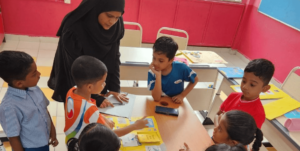
Towards the end of the day, children reflect on their experiences, share discoveries with classmates, and celebrate achievements.
These moments build communication skills, confidence, and emotional resilience that support lifelong learning.
How Montessori Differs from a Traditional Kindergarten
The difference between traditional kindergarten and Montessori in education is significant. Although both approaches aim to educate young children, the learning experience differs significantly.
| Montessori | Traditional Kindergarten |
| Teacher acts as a guide | Teacher leads lessons |
| Child-paced learning | Fixed classroom schedule |
| Hands-on materials | Workbook-focused learning |
| Mixed-age collaboration | Same-age classrooms |
| Individual exploration | Whole-class instruction |
| Focus on independence | Focus on completing assigned tasks |
How does a Montessori school in Kuala Lumpur differ from a traditional one?
A Montessori-inspired school encourages curiosity, independent thinking, and practical problem-solving. Children learn through purposeful exploration in an environment that adapts to their developmental needs rather than expecting every learner to progress at the same pace.
Why Early Years Education Matters
Research consistently shows that the first few years of life are critical for brain development.
High-quality early education helps children develop:
- Language and communication skills
- Cognitive ability
- Emotional intelligence
- Social confidence
- Physical coordination
- Creativity
- Critical thinking
These foundations influence future academic achievement and overall wellbeing.
Why is early years education important for a child’s development in Malaysia?
Strong early childhood education equips children with the confidence, curiosity, and learning habits they need to thrive throughout school while supporting their emotional and social development in increasingly diverse learning environments.
Why is kindergarten an important stage in a child’s early development?
Kindergarten introduces children to structured learning while nurturing independence, collaboration, and self-confidence. It creates the foundation upon which future academic and personal success is built.
What Parents Should Look for in the Best Kindergarten
Finding the best kindergarten in Kuala Lumpur involves much more than comparing fees or location.
Parents should evaluate:
- Qualified and experienced educators
- Safe, stimulating classrooms
- Child-centred teaching philosophy
- Strong communication between school and parents
- Age-appropriate learning resources
- Balanced academic and play-based learning
- Opportunities for creativity and exploration
Which kindergarten in Kuala Lumpur offers the best learning environment?
The ideal learning environment encourages children to ask questions, explore independently, collaborate with peers, and develop confidence through meaningful daily experiences supported by caring educators.
Which is the Best Kindergarten in Kuala Lumpur or Malaysia?
The best kindergarten is one that aligns with your child’s learning style while providing a nurturing environment, experienced teachers, international standards, and a balanced curriculum that supports both academic readiness and holistic development.
Activities That Shape Holistic Development
Montessori-inspired education goes far beyond early literacy and numeracy.
Children participate in activities such as:
- Practical life exercises
- Sensory exploration
- Storytelling sessions
- Music and dance
- Arts and crafts
- STEM discovery through play
- Outdoor exploration
- Collaborative projects
What activities are included in a kindergarten curriculum?
A well-rounded kindergarten curriculum combines language development, mathematics, creative arts, physical education, practical life skills, social interaction, and exploratory STEM experiences to nurture every aspect of a child’s growth.
Why GIIS Kuala Lumpur is an Excellent Choice for Early Learners
At GIIS Kuala Lumpur, we believe every child deserves an inspiring start to their educational journey.
We, at GIIS KL, offer a nurturing early years programme that blends the strengths of Montessori-inspired learning with internationally recognised educational practices. Our youngest learners benefit from engaging classrooms, experienced educators, and personalised attention that supports every stage of development.
Children enjoy opportunities to build independence, communication, creativity, and confidence through meaningful learning experiences designed specifically for their age and developmental needs.
Importantly, our early years programme provides a seamless transition into the internationally recognised Cambridge Primary Programme, ensuring continuity as children progress through their educational journey.
As an established kindergarten kuala lumpur, we also provide:
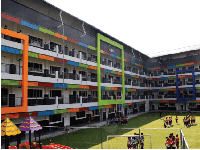
- Safe and modern learning spaces
- Small, engaging classroom environments
- Holistic character development
- Parent-school partnerships
- Enrichment programmes in arts, sports, and innovation
- Individualised support for every learner
Tips for Choosing the Right Kindergarten
Before making your decision, consider the following:
- Understand the school’s teaching philosophy.
- Visit the campus and observe classroom interactions.
- Speak with teachers and school leaders.
- Evaluate safety measures and learning facilities.
- Explore co-curricular opportunities.
- Consider how the school supports long-term academic progression.
When should I apply for kindergarten admission?
Many leading international schools accept applications throughout the year, subject to availability. However, parents are encouraged to apply several months before the intended start date to secure their preferred intake.
Common Mistakes Parents Should Avoid
Many families unintentionally focus on the wrong factors when choosing a kindergarten.
Avoid these common mistakes:
- Choosing solely based on proximity or fees
- Ignoring teaching philosophy
- Overlooking teacher qualifications
- Focusing only on academics instead of holistic development
- Not considering future educational continuity within the school
A thoughtful decision today can positively influence your child’s lifelong learning journey.
Final Words
A Montessori-inspired kindergarten does far more than prepare children for primary school. It nurtures curiosity, independence, resilience, creativity, and a genuine love for learning that lasts a lifetime.
Choosing the right early learning environment can shape not only your child’s academic future but also their confidence, character, and ability to adapt in an ever-changing world.
We, at GIIS KL, are committed to providing a holistic, internationally focused early years education that combines Montessori-inspired learning with a seamless pathway into the Cambridge Primary Programme. If you’re looking for an international kindergarten in Kuala Lumpur where your child can thrive academically, socially, and emotionally, we’d love to welcome your family.
Book a personalised campus tour today and discover how GIIS Kuala Lumpur can give your child the best possible start to a lifelong journey of learning and success. Contact us for more details.
Frequently Asked Questions
1. What is the right age for children to start preschool in Malaysia?
Most children begin preschool between the ages of three and four, although programmes may vary depending on the school’s admission policy.
2. What is the difference between a Montessori and a traditional preschool in Kuala Lumpur?
Montessori focuses on child-led, hands-on learning and independence, while traditional preschools typically follow teacher-directed instruction and structured classroom routines.
3. How does a Montessori school in Kuala Lumpur differ from a traditional one?
Montessori schools encourage personalised learning, practical life experiences, mixed-age collaboration, and independent exploration rather than standardised classroom instruction.
4. What activities are included in a kindergarten curriculum?
Children participate in literacy, numeracy, creative arts, music, physical education, sensory exploration, practical life exercises, STEM activities, and collaborative play.
5. Which kindergarten in Kuala Lumpur offers the best learning environment?
Schools that combine experienced educators, safe campuses, child-centred teaching, holistic development, and international standards provide excellent early learning environments.
6. Which is the best kindergarten in Kuala Lumpur?
The right choice depends on your child’s needs. We, at GIIS KL, offer a nurturing international environment, Montessori-inspired learning experiences, and a clear progression into globally recognised academic programmes.
7. Where can parents find reputable kindergartens in Kuala Lumpur?
Parents should explore accredited international schools, attend campus tours, meet educators, and review the school’s curriculum, facilities, and educational philosophy before making a decision.
8. When should I apply for kindergarten admission?
Applying early is recommended, especially for popular intakes, as places at leading international schools can fill quickly.