The International Baccalaureate, or the IB, is regarded as one of the top education programmes in the world. IB programmes nurture students to become curious, knowledgeable, confident and compassionate individuals who can make a difference in the 21st century world.
At IB schools, students enjoy an inquiry-based approach to learning that focuses on in-depth knowledge, collaboration, communication and skill development through hands-on experience. Here are ten key reasons why you should consider IB schools in Singapore:

1. IB schools offer a broad and balanced curriculum
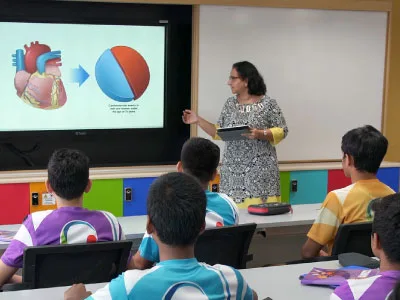
At every level, the IB curriculum is designed to engage students and inspire them to take their thinking one step further. The curriculum framework is such that it empowers students to take charge or ownership of their own learning. It equips them with future-ready skills to help them thrive in an uncertain world.
Courses are offered across a wide range of subjects, and within each course, students are encouraged to ask questions, come up with their own hypotheses and test them in order to better understand the topic at hand.
Throughout their learning journey from IB Primary Years Programme (IB PYP) through IB Diploma Programme (IBDP), students will develop independent mindsets, effective research, collaboration and communication skills, which uniquely prepare them for leadership positions.
2. There’s focus on International Mindedness
Being an international programme, nurturing international mindedness is an essential part of the IB experience. Not only is the IB curriculum recognised by leading educational institutions around the world, it is also a programme that actively seeks to develop learners who are culturally aware and responsive.
It does so by asking students to reflect not only on their own cultural identity and beliefs but also on the traditions and norms of other cultures. By giving students an opportunity to interact with people from all backgrounds and cultures, the IB programme allows students to collaborate with a diverse range of people effectively.
3. The curriculum puts student-centered learning at the forefront
This student-centered approach to learning sets the IB programme apart from other curricula. At every level of the IB curriculum, students learn to ask powerful questions, set their own goals and make plans to achieve those goals.
This produces self-motivated students, with a love for lifelong learning, who are driven towards success not only for personal gain but also for the betterment of the world around them.
4. IB offers strong learning outcomes
For years, IB schools have produced students who score well on their assessments, not only within the IB programme but also on admission exams that are required for university placement.
The fact that this programme combines the importance of academic development with the critical need for well-rounded education has supported strong learning outcomes in students of all ages.
5. Soft skills development is a priority
As technological advances continue to reshape the world, soft skills have never been more important or necessary. The IB programme recognises that students will require these skills not only throughout their education but also their entire lives.
Soft skills include active listening, oral communication, self-management, self-motivation, creative thinking, to name a few. Over time, students who hone and develop these skills will be ready to take on leadership roles within their chosen fields.
6. IB programme uniquely prepare students for university
When students graduate from secondary school and move on to university, they are thrust into a world in which they must be responsible for their learning. Self-motivation and time management skills are required at the university level, and the structure of the IB programme effectively prepares graduates for this transition.
Throughout the IBDP, secondary school students learn how to set goals and objectives, and work to achieve those goals during the academic year.
7. The IB curriculum encourages creativity and innovation
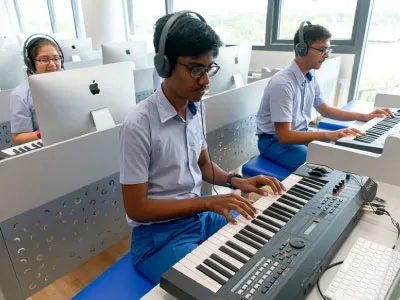
Creativity and innovation are at the core of the IB curriculum, primarily because it is based on an inquiry-led approach. This gives students the freedom to think creatively and test their ideas, ultimately coming up with innovative solutions that they may not otherwise have discovered.
8. IB promotes multilingualism
With international mindedness and cultural awareness at the forefront of the IB curriculum, it comes as no surprise that students also have many opportunities to develop their language skills. Depending on the level of the curriculum and the school, students may be able to choose from several different languages, including French, Spanish, Mandarin and more.
9. Emphasis on personal and social responsibility
The IB Learner Profile identifies the traits that IB students will develop by the time they complete the programme. Many of these attributes focus on personal and social responsibility, instilling in students the idea that they should strive to serve their communities and make decisions that benefit the common good. Some important traits within the IB Learner Profile include being principled, open-minded, caring and reflective.
10. Reflection plays an integral role in the learning process
Throughout the IB programme, students are called upon not only to reflect on their own learning experiences but also to reflect on the concepts that they are being taught. They are encouraged to consider how their own experiences can shape the world around them.
These moments of active reflection provide students with an opportunity to pause and consider how their learning plays a larger role than they might realise. They learn that reflection is not optional but a necessary part of understanding a concept.
IB programmes at GIIS
As a leading IB school in Singapore, GIIS offers two IB programmes:
IB Primary Years Programme (IB PYP)
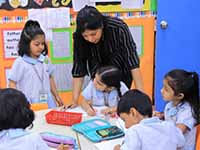
At GIIS, the IB PYP is offered to primary school students in Grades 1 through 5. This IB curriculum provides students with an introduction to inquiry-led learning and allows them to develop a foundation that they can build upon during their time at GIIS. Collaborative learning plays an integral role within the IB PYP and helps students learn how to work well with others and discover the best way to communicate in a group setting.
Also read: Mapping the IB Learner Profile to GIIS’ holistic educational framework
IB Diploma Programme (IBDP)
The IBDP is available to secondary school students in Grades 11 and 12 at GIIS. This programme is often described as a pre-university curriculum and is known for its rigorous academic coursework.
The curriculum is designed to maintain a global perspective, which allows students to consider the world at large and connect their lessons to their lives outside the classroom. In addition, the focus on collaboration and critical thinking uniquely prepares students for the interconnected global economy of the 21st century.
If you are keen to know more about the IB PYP and IBDP curricula options at GIIS, please do not hesitate to contact our admissions counsellors.

Shubhdarshani Mitra
Shubhdarshani has over 10 years of experience in content creation, curation and editing. She has worked for Indian newspapers, school magazines and international news websites where she worked closely with the leadership on the execution and communication of the content strategy. Aside from work, she’s a passionate B&W photographer and storyteller.