Global
All Cities
Where would you like to study? Select cities to refine your search.
Any Curriculum
Find a campus based on the curriculum offered.
Global
Global
All Cities
Where would you like to study? Select cities to refine your search.
Any Curriculum
Find a campus based on the curriculum offered.
Search

How We Encourage Independent Learning in the PYP at GIIS

Education Tips

The IB Primary Years Programme (PYP) is known to encourage independent and inquiry-based learning in primary students. At GIIS, our students in the PYP are encouraged to pursue self-led learning at every level – from the way they choose to arrange their classrooms and decorate the walls to the mini exhibitions held each year for Grades 1-5.

Your child will take an active role in how they tackle subjects, choose to do their research, and how they present their hard work to the world, at GIIS. Independent learning fosters responsibility, discipline and pride, and these are values we wish to instil in every student who passes through our doors.‍

‍

‍

Teaching Self-Led Learning

GIIS teachers do more than just guide students in the right direction. We equip children with the skills they need to master, including:

● Reasoning

● Exploration

● Drawing Conclusions

● Forming Theories

● Testing Outcomes

We do this by using techniques and teaching strategies such as visible thinking routines, design thinking, transdisciplinary inquiry and encouraging student agency. Students are encouraged to take classroom learning out into the community and apply it to real-world situations.

Adopting the SOLO Taxonomy

Another academic tool we use at GIIS is SOLO or Structured Observation of Learning Outcomes. SOLO was developed by John Biggs to measure a student’s understanding of a topic. It moves students through five levels of learning, each more complex than the one that came before. The five levels of SOLO include:

‍
‍

‍

● Pre-structural — Students have no understanding of the topic.

● Uni-structural — Students understand one or two elements but not the whole concept.

● Multi-structural — Students have collected relevant knowledge but have yet to assemble it.

● Relational — Students begin to grasp the big picture.

● Extended Abstract — Students have mastered the topic and are able to apply it outside the classroom.

‍
As they move from level to level, students are forced to use higher levels of thinking that include deduction skills, comparing and contrasting, and theoretical modelling. Using the SOLO taxonomy, children gain a comprehensive understanding of topics they’ve never encountered before.
‍

‍

Controlling the Teacher Response

Possibly the most significant aid to encouraging self-led learning is the response of our teachers at GIIS. Our PYP educators constantly encourage new ideas and techniques in the classroom. Additionally, they reward students who come up with new ideas by appreciating their initiative and their ideas.

We reinforce independent thinking and creativity in our PYP classrooms and require students to play active roles in their learning processes. As a result, we’re educating a generation of students who are well-prepared to become the intuitive leaders of tomorrow.

For more information on admission to GIIS’s innovative IB Primary Years Programme, get in touch with an admissions counsellor or schedule a school tour to see the PYP in action for yourself. Also, please remember to share us with friends who may also be interested in learning more about the independent learning methods at GIIS.

‍

‍

Manju Nair

Ms. Manju Nair is a doctoral candidate with the University of Bath. Her research interests included leadership, inclusion, and multilingualism under the overarching practices and principles of progressive education. As a lecturer and pedagogical leader she has inspired and groomed countless numbers of teachers. As an advocate for ‘student-centred pedagogies’, she has established time and again that it leads to the best outcome for students. She is currently working as the IB Primary Years Coordinator at GIIS. Outside of work, she enjoys reading, yoga & meditation, baking, painting and traveling.
Featured Blogs

Cambridge IGCSE

What Is the Cambridge IGCSE? A Guide for Parents and Students

A secondary school curriculum plays an important role in shaping a child's academic journey. It influences how a teenager learns, thinks and is assessed, while also affecting the pathways available for senior high school and university. For parents in Singapore exploring different curriculum options, the Cambridge IGCSE is often part of the conversation. As one of the world's most widely recognised secondary qualifications, it offers an internationally oriented approach to education.

Cambridge IGCSE

Cambridge IGCSE Results 2026: Everything Students and Parents Need to Know

If your child is preparing to enter Grade 9 or Grade 10, you have likely already encountered the term ‘IGCSE results’ in parent meetings, school communications, and open days. For those currently comparing IGCSE schools in Singapore, one practical question often stands out: how can a school's results be verified as genuinely reliable, rather than simply a marketing claim

IGCSE

Where Can You Study Cambridge IGCSE in Singapore? Best Schools, Fees & Admissions

Cambridge IGCSE is offered in Singapore mainly through private international schools, since local MOE schools follow the Singapore-Cambridge GCE syllabus instead. Among the IGCSE schools in Singapore, Global Indian International School (GIIS) Singapore is one of the most established options, offering the Cambridge IGCSE programme for Grades 9 and 10 (ages 14–16) at its SMART Campus in Punggol, with a consistent track record of A* and distinction results.

IGCSE Results

Understanding Your Cambridge IGCSE Results: A Complete Guide to Grades, Grading Scales and What Your Results Mean

Cambridge IGCSE results are graded on a scale from A* (highest) to G (lowest), based on a student's Uniform Mark achieved in each subject. An A* reflects a mark of 90–100%, while a G reflects 20–29%. Grades are issued per subject, not as an overall aggregate and are recognised by universities and employers in more than 160 countries.

Top Scholarships

Dr APJ Abdul Kalam Global Skills Scholarship

Eligibility:

Talent Based - Technology

More from same author
Trending Blogs

Cambridge IGCSE

What Is the Cambridge IGCSE? A Guide for Parents and Students

A secondary school curriculum plays an important role in shaping a child's academic journey. It influences how a teenager learns, thinks and is assessed, while also affecting the pathways available for senior high school and university. For parents in Singapore exploring different curriculum options, the Cambridge IGCSE is often part of the conversation. As one of the world's most widely recognised secondary qualifications, it offers an internationally oriented approach to education.

Cambridge IGCSE

Cambridge IGCSE Results 2026: Everything Students and Parents Need to Know

If your child is preparing to enter Grade 9 or Grade 10, you have likely already encountered the term ‘IGCSE results’ in parent meetings, school communications, and open days. For those currently comparing IGCSE schools in Singapore, one practical question often stands out: how can a school's results be verified as genuinely reliable, rather than simply a marketing claim

IGCSE

Where Can You Study Cambridge IGCSE in Singapore? Best Schools, Fees & Admissions

Cambridge IGCSE is offered in Singapore mainly through private international schools, since local MOE schools follow the Singapore-Cambridge GCE syllabus instead. Among the IGCSE schools in Singapore, Global Indian International School (GIIS) Singapore is one of the most established options, offering the Cambridge IGCSE programme for Grades 9 and 10 (ages 14–16) at its SMART Campus in Punggol, with a consistent track record of A* and distinction results.

IGCSE Results

Understanding Your Cambridge IGCSE Results: A Complete Guide to Grades, Grading Scales and What Your Results Mean

Cambridge IGCSE results are graded on a scale from A* (highest) to G (lowest), based on a student's Uniform Mark achieved in each subject. An A* reflects a mark of 90–100%, while a G reflects 20–29%. Grades are issued per subject, not as an overall aggregate and are recognised by universities and employers in more than 160 countries.

GIIS

Mid-Year & Transfer Admissions: Moving Your Child to a Singapore International School (2026)

Relocating to Singapore rarely happens on a school's neat academic calendar. A posting can start in June, a lease can begin in September, a visa can clear in November—and somewhere in between, a child still needs a classroom, a timetable and a group of friends. This is the reality behind expat school admissions mid year in Singapore and it's a far more common situation than most parents expect.

GIIS

Choosing Subjects for IGCSE: A Parent’s Guide to Streams, Options & Future Careers

By age 14, most children have never had to make a decision that shapes their next ten years. Choosing IGCSE subjects is exactly that decision and for parents, it often arrives with more questions than answers. Which subjects matter for university? Does dropping a science close doors? Is a 'safe' combination actually the right one?

GIIS

Your Child’s Journey to IBDP Success Starts Before Grade 11: A Parent’s Guide

While evaluating the IB Diploma programme in Singapore for their children, parents center the conversation around Grade 11 and 12. It is during these final two high school years that students write their Extended Essays, dive deep into Theory of Knowledge (TOK) and prepare for final examinations.

Search
History Menu Icon

Our vision is to become a global role model for teaching and learning.

History Menu Icon Secondary

Since its inception in 2002, GIIS has spread quality education through 17 campuses across the globe.

Global Indian International School Singapore smart campus learning environment

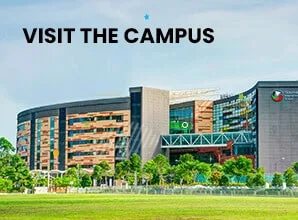
SMART Campus

A green, tech-enabled campus with extensive sports facilities that enables a holistic education

  • Kindergarten program at GIIS Singapore smart campus

    Montessori education with a modern touch.

  • Primary school curriculum at GIIS Singapore

    International primary programmes with best holistic learning.

  • Secondary school students learning at GIIS Singapore

    International middle school programmes with best foundation for high school.

  • High school education and curriculum at GIIS Singapore

    International high school programmes with beat launchpads for university.

21st century learning campus at GIIS Singapore

Facilities which are collaborative, creative and adaptable to individual needs.

Holistic education approach with 9 Gems at GIIS Singapore

Award-winning framework for all-round student development

Co-curricular activities at GIIS Singapore

Extra-curricular activities are those activities, often sports-based, that take place outside of the GIIS classroom

Extra curricular activities at GIIS Singapore

Talent shows, performances, competitions, clubs and additional classroom work.

Admission Process Icon

Get an overview of the admissions process

Campus Tour Icon

Register for a tour of the campus to learn more about the school first hand

Book Meeting Icon

You can talk to our Admissions Counsellor online or in-person, as per your convenience.

Admissions Form Icon

Find all forms related to admissions procedure here

Fees Icon

Get information on our fee structure for different grades

Scholarship Icon

Thank you for considering GIIS as a prospective school for your child. Our goal is to make the admissions.