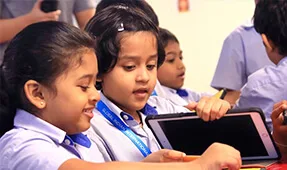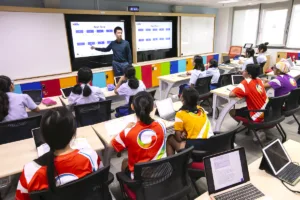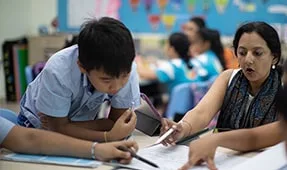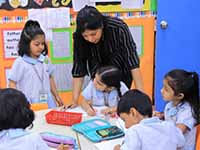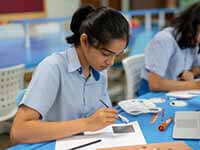
Students need to be involved in meaningful and stimulating activities so that they can develop a love for learning and critical thinking. At GIIS, we use a variety of creative classroom activities to meet the diverse needs of our students, encouraging them to explore, inquire, and discover.
This guide offers ten innovative activities designed to keep PYP students in a private school setting actively engaged in their learning journey.
Storytelling with a twist
Storytelling is a powerful tool for captivating young minds and enhancing their language skills. At GIIS, we take this activity further by incorporating interactive elements.
Role playing
In this approach, the story is learned as students takes on roles to play out different aspects of the story and actively participate and understand character motivations.
Story cubes
Adding story cubes during such role plays, which contain images on all sides, can make the activity more fun in terms of selecting the story elements and developing creativity along with spontaneous thinking.
Science experiments
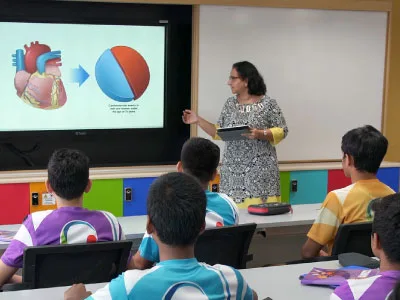
Hands-on science experiments make learning fun and allow students to apply theoretical knowledge practically.
Plant growth observation
Students can plant seeds and document the growth over time, learning about plant biology and the factors affecting growth.
Simple machines
Building simple machines like levers and pulleys helps students understand basic physics concepts through practical application.
Maths scavenger hunt
Turning maths lessons into a scavenger hunt is an exciting way to develop problem-solving skills.
Number hunt
By placing number cards around the classroom, tudents can solve clues to find the next number, practising addition, subtraction, or multiplication along the way.
Geometry hunt
Students search for objects matching specific geometric shapes, helping them identify shapes in the real world.
Cultural days
Celebrating different cultures enhances global awareness and appreciation among students.
Dress and share
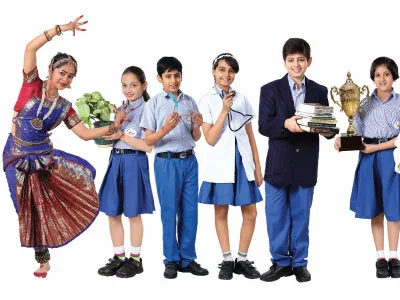
Students wear traditional attire from various countries and share facts about the culture they are representing.
Food festival
A classroom event where students bring dishes from different countries and explain their cultural significance.
Art and craft
Artistic activities stimulate creativity and fine motor skills, allowing students to express themselves visually.
Recycled art
Using recyclable materials, students create artwork, which also promotes environmental awareness.
Clay modelling
Students sculpt figures from clay, enhancing their tactile skills and creativity.
Drama and music
Integrating drama and music into the curriculum supports emotional expression and team collaboration.
Mini musicals
Students create and perform in short musicals, which involve singing, acting, and sometimes dancing.
Instrumental rhythms
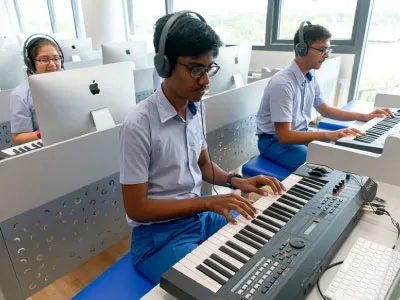
Learning basic rhythms on percussion instruments helps students understand musical patterns and teamwork.
Technology integration
Incorporating technology into classroom activities can significantly enhance learning experiences.
Coding games
Simple coding activities using platforms like Scratch introduce students to basic programming in a fun, interactive way.
Digital storybooks
Students use apps to create their own digital storybooks, incorporating text, images, and audio.
Mindfulness and yoga
Mindfulness activities and yoga can greatly benefit students by improving their concentration and stress management.
Guided meditation
Short sessions help students relax and focus better on their studies.
Yoga poses
Basic poses improve physical flexibility and help students learn about body awareness.
Environmental projects
Projects focused on the environment teach students about sustainability and the impact of human activities on the planet.
Recycling drives
Organising classroom recycling challenges promotes environmental responsibility.
Wildlife conservation
Learning about endangered species and creating posters to spread awareness.
Peer teaching
Allowing students to teach each other fosters confidence and reinforces their knowledge.
Subject experts
Students become ‘experts’ in a particular topic and teach their peers.
Presentation skills
Students prepare and deliver presentations on subjects of interest, enhancing their public speaking and research skills.
Evaluating engagement through feedback
Continuous feedback is crucial to ensure classroom activities are engaging for PYP students. Teachers at GIIS employ various methods to gather students’ insights about the activities’ effectiveness.
Surveys and questionnaires
After completing an activity, students may fill out quick surveys or questionnaires to express how the activity helped them and what they enjoyed the most.
Reflection sessions
Setting aside time for students to reflect on what they learned and how they felt during the activity can provide valuable insights into their engagement levels.
Peer feedback
Encouraging students to give constructive feedback to each other can foster a supportive learning environment and offer new perspectives on the activity’s impact.
Integrating assessment with activities
Incorporating assessment methods that align with creative activities can help track and enhance student learning outcomes without diminishing the joy of learning.
Performance-based assessments
These involve students demonstrating their knowledge through creative outputs like projects, performances, or portfolios.
Formative assessments
Informal assessments can be integrated seamlessly into daily activities to monitor progress and adjust teaching strategies accordingly.
Self-assessment tools
Empowering students with tools to assess their own work encourages responsibility and helps them understand their learning journey.
Role of collaborative learning in PYP
Collaboration is a key component of the PYP curriculum framework in an international school, and incorporating group-based activities fosters a community of learning and mutual respect among students.
Group projects
Students work in teams to solve problems or create projects, which helps them learn to negotiate, collaborate, and share ideas effectively.
Peer tutoring sessions
Pairing students together for tutoring sessions can reinforce learning and build leadership skills among older students.
Discussion circles
Regularly organising discussion circles where students can voice their ideas and debate on various topics promotes critical thinking and active learning.
How to sustain interest over time?
Maintaining students’ interest in learning activities over a prolonged period can be challenging. Here are strategies used at GIIS to keep students consistently engaged.
Rotating activities
Introducing new activities regularly or rotating them can keep the learning environment dynamic and prevent boredom.
Incorporating current events
Linking classroom activities to current events or real-world issues can make learning more relevant and engaging for students.
Long-term projects
Engaging students in long-term projects that span several weeks or months gives them a sense of accomplishment and keeps them motivated to see the results.
Conclusion
At Global Indian International School, we believe that engaging classroom activities are essential for developing inquisitive, knowledgeable, and compassionate students.
These creative approaches make learning enjoyable and prepare our students for a successful educational journey in a private school setting. We continuously strive to provide innovative and effective teaching methods in our international school environment.
If you are interested in learning more about our approach to education and how we keep our students engaged, feel free to reach out to our admissions team.

Team GIIS
Team GIIS is a group of enthusiastic writers who bring the vibrant world of GIIS in Singapore to life through engaging blog posts. Dedicated to highlighting the school’s teaching methodology, innovative learning environment, and diverse curriculum options like IB, Cambridge and CBSE, they aim to connect with parents, educators and students, sharing insights and stories that inspire and inform the school community.